Chongqing Academy of Animal Sciences, Rongchang, 402460, China.
Chongqing Engineering Laboratory of Nano/Micro Biomedical Detection; Chongqing Key Laboratory of Nano/Micro Composite Material and Device, College of Metallurgy and Materials Engineering, Chongqing University of Science and Technology, Chongqing, 401331, China.
Sci Rep. 2023 Jun 23;13(1):10233. doi: 10.1038/s41598-023-36779-w.
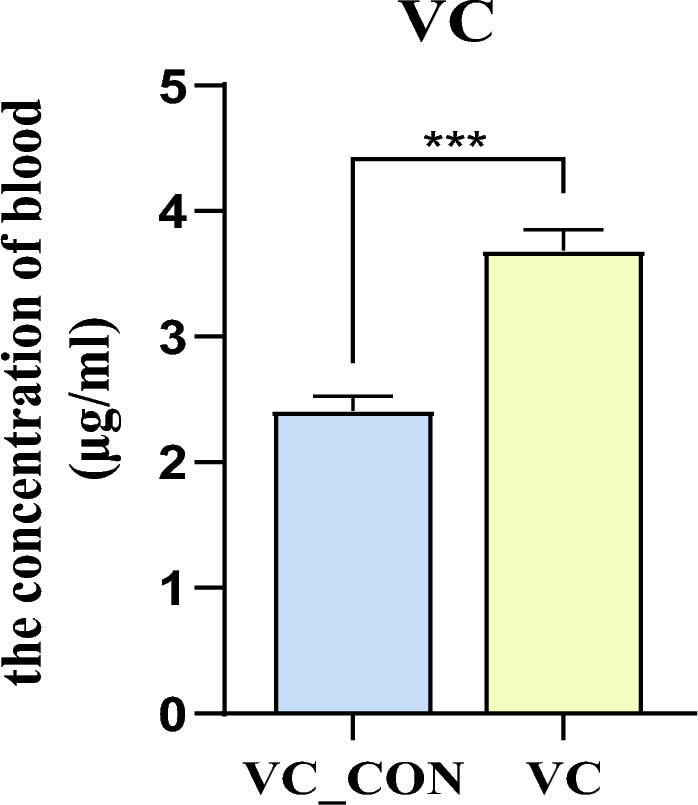
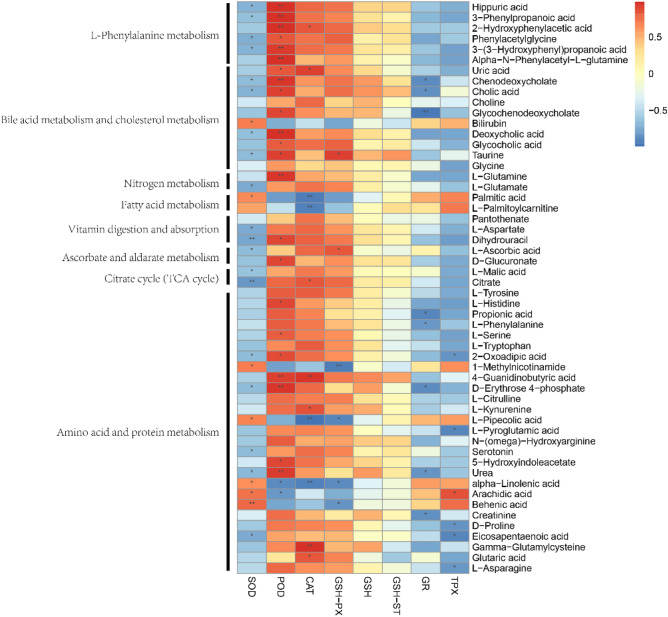
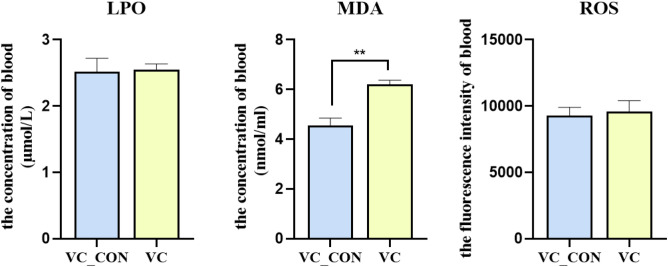
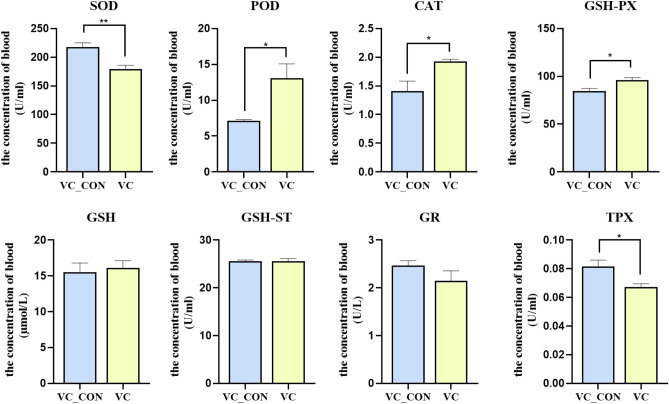
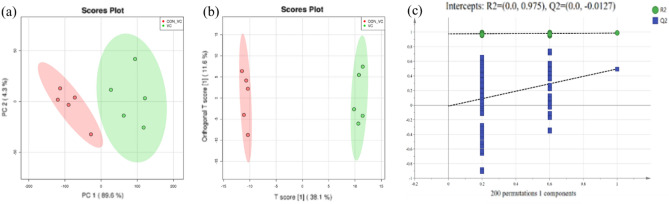
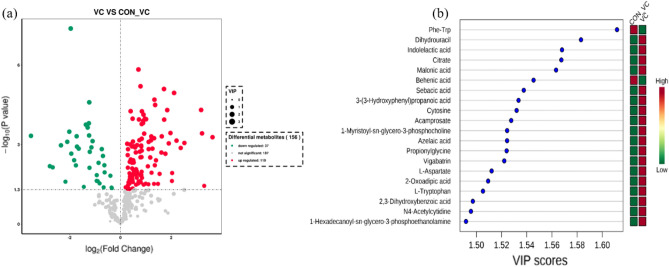
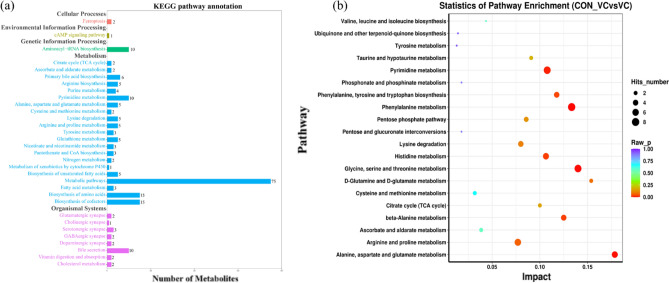
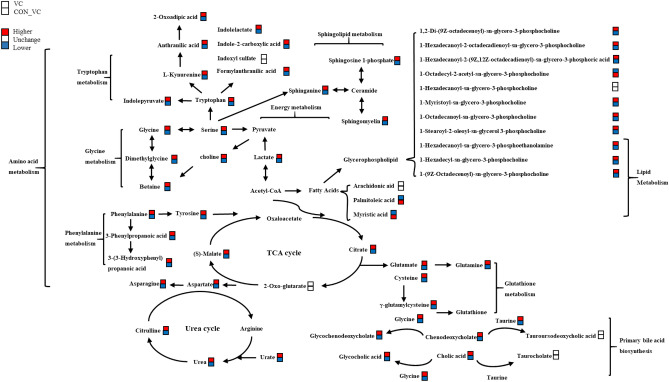
Transportation stress is one of the most serious issues in the management of yak. Previous studies have demonstrated that transport stress is caused by a pro-oxidant state in the animal resulting from an imbalance between pro-oxidant and antioxidant status. In this context, vitamin C has the ability to regulate reactive oxygen species (ROS) synthesis and alleviate oxidative stress. Although this effect of vitamin C is useful in pigs, goats and cattle, the effect of vitamin C on the mitigation of transport stress in yaks is still unclear. The purpose of this study was to better assess the metabolic changes induced by the action of vitamin C in yaks under transportation stress, and whether these changes can influence antioxidant status. After the yaks arrived at the farm, control or baseline blood samples were collected immediately through the jugular vein (VC_CON). Then, 100 mg/kg VC was injected intramuscularly, and blood samples were collected on the 10th day before feeding in the morning (VC). Relative to the control group, the VC injection group had higher levels of VC. Compared with VC_CON, VC injection significantly (P < 0.05) decreased the blood concentrations of ALT, AST, T-Bil, D-Bil, IDBIL, UREA, CRP and LDH. However, VC injection led to greater (P < 0.05) AST/ALT and CREA-S relative to VC_CON. There was no difference (P > 0.05) in GGT, ALP, TBA, TP, ALBII, GLO, A/G, TC, TG, HDL-C, LDL-C, GLU and L-lactate between VC_CON and VC. The injection of VC led to greater (P < 0.05) concentration of MDA, but did not alter (P > 0.05) the serum concentrations of LPO and ROS. The injection of VC led to greater (P < 0.05) serum concentrations of POD, CAT and GSH-PX. In contrast, lower (P < 0.05) serum concentrations of SOD, POD and TPX were observed in VC relative to VC_CON. No difference (P > 0.05) in GSH, GSH-ST and GR was observed between VC_CON and VC. Compared with the control group, metabolomics using liquid chromatography tandem-mass spectrometry identified 156 differential metabolites with P < 0.05 and a variable importance in projection (VIP) score > 1.5 in the VC injection group. The injection of VC resulted in significant changes to the intracellular amino acid metabolism of glutathione, glutamate, cysteine, methionine, glycine, phenylalanine, tyrosine, tryptophan, alanine and aspartate. Overall, our study indicated that VC injections were able to modulate antioxidant levels by affecting metabolism to resist oxidative stress generated during transport.
运输应激是牦牛管理中最严重的问题之一。先前的研究表明,运输应激是由于动物体内的促氧化剂状态导致的,这种状态是由促氧化剂和抗氧化剂之间的平衡失调引起的。在这种情况下,维生素 C 具有调节活性氧(ROS)合成和减轻氧化应激的能力。虽然维生素 C 在猪、山羊和牛中的这种作用是有用的,但维生素 C 对缓解牦牛运输应激的影响仍不清楚。本研究旨在更好地评估维生素 C 在运输应激下对牦牛的代谢变化的影响,以及这些变化是否会影响抗氧化状态。牦牛到达农场后,立即通过颈静脉(VC_CON)采集对照或基线血样。然后,肌肉注射 100mg/kg VC,并在早上(VC)在第 10 天给料前采集血样。与对照组相比,VC 注射组 VC 水平更高。与 VC_CON 相比,VC 注射显著(P < 0.05)降低了 ALT、AST、T-Bil、D-Bil、IDBIL、UREA、CRP 和 LDH 的血液浓度。然而,与 VC_CON 相比,VC 注射导致 AST/ALT 和 CREA-S 更大(P < 0.05)。GGT、ALP、TBA、TP、ALBII、GLO、A/G、TC、TG、HDL-C、LDL-C、GLU 和 L-乳酸在 VC_CON 和 VC 之间无差异(P > 0.05)。VC 注射导致 MDA 浓度更大(P < 0.05),但不改变(P > 0.05)LPO 和 ROS 的血清浓度。VC 注射导致 POD、CAT 和 GSH-PX 的血清浓度更大(P < 0.05)。相反,与 VC_CON 相比,VC 中的 SOD、POD 和 TPX 血清浓度更低(P < 0.05)。VC_CON 和 VC 之间的 GSH、GSH-ST 和 GR 无差异(P > 0.05)。与对照组相比,在 VC 注射组中,使用液相色谱串联质谱法进行代谢组学分析,发现 156 种差异代谢物的 P 值<0.05,投影重要性(VIP)得分>1.5。VC 注射导致谷胱甘肽、谷氨酸、半胱氨酸、蛋氨酸、甘氨酸、苯丙氨酸、酪氨酸、色氨酸、丙氨酸和天冬氨酸的细胞内氨基酸代谢发生显著变化。总体而言,我们的研究表明,VC 注射能够通过影响代谢来调节抗氧化水平,从而抵抗运输过程中产生的氧化应激。