Department of Otorhinolaryngology, Head and Neck Surgery, Yantai Yuhuangding Hospital of Qingdao University, Yantai, 264000, Shandong, China.
Key Laboratory of Spatiotemporal Single-Cell Technologies and Translational Medicine, Yantai, 264000, Shandong, China.
Mol Cancer. 2023 Jun 23;22(1):99. doi: 10.1186/s12943-023-01791-1.
Lung adenocarcinoma (LUAD) is a common type of lung cancer with a high risk of metastasis, but the exact molecular mechanisms of metastasis are not yet understood.
This study acquired single-cell transcriptomics profiling of 11 distal normal lung tissues, 11 primary LUAD tissues, and 4 metastatic LUAD tissues from the GSE131907 dataset. The lung multicellular ecosystems were characterized at a single-cell resolution, and the potential mechanisms underlying angiogenesis and metastasis of LUAD were explored.
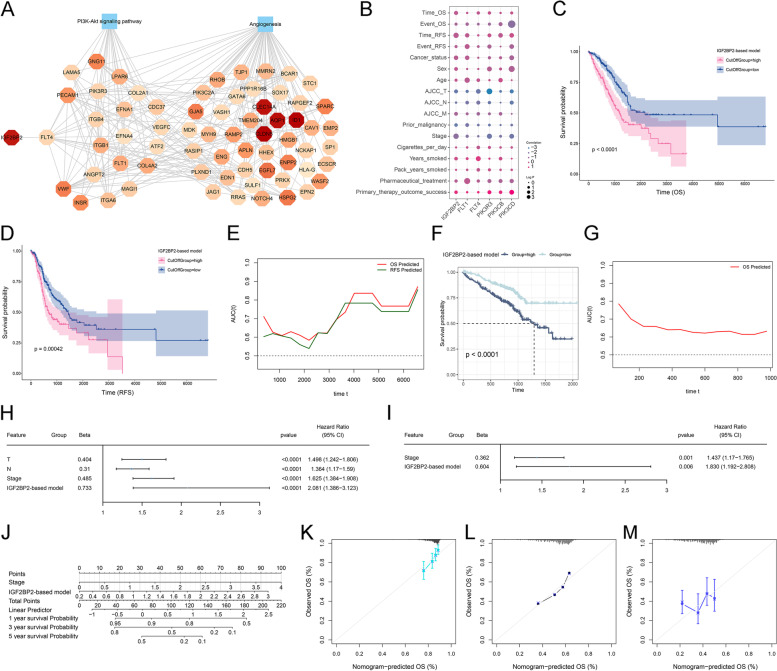
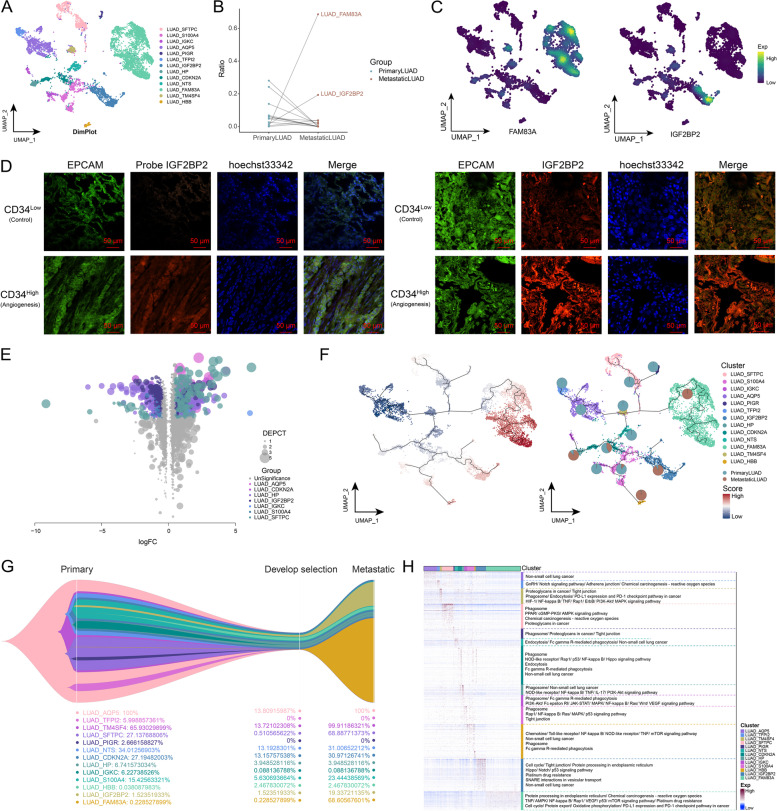
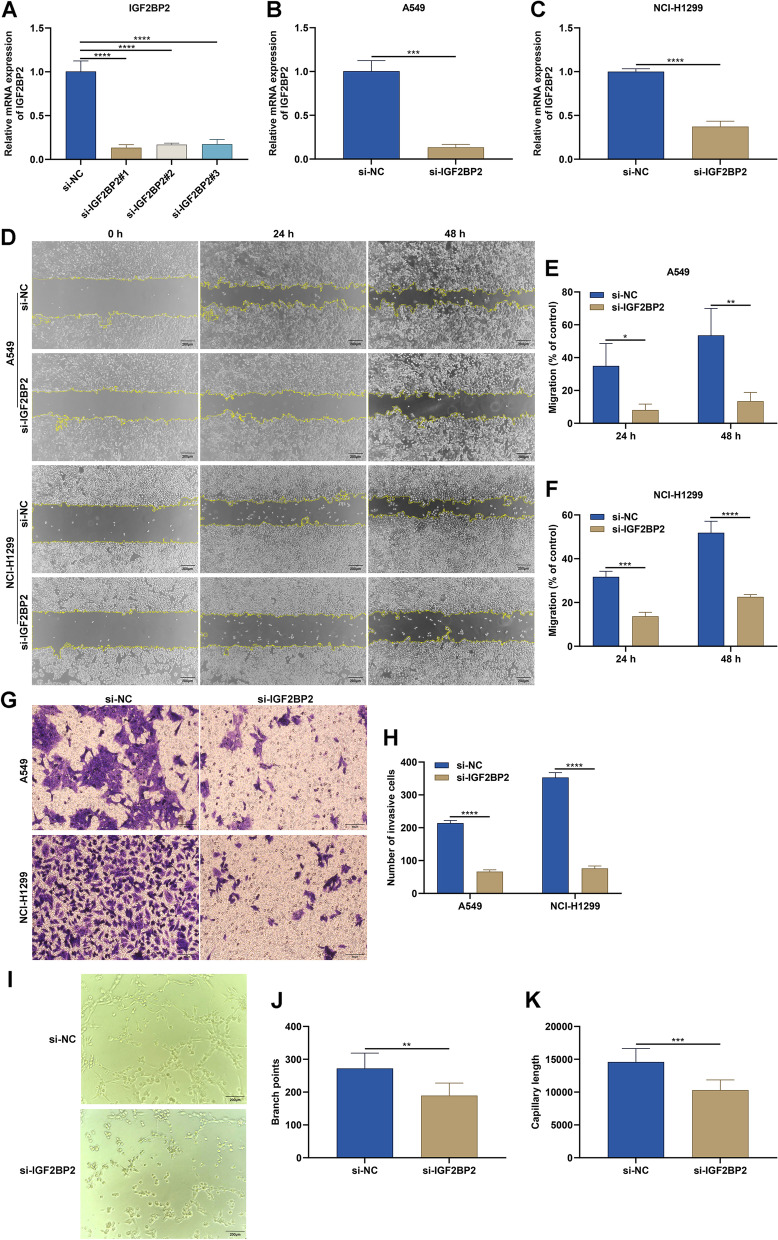
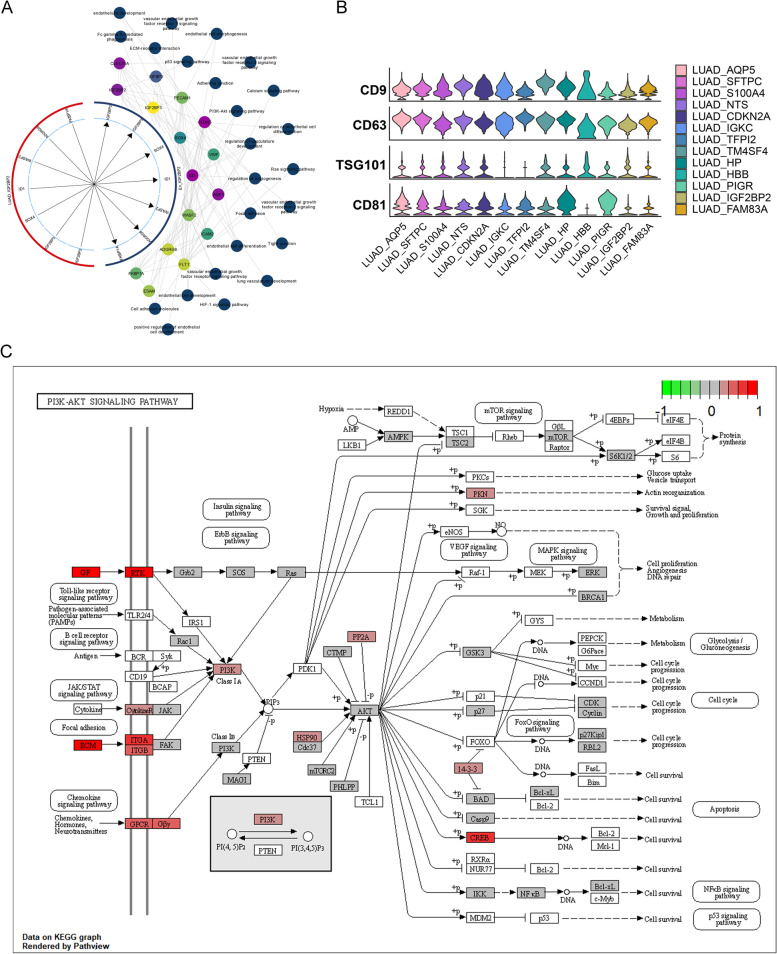
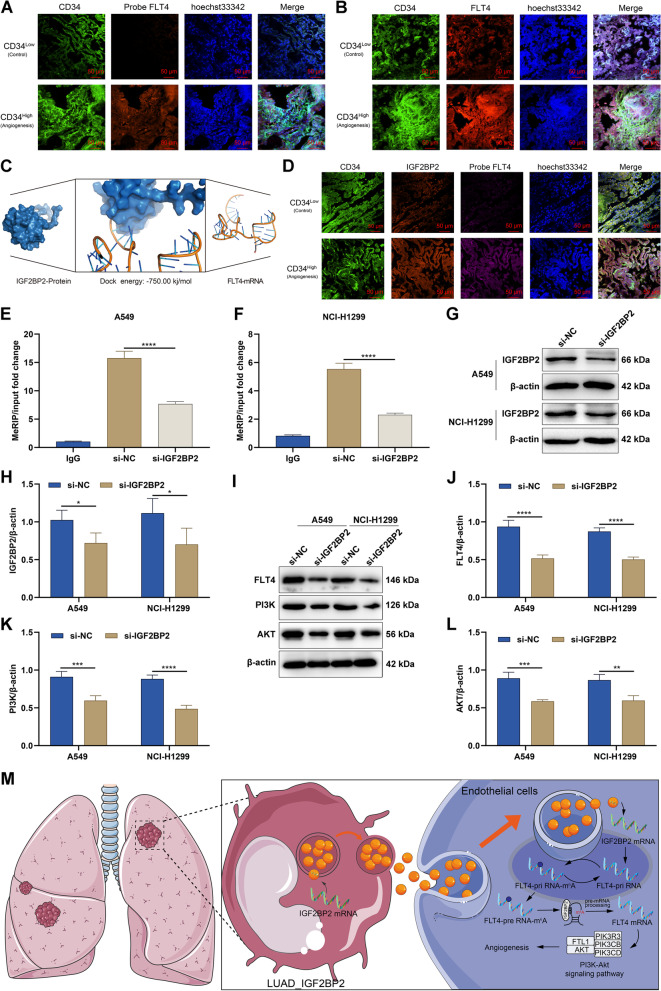
We constructed a global single-cell landscape of 93,610 cells from primary and metastatic LUAD and found that IGF2BP2 was specifically expressed both in a LUAD cell subpopulation (termed as LUAD_IGF2BP2), and an endothelial cell subpopulation (termed as En_IGF2BP2). The LUAD_IGF2BP2 subpopulation progressively formed and dominated the ecology of metastatic LUAD during metastatic evolution. IGF2BP2 was preferentially secreted by exosomes in the LUAD_IGF2BP2 subpopulation, which was absorbed by the En_IGF2BP2 subpopulation in the tumor microenvironment. Subsequently, IGF2BP2 improved the RNA stability of FLT4 through mA modification, thereby activating the PI3K-Akt signaling pathway, and eventually promoting angiogenesis and metastasis. Analysis of clinical data showed that IGF2BP2 was linked with poor overall survival and relapse-free survival for LUAD patients.
Overall, these findings provide a novel insight into the multicellular ecosystems of primary and metastatic LUAD, and demonstrate that a specific LUAD_IGF2BP2 subpopulation is a key orchestrator promoting angiogenesis and metastasis, with implications for the gene regulatory mechanisms of LUAD metastatic evolution, representing themselves as potential antiangiogenic targets.
肺腺癌(LUAD)是一种常见的肺癌类型,具有较高的转移风险,但转移的确切分子机制尚不清楚。
本研究从 GSE131907 数据集获得了 11 个远端正常肺组织、11 个原发性 LUAD 组织和 4 个转移性 LUAD 组织的单细胞转录组学图谱。以单细胞分辨率对肺多细胞生态系统进行了特征描述,并探讨了 LUAD 血管生成和转移的潜在机制。
我们构建了一个来自原发性和转移性 LUAD 的 93610 个细胞的全局单细胞图谱,发现 IGF2BP2 特异性表达于 LUAD 细胞亚群(称为 LUAD_IGF2BP2)和内皮细胞亚群(称为 En_IGF2BP2)。在转移性进化过程中,LUAD_IGF2BP2 亚群逐渐形成并主导转移性 LUAD 的生态系统。IGF2BP2 优先由 LUAD_IGF2BP2 亚群的外泌体分泌,然后被肿瘤微环境中的 En_IGF2BP2 亚群吸收。随后,IGF2BP2 通过 mA 修饰增强了 FLT4 的 RNA 稳定性,从而激活了 PI3K-Akt 信号通路,最终促进了血管生成和转移。对临床数据分析表明,IGF2BP2 与 LUAD 患者的总生存期和无复发生存期不良相关。
综上所述,这些发现为原发性和转移性 LUAD 的多细胞生态系统提供了新的见解,并表明一个特定的 LUAD_IGF2BP2 亚群是促进血管生成和转移的关键协调者,为 LUAD 转移进化的基因调控机制提供了新的认识,代表着它们可能成为潜在的抗血管生成靶点。