Niu Xing, Xu Jingping, Liu Jinwen, Chen Lijie, Qiao Xue, Zhong Ming
Department of Stomatology, Xiang'an Hospital of Xiamen University, Xiamen, China.
Department of Oral Histopathology, School and Hospital of Stomatology, China Medical University, Liaoning Province Key Laboratory of Oral Disease, Shenyang, China.
Front Oncol. 2020 Oct 14;10:556497. doi: 10.3389/fonc.2020.556497. eCollection 2020.
To comprehensively analyze the global N-methyladenosine (mA) modification pattern in ameloblastoma.
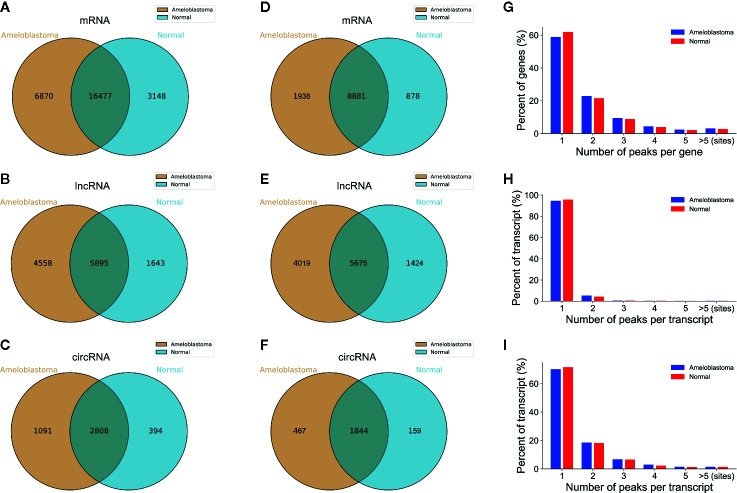
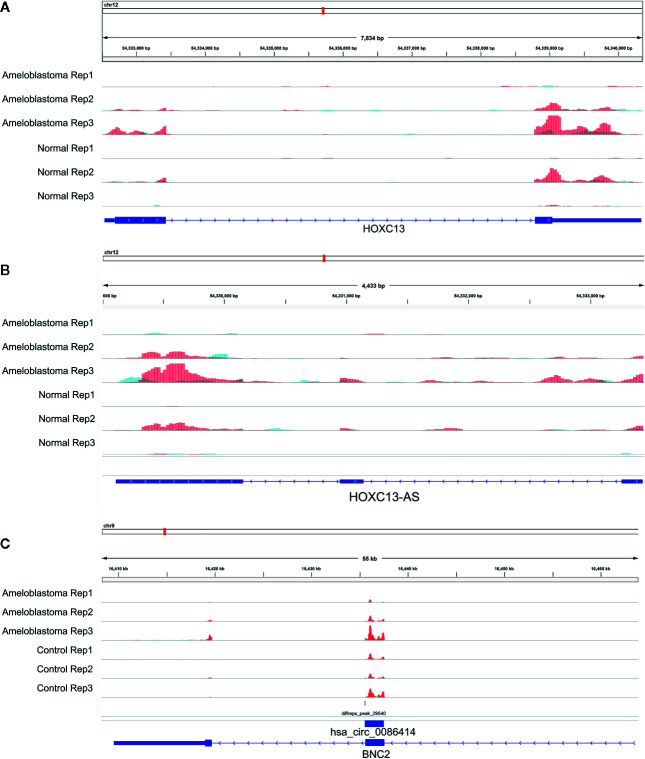
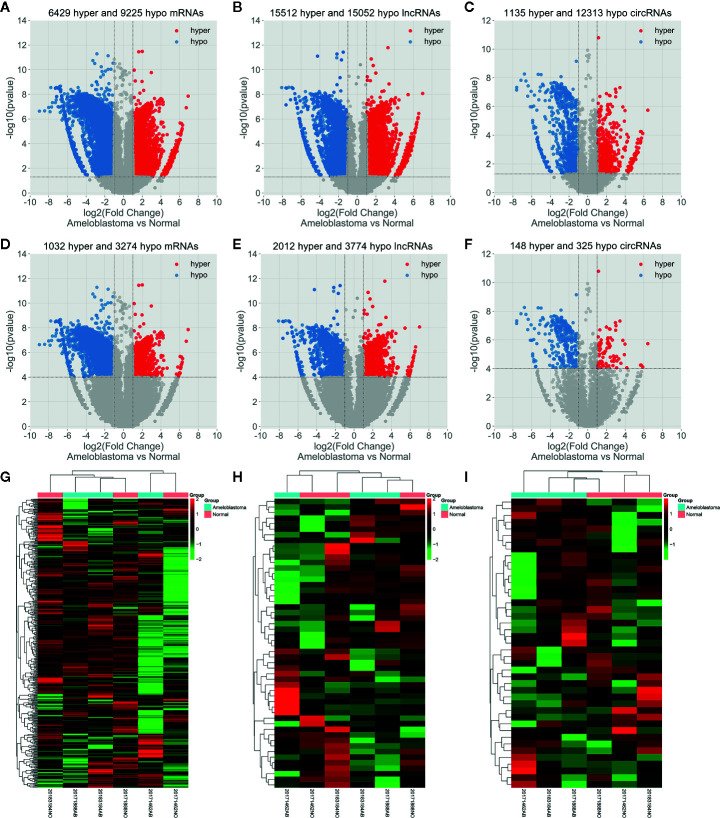
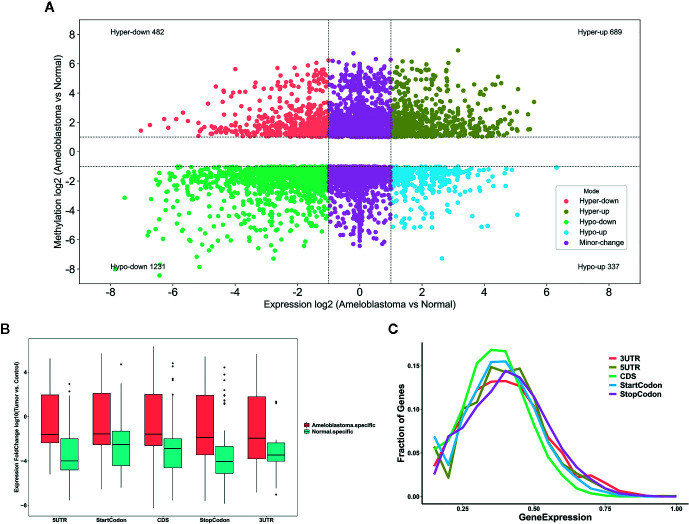
mA peaks in ameloblastoma and normal oral tissues were detected by MeRIP-seq. Differentially methylated mA sites within messenger RNAs (mRNAs), long no-coding RNA (lncRNAs) and circular RNA (circRNAs) were identified, followed by functional enrichment analysis. By comprehensively analyzing MeRIP-seq and RNA-seq data, differentially expressed mRNAs, lncRNAs and circRNAs containing differentially methylated sites were identified. RNA binding proteins (RBPs) were then identified for differentially methylated mA sites.
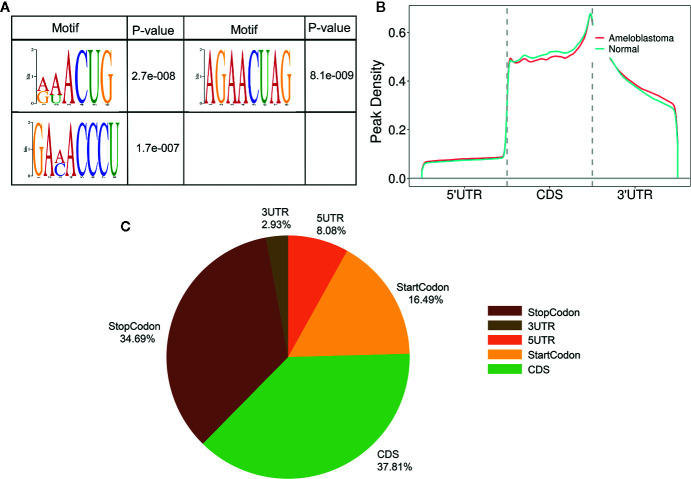
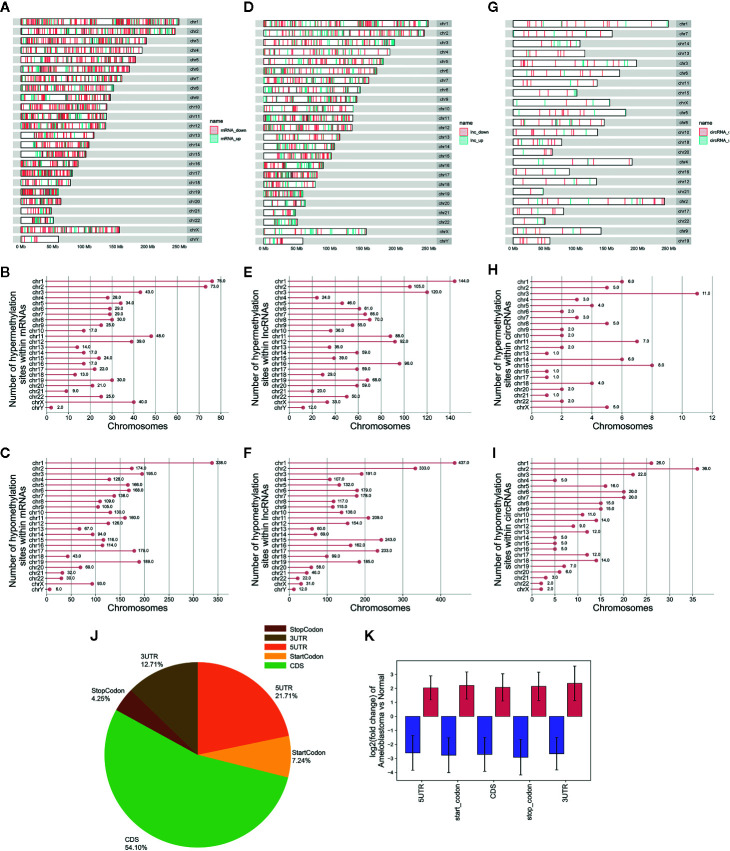
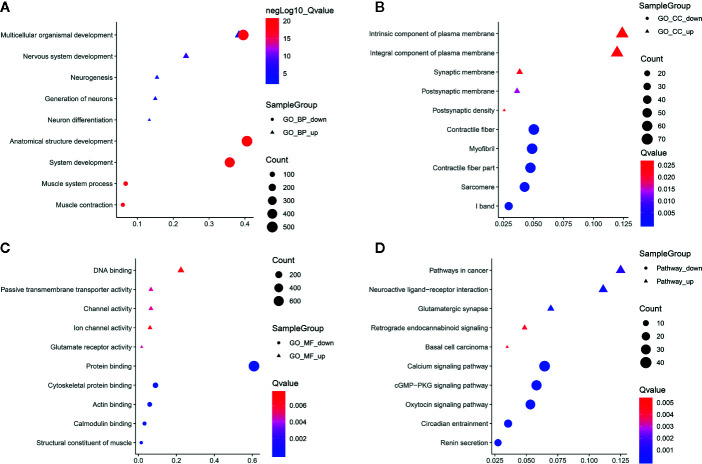
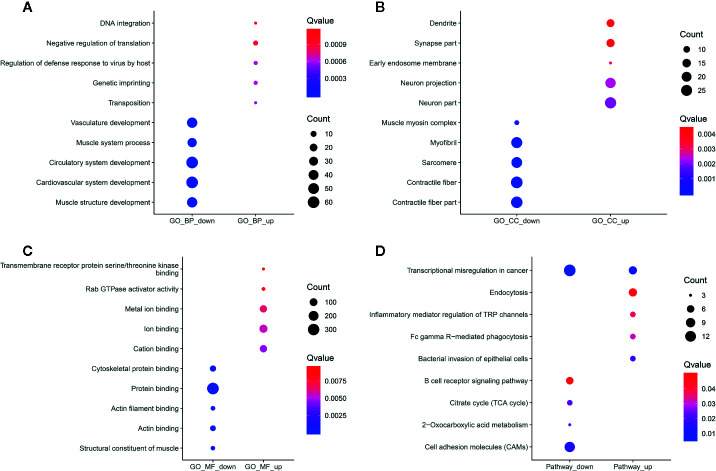
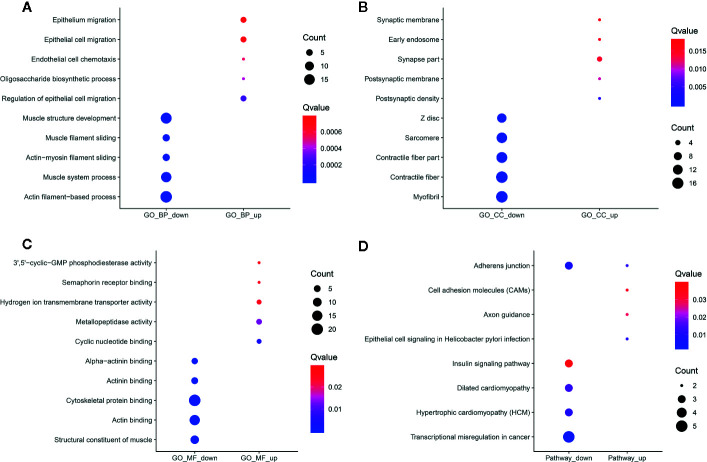
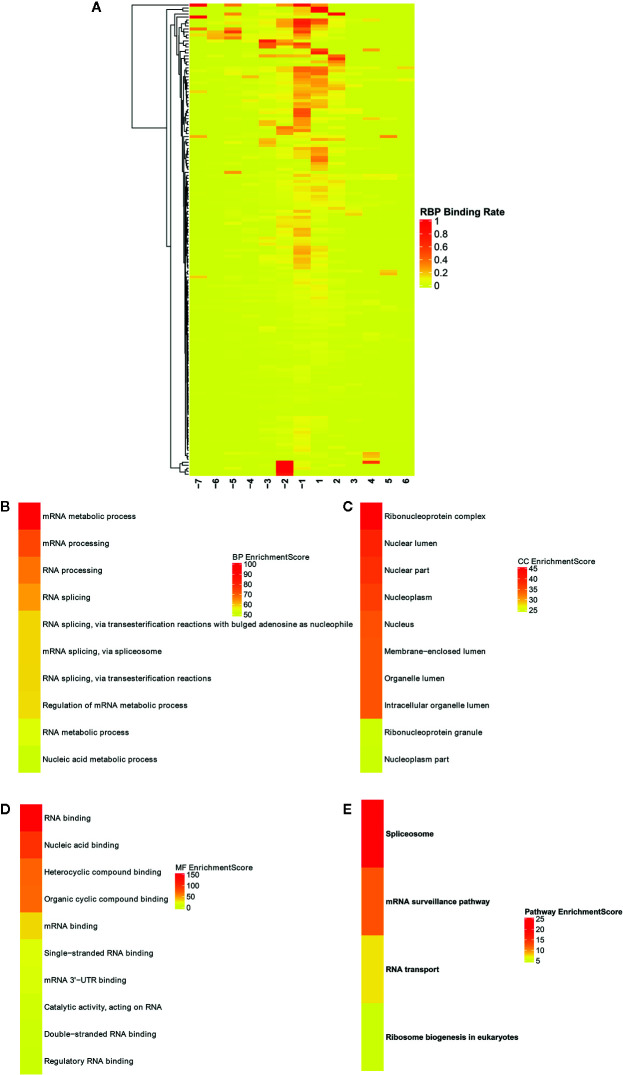
In total, 3,673 differentially methylated mA sites within coding genes were detected, of which 16.2% (704/3,673) were significantly upmethylated sites in ameloblastoma compared to normal oral tissues. Furthermore, 4,975 differentially methylated mA sites within lncRNAs were identified, of which 29.4% (1,465/4,975) were upmethylated sites in ameloblastoma. We also found 364 differentially methylated mA sites within circRNAs, of which 22.5% (82/364) were upmethylated sites in ameloblastoma. Differentially methylated mA was most often harbored in the CDS (54.10%), followed by 5'UTR (21.71%). Functional enrichment analysis revealed that mA modification could be involved in the development of ameloblastoma by organism developmental processes. A total of 158 RBPs within differentially methylated mA sites were identified, which were significantly involved in mRNA metabolic process, mRNA processing, RNA processing, RNA splicing and RNA transport.
Our findings for the first time provide mA landscape of human ameloblastoma, which expand the understanding of mA modifications and uncover regulation of lncRNAs and circRNAs through mA modification in ameloblastoma.
全面分析成釉细胞瘤中的全球N - 甲基腺苷(mA)修饰模式。
通过MeRIP - seq检测成釉细胞瘤和正常口腔组织中的mA峰。鉴定信使RNA(mRNA)、长链非编码RNA(lncRNA)和环状RNA(circRNA)内的差异甲基化mA位点,随后进行功能富集分析。通过综合分析MeRIP - seq和RNA - seq数据,鉴定包含差异甲基化位点的差异表达mRNA、lncRNA和circRNA。然后鉴定差异甲基化mA位点的RNA结合蛋白(RBP)。
总共检测到编码基因内3673个差异甲基化mA位点,其中与正常口腔组织相比,成釉细胞瘤中有16.2%(704/3673)的位点显著高甲基化。此外,在lncRNA中鉴定出4975个差异甲基化mA位点,其中成釉细胞瘤中有29.4%(1465/4975)的位点高甲基化。我们还在circRNA中发现了364个差异甲基化mA位点,其中成釉细胞瘤中有22.5%(82/364)的位点高甲基化。差异甲基化mA最常存在于编码序列(CDS,54.10%)中,其次是5'非翻译区(5'UTR,21.71%)。功能富集分析表明,mA修饰可能通过生物体发育过程参与成釉细胞瘤的发生发展。在差异甲基化mA位点共鉴定出158个RBP,它们显著参与mRNA代谢过程、mRNA加工、RNA加工、RNA剪接和RNA转运。
我们的研究结果首次提供了人类成釉细胞瘤的mA图谱,扩展了对mA修饰的理解,并揭示了成釉细胞瘤中通过mA修饰对lncRNA和circRNA的调控。