Data Science Institute, I-BioStat, Hasselt University, BE-3500, Hasselt, Belgium.
I-BioStat, Katholieke Universiteit Leuven, BE-3000, Leuven, Belgium.
BMC Infect Dis. 2023 Jun 24;23(1):428. doi: 10.1186/s12879-023-08368-9.
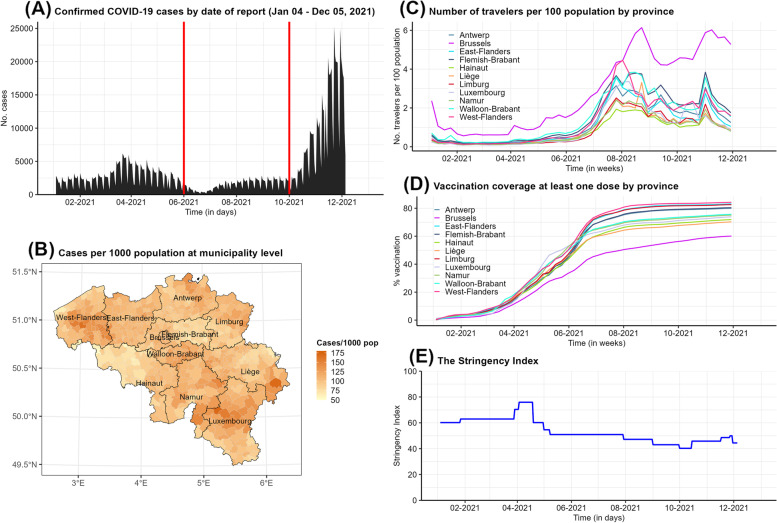
The Severe Acute Respiratory Syndrome Coronavirus 2 (SARS-CoV-2) has rapidly spread over the world and caused tremendous impacts on global health. Understanding the mechanism responsible for the spread of this pathogen and the impact of specific factors, such as human mobility, will help authorities to tailor interventions for future SARS-CoV-2 waves or newly emerging airborne infections. In this study, we aim to analyze the spatio-temporal transmission of SARS-CoV-2 in Belgium at municipality level between January and December 2021 and explore the effect of different levels of human travel on disease incidence through the use of counterfactual scenarios.
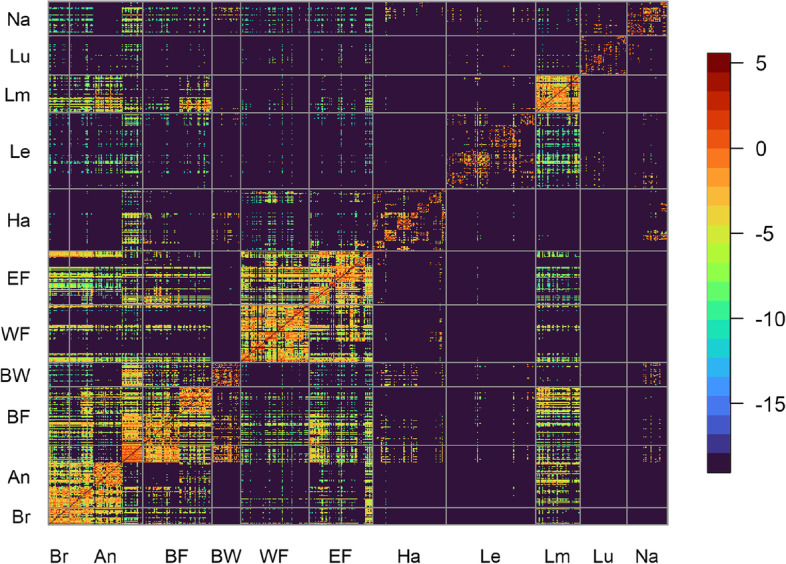
We applied the endemic-epidemic modelling framework, in which the disease incidence decomposes into endemic, autoregressive and neighbourhood components. The spatial dependencies among areas are adjusted based on actual connectivity through mobile network data. We also took into account other important factors such as international mobility, vaccination coverage, population size and the stringency of restriction measures.
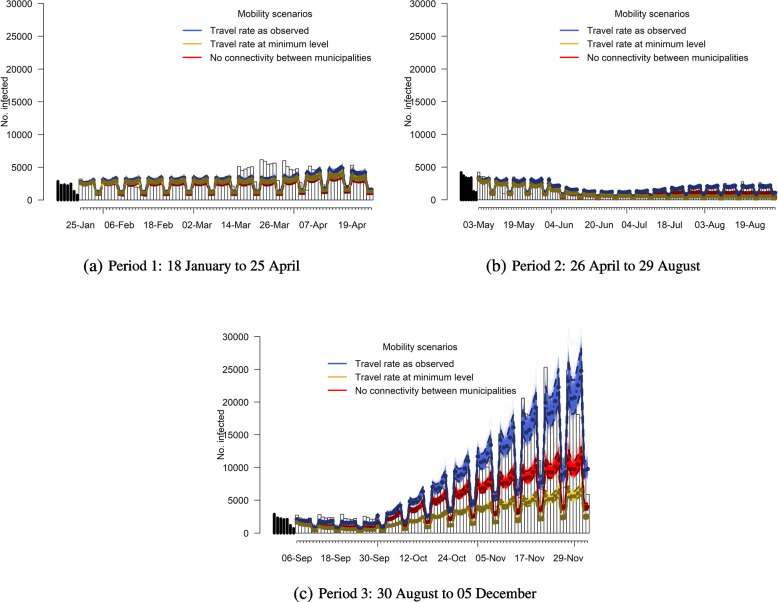
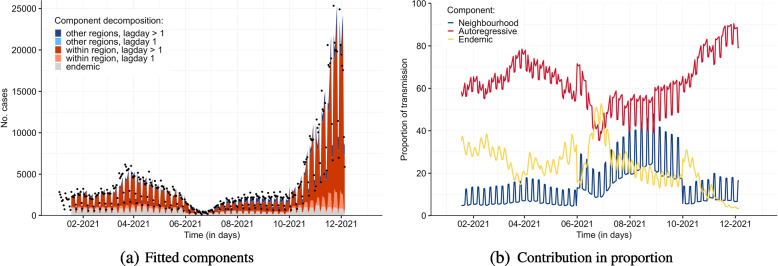
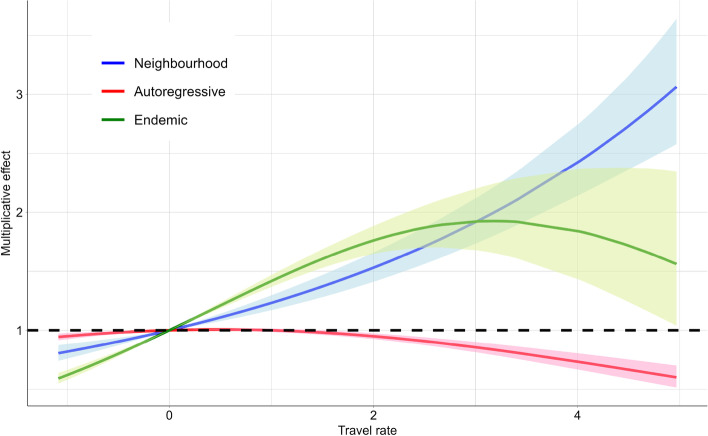
The results demonstrate the aggravating effect of international travel on the incidence, and simulated counterfactual scenarios further stress the alleviating impact of a reduction in national and international travel on epidemic growth. It is also clear that local transmission contributed the most during 2021, and municipalities with a larger population tended to attract a higher number of cases from neighboring areas.
Although transmission between municipalities was observed, local transmission was dominant. We highlight the positive association between the mobility data and the infection spread over time. Our study provides insight to assist health authorities in decision-making, particularly when the disease is airborne and therefore likely influenced by human movement.
严重急性呼吸系统综合征冠状病毒 2 型(SARS-CoV-2)在全球迅速传播,对全球健康造成了巨大影响。了解导致该病原体传播的机制以及特定因素(如人类流动性)的影响,将有助于当局针对未来 SARS-CoV-2 波或新出现的空气传播感染制定干预措施。在这项研究中,我们旨在分析 2021 年 1 月至 12 月比利时市县级 SARS-CoV-2 的时空传播情况,并通过使用反事实情景探索不同水平的人类旅行对疾病发病率的影响。
我们应用了地方病-流行病建模框架,其中疾病发病率分解为地方病、自回归和邻域成分。通过移动网络数据调整区域之间的实际连通性来调整空间依赖性。我们还考虑了其他重要因素,如国际流动性、疫苗接种覆盖率、人口规模和限制措施的严格程度。
结果表明国际旅行对发病率有加重作用,模拟的反事实情景进一步强调了减少国内和国际旅行对疫情增长的缓解作用。很明显,2021 年期间本地传播最为严重,人口较多的城市倾向于吸引来自邻近地区的更多病例。
尽管观察到城市之间的传播,但本地传播占主导地位。我们强调了随时间推移移动数据与感染传播之间的正相关关系。我们的研究为协助卫生当局做出决策提供了深入了解,特别是在疾病是空气传播并且可能受人类移动影响时。