Fisher Jennifer L, Clark Amanda D, Jones Emma F, Lasseigne Brittany N
Department of Cell, Developmental and Integrative Biology, Heersink School of Medicine, The University of Alabama at Birmingham, Birmingham, Alabama, 35294, USA.
bioRxiv. 2023 Nov 15:2023.05.23.541950. doi: 10.1101/2023.05.23.541950.
Previous pharmacovigilance studies and a retroactive review of cancer clinical trial studies identified that women were more likely to experience drug adverse events (i.e., any unintended effects of medication), and men were more likely to experience adverse events that resulted in hospitalization or death. These sex-biased adverse events (SBAEs) are due to many factors not entirely understood, including differences in body mass, hormones, pharmacokinetics, and liver drug metabolism enzymes and transporters.
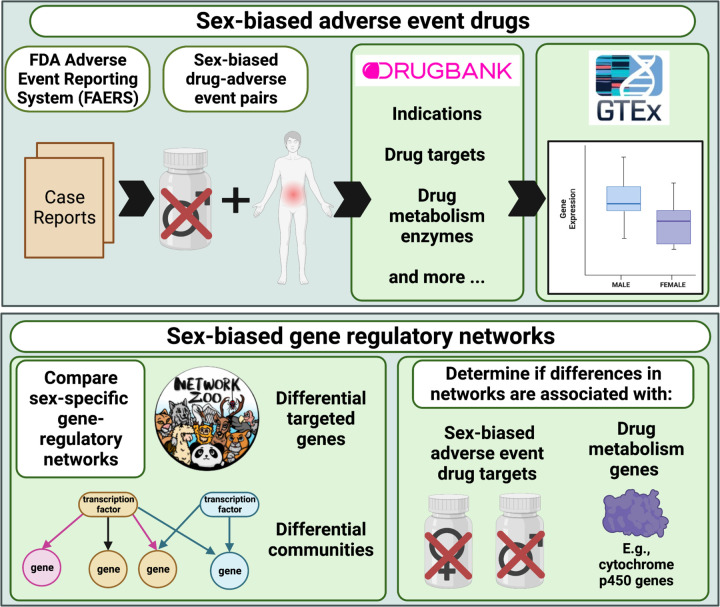
We first identified drugs associated with SBAEs from the FDA Adverse Event Reporting System (FAERS) database. Next, we evaluated sex-specific gene expression of the known drug targets and metabolism enzymes for those SBAE-associated drugs. We also constructed sex-specific tissue gene-regulatory networks to determine if these known drug targets and metabolism enzymes from the SBAE-associated drugs had sex-specific gene-regulatory network properties and predicted regulatory relationships.
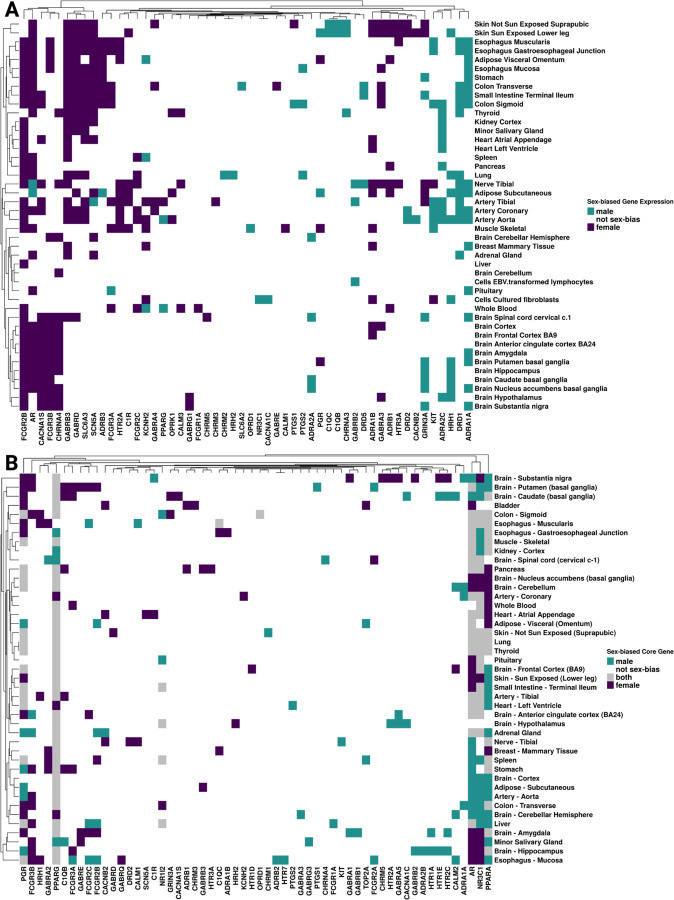
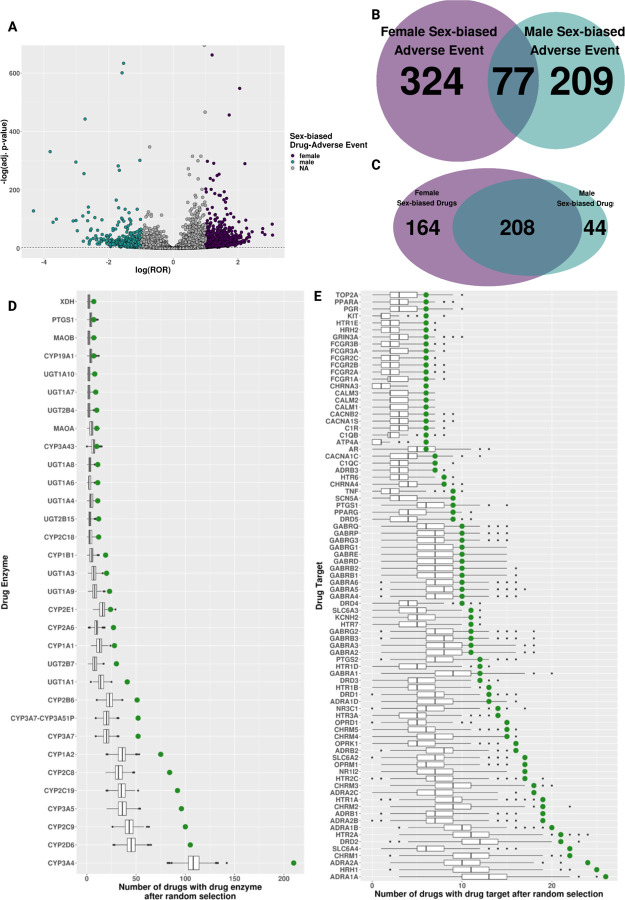
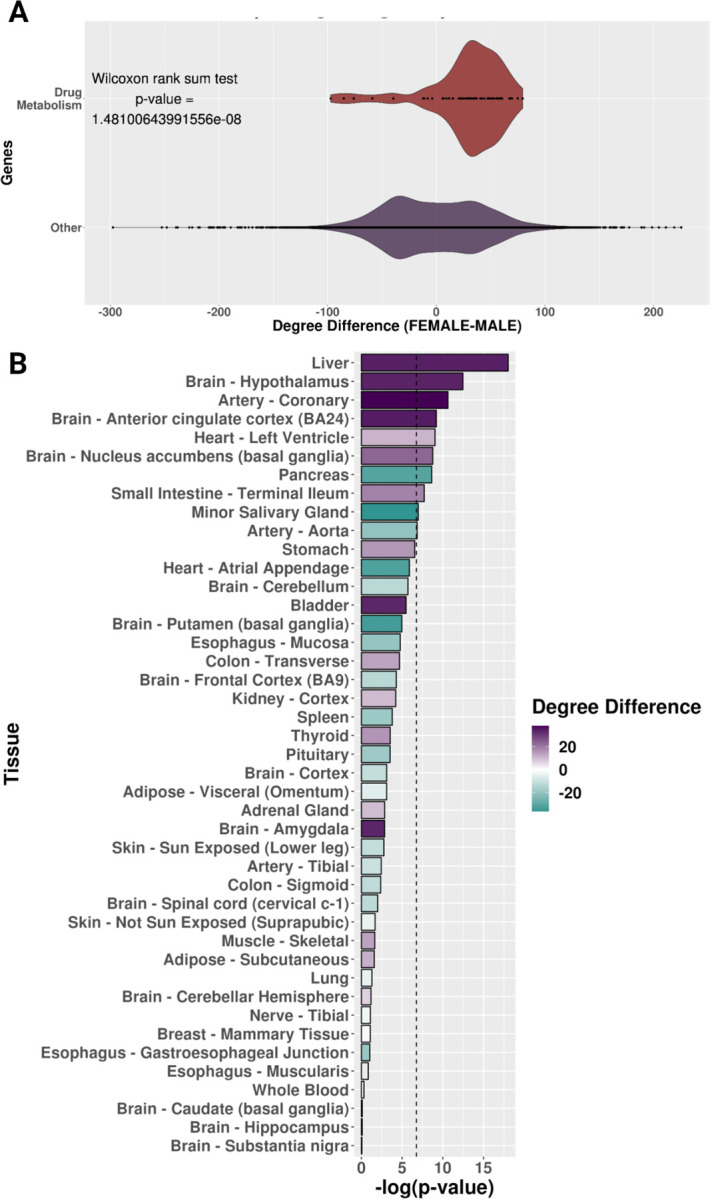
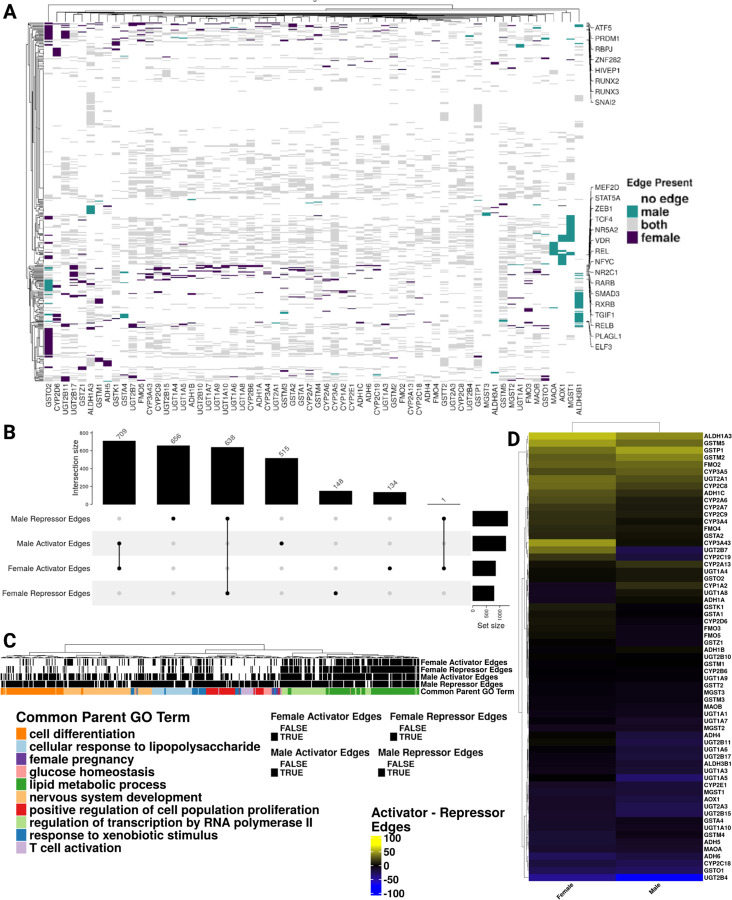
We identified liver-specific gene-regulatory differences for drug metabolism genes between males and females, which could explain observed sex differences in pharmacokinetics and pharmacodynamics. In addition, we found that ~85% of SBAE-associated drug targets had sex-biased gene expression or were core genes of sex- and tissue-specific network communities, significantly higher than randomly selected drug targets. Lastly, we provide the sex-biased drug-adverse event pairs, drug targets, and drug metabolism enzymes as a resource for the research community.
Overall, we provide evidence that many SBAEs are associated with drug targets and drug metabolism genes that are differentially expressed and regulated between males and females. These SBAE-associated drug metabolism enzymes and drug targets may be useful for future studies seeking to explain or predict SBAEs.
先前的药物警戒研究以及对癌症临床试验研究的追溯性审查发现,女性更有可能经历药物不良事件(即药物的任何意外作用),而男性更有可能经历导致住院或死亡的不良事件。这些性别偏向性不良事件(SBAEs)是由许多尚未完全了解的因素引起的,包括体重、激素、药代动力学以及肝脏药物代谢酶和转运蛋白的差异。
我们首先从美国食品药品监督管理局不良事件报告系统(FAERS)数据库中识别出与SBAEs相关的药物。接下来,我们评估了这些与SBAE相关药物的已知药物靶点和代谢酶的性别特异性基因表达。我们还构建了性别特异性组织基因调控网络,以确定这些与SBAE相关药物的已知药物靶点和代谢酶是否具有性别特异性基因调控网络特性并预测调控关系。
我们发现男性和女性之间药物代谢基因存在肝脏特异性基因调控差异,这可以解释观察到的药代动力学和药效学方面的性别差异。此外,我们发现约85%与SBAE相关的药物靶点具有性别偏向性基因表达,或者是性别和组织特异性网络群落的核心基因,显著高于随机选择的药物靶点。最后,我们提供了性别偏向性药物不良事件对、药物靶点和药物代谢酶,作为研究界的资源。
总体而言,我们提供的证据表明,许多SBAEs与男性和女性之间差异表达和调控的药物靶点及药物代谢基因有关。这些与SBAE相关的药物代谢酶和药物靶点可能对未来旨在解释或预测SBAEs的研究有用。