Klarman Cell Observatory, Broad Institute of MIT and Harvard, Cambridge, MA 02142, USA.
The Broad Institute of MIT and Harvard, Cambridge, MA 02142, USA.
Science. 2022 May 13;376(6594):eabl4290. doi: 10.1126/science.abl4290.
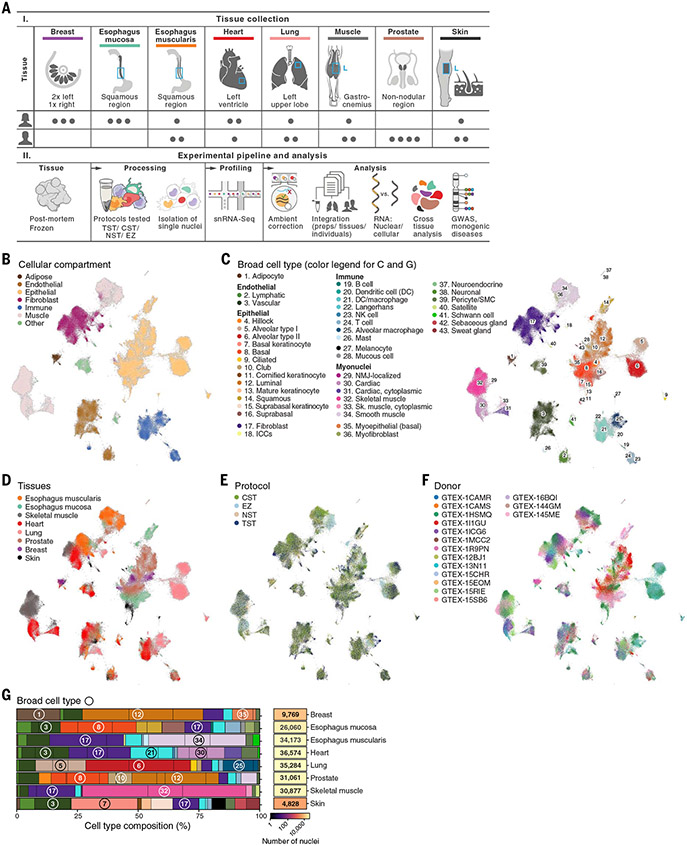
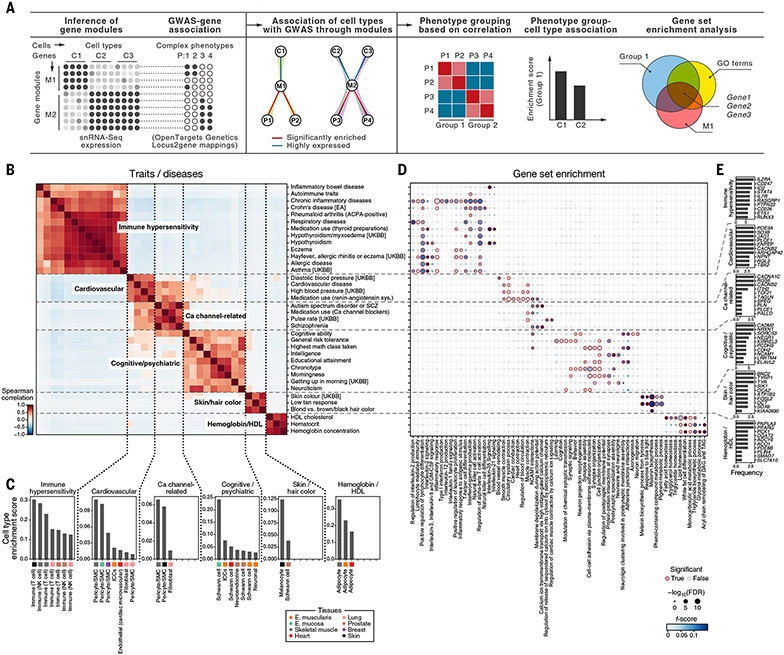
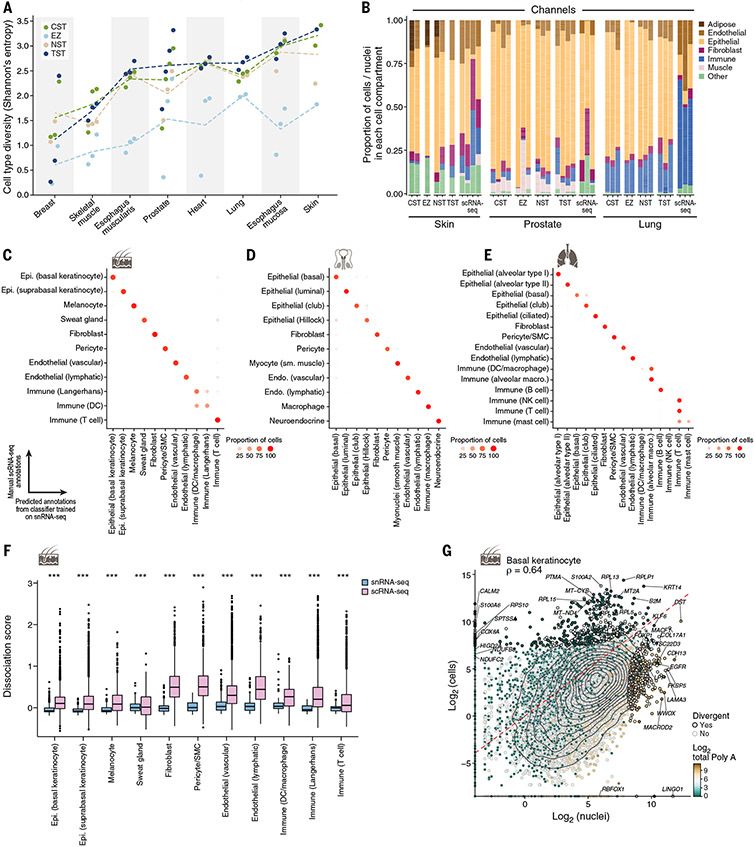
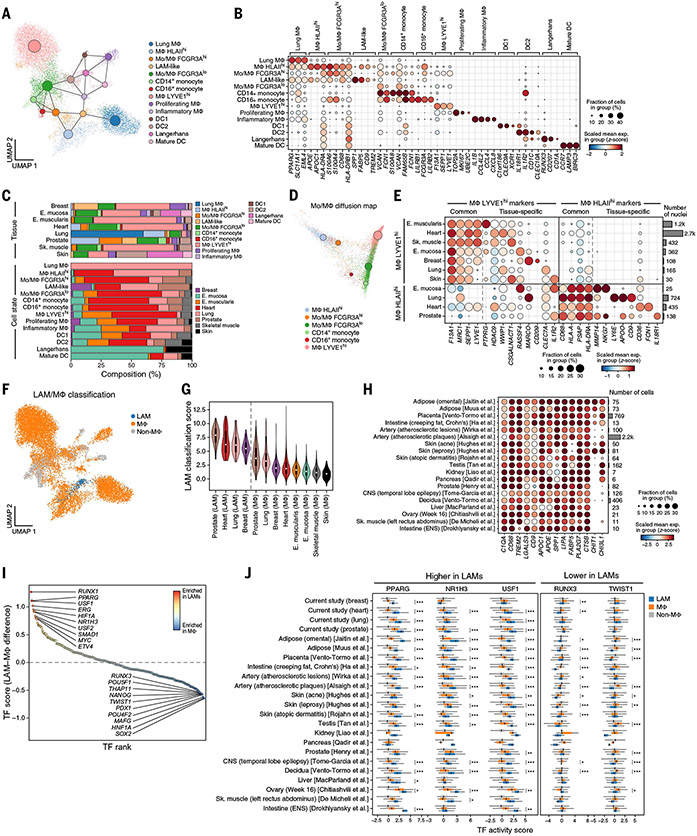
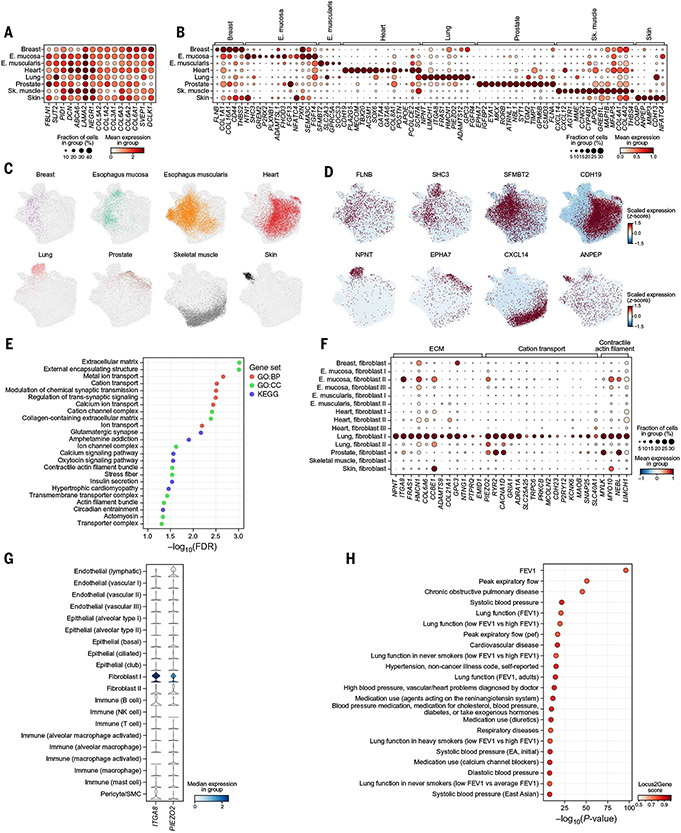
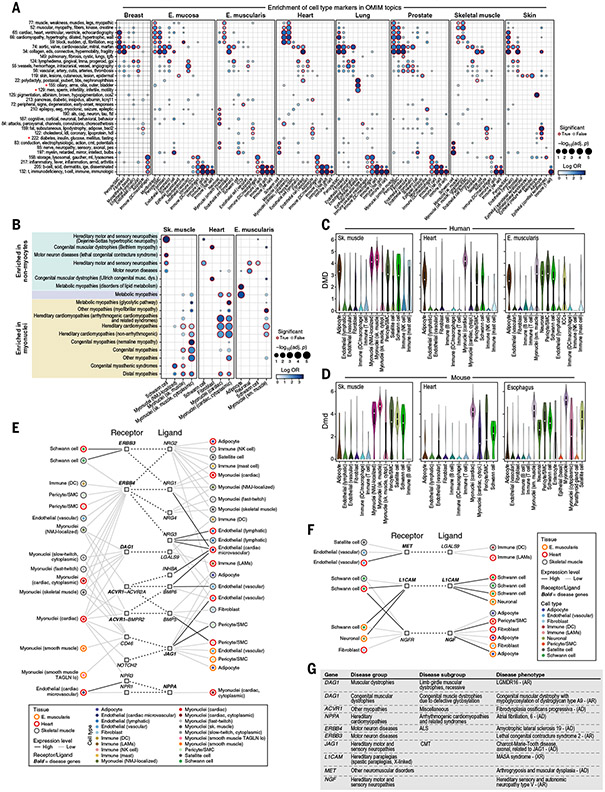
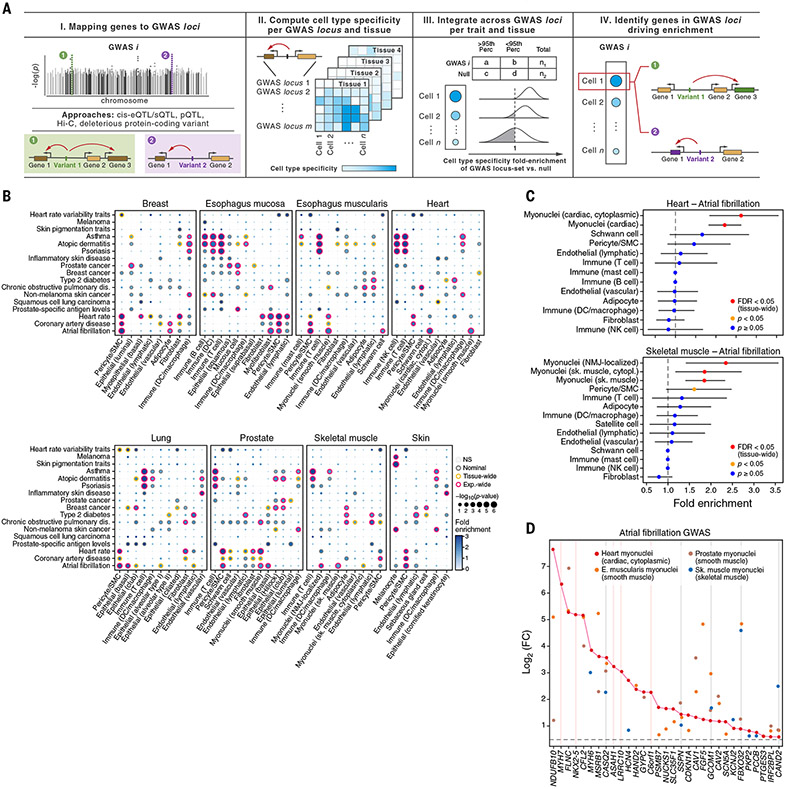
Understanding gene function and regulation in homeostasis and disease requires knowledge of the cellular and tissue contexts in which genes are expressed. Here, we applied four single-nucleus RNA sequencing methods to eight diverse, archived, frozen tissue types from 16 donors and 25 samples, generating a cross-tissue atlas of 209,126 nuclei profiles, which we integrated across tissues, donors, and laboratory methods with a conditional variational autoencoder. Using the resulting cross-tissue atlas, we highlight shared and tissue-specific features of tissue-resident cell populations; identify cell types that might contribute to neuromuscular, metabolic, and immune components of monogenic diseases and the biological processes involved in their pathology; and determine cell types and gene modules that might underlie disease mechanisms for complex traits analyzed by genome-wide association studies.
理解基因在稳态和疾病中的功能和调控需要了解基因表达的细胞和组织背景。在这里,我们应用了四种单细胞 RNA 测序方法,对来自 16 个供体和 25 个样本的八种不同的、存档的冷冻组织类型进行了分析,生成了 209126 个核谱的跨组织图谱,我们通过条件变分自动编码器对这些数据进行了跨组织、供体和实验室方法的整合。利用生成的跨组织图谱,我们突出了组织驻留细胞群体的共享和组织特异性特征;确定了可能导致单基因疾病的神经肌肉、代谢和免疫成分以及涉及它们病理的生物学过程的细胞类型;并确定了可能为全基因组关联研究分析的复杂特征疾病机制的细胞类型和基因模块。