Iliuță Luminita, Andronesi Andreea Gabriella, Rac-Albu Marius, Furtunescu Florentina Ligia, Rac-Albu Mădălina-Elena, Scafa-Udriște Alexandru, Moldovan Horațiu, Panaitescu Eugenia
Medical Informatics and Biostatistics Department, University of Medicine and Pharmacy "Carol Davila", 050474 Bucharest, Romania.
Cardioclass Clinic for Cardiovascular Disease, 031125 Bucharest, Romania.
Healthcare (Basel). 2023 Jun 12;11(12):1727. doi: 10.3390/healthcare11121727.
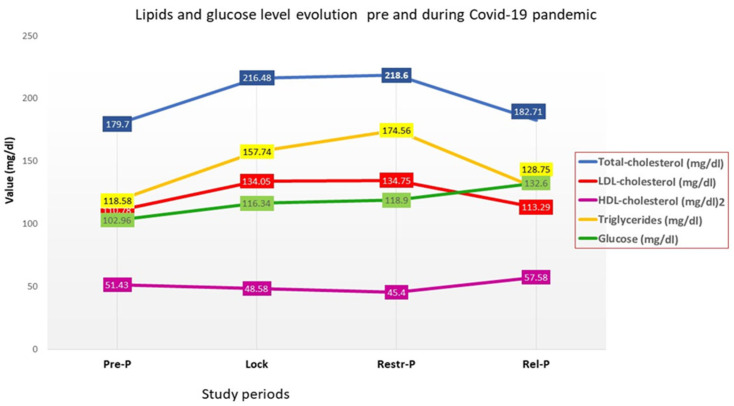
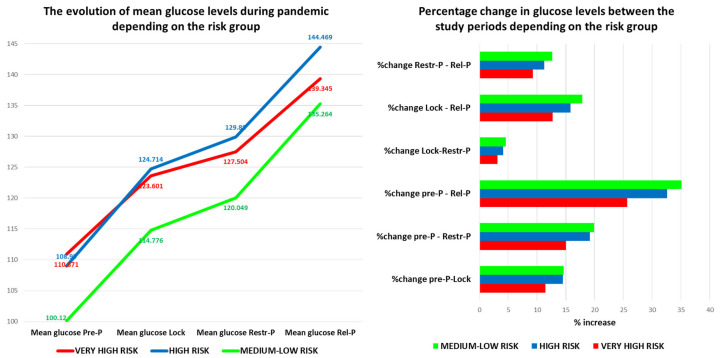
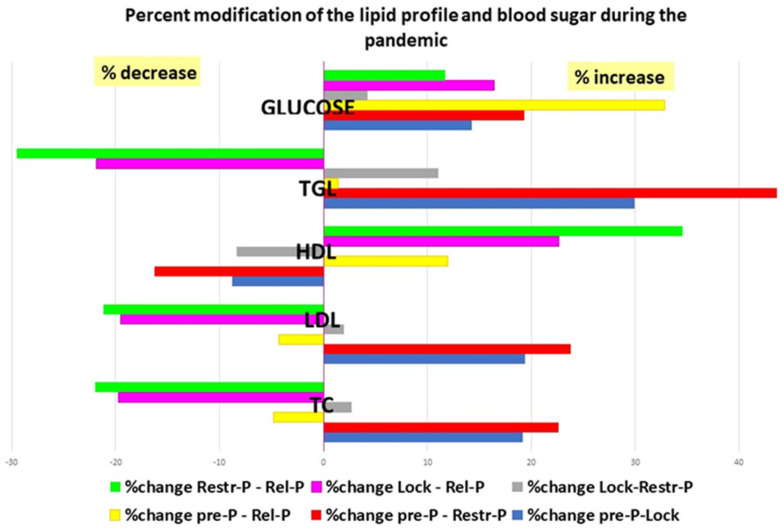
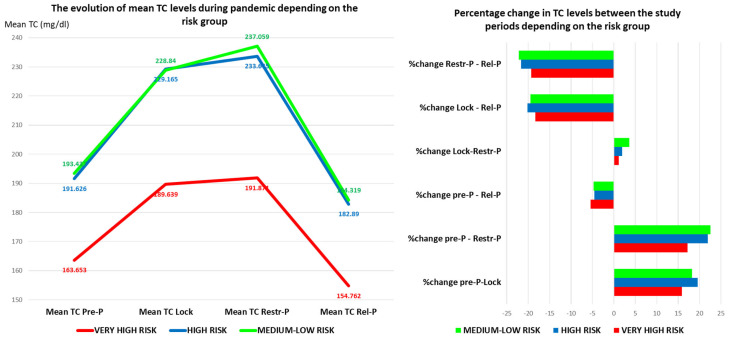
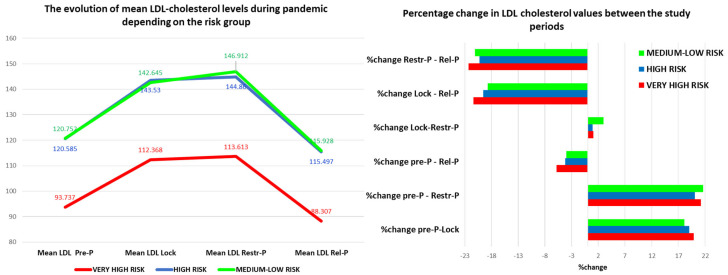
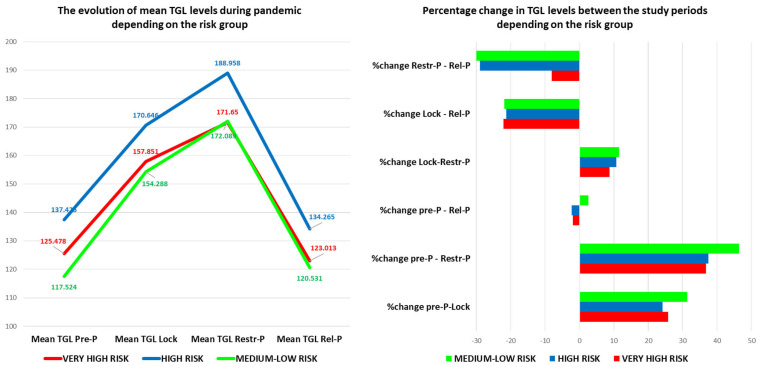
(1) Background: Cardiovascular prevention was left in second place during the COVID-19 pandemic and the use of telemedicine turned out to be very useful. We aimed to evaluate the effectiveness of a telemedicine application for remote monitoring and treatment adjustments in terms of improving cardiovascular prevention. (2) Methods: A prospective study of 3439 patients evaluated between the 1st of March 2019 and the 1st of March 2022, in the pre-pandemic period by face-to-face visits and during the pandemic by teleconsultations or hybrid follow-up. We compared four periods: pre-pandemic-Pre-P (1 March 2019-1 March 2020), lockdown-Lock (1 March-1 September 2020), restrictive-pandemic-Restr-P (1 September 2020-1 March 2021), and relaxed-pandemic-Rel-P (1 March 2021-1 March 2022). (3) Results: The average values of total cholesterol (TC), LDL cholesterol, triglycerides, uric acid, and glucose had an increasing trend during Lock and Restr-P, and they decreased close to the baseline level during the Rel-P, with the exception of glucose which remained elevated in Rel-P. The number of patients with newly discovered DM increased significantly in the Rel-P, and 79.5% of them had mild/moderate forms of COVID-19. During Lock and Res-P, the percentage of obese, smoking, or hypertensive patients increased, but probably through the use of telemedicine, we managed to reduce it, although it remained slightly higher than the pre-pandemic level. Physical activity decreased in the first year of the pandemic, but in Rel-P people became more active than before the pandemic. (4) Conclusions: The use of telemedicine for cardiovascular prevention seems to yield favorable results, especially for secondary prevention in the very high-risk group and during the second year.
(1)背景:在新冠疫情期间,心血管疾病预防被置于次要地位,而远程医疗的应用证明非常有用。我们旨在评估一种远程医疗应用在改善心血管疾病预防方面进行远程监测和治疗调整的有效性。(2)方法:对2019年3月1日至2022年3月1日期间评估的3439例患者进行前瞻性研究,在疫情前通过面对面就诊,在疫情期间通过远程会诊或混合随访。我们比较了四个时期:疫情前-Pre-P(2019年3月1日至2020年3月1日)、封锁期-Lock(2020年3月1日至9月1日)、疫情限制期-Restr-P(2020年9月1日至2021年3月1日)和疫情缓解期-Rel-P(2021年3月1日至2022年3月1日)。(3)结果:总胆固醇(TC)、低密度脂蛋白胆固醇、甘油三酯、尿酸和血糖的平均值在Lock和Restr-P期间呈上升趋势,在Rel-P期间降至接近基线水平,但血糖在Rel-P期间仍居高不下。新发现糖尿病患者的数量在Rel-P期间显著增加,其中79.5%患有轻度/中度新冠。在Lock和Res-P期间,肥胖、吸烟或高血压患者的比例增加,但可能通过远程医疗的使用,我们设法降低了这一比例,尽管仍略高于疫情前水平。疫情第一年身体活动减少,但在Rel-P期间人们比疫情前更加活跃。(4)结论:使用远程医疗进行心血管疾病预防似乎产生了良好效果,特别是对于极高风险组的二级预防以及在第二年。