
代谢紊乱及其他领域中的高密度脂蛋白:一个充满挑战与机遇的全新激动人心的世界。
High-Density Lipoprotein in Metabolic Disorders and Beyond: An Exciting New World Full of Challenges and Opportunities.
作者信息
Zvintzou Evangelia, Xepapadaki Eva, Skroubis George, Mparnia Victoria, Giannatou Katerina, Benabdellah Karim, Kypreos Kyriakos E
机构信息
Department of Pharmacology, School of Medicine, University of Patras, Rio Achaias, 26500 Patras, Greece.
Morbid Obesity Unit, Department of Surgery, School of Medicine, University of Patras, Rio Achaias, 26500 Patras, Greece.
出版信息
Pharmaceuticals (Basel). 2023 Jun 8;16(6):855. doi: 10.3390/ph16060855.
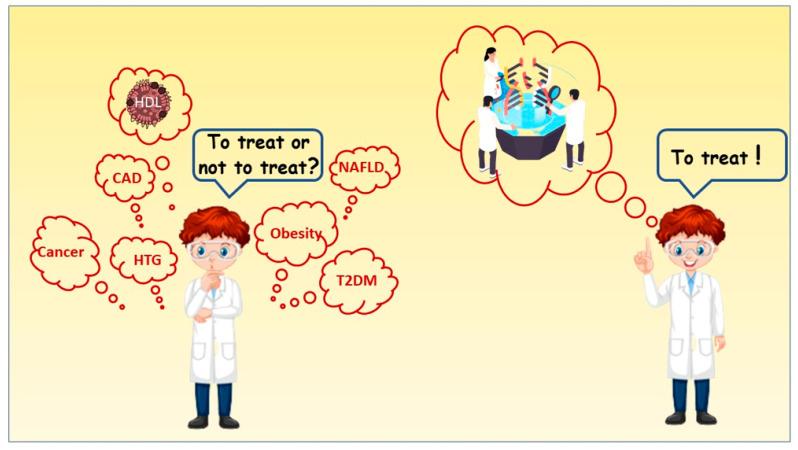
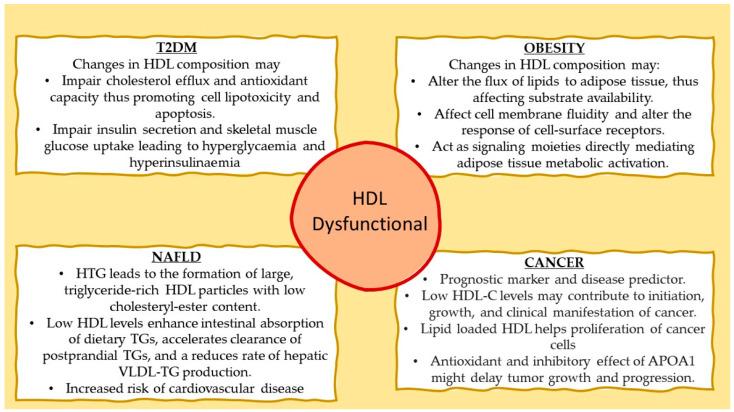
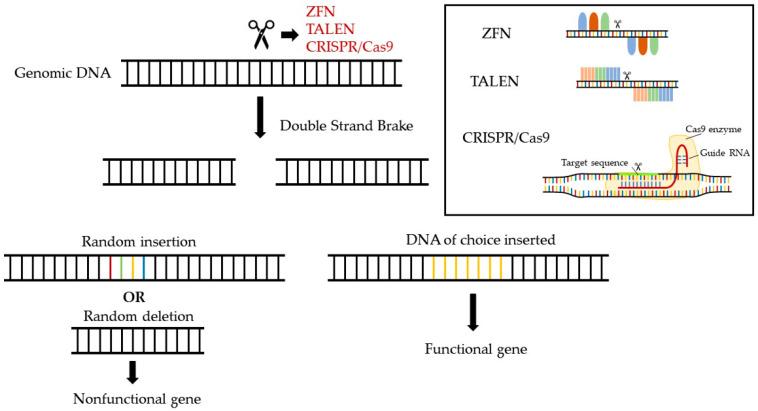
High-density lipoprotein (HDL) is an enigmatic member of the plasma lipid and lipoprotein transport system, best known for its ability to promote the reverse cholesterol efflux and the unloading of excess cholesterol from peripheral tissues. More recently, data in experimental mice and humans suggest that HDL may play important novel roles in other physiological processes associated with various metabolic disorders. Important parameters in the HDL functions are its apolipoprotein and lipid content, further reinforcing the principle that HDL structure defines its functionality. Thus, based on current evidence, low levels of HDL-cholesterol (HDL-C) or dysfunctional HDL particles contribute to the development of metabolic diseases such as morbid obesity, type 2 diabetes mellitus, and nonalcoholic fatty liver disease. Interestingly, low levels of HDL-C and dysfunctional HDL particles are observed in patients with multiple myeloma and other types of cancer. Therefore, adjusting HDL-C levels within the optimal range and improving HDL particle functionality is expected to benefit such pathological conditions. The failure of previous clinical trials testing various HDL-C-raising pharmaceuticals does not preclude a significant role for HDL in the treatment of atherosclerosis and related metabolic disorders. Those trials were designed on the principle of "the more the better", ignoring the U-shape relationship between HDL-C levels and morbidity and mortality. Thus, many of these pharmaceuticals should be retested in appropriately designed clinical trials. Novel gene-editing-based pharmaceuticals aiming at altering the apolipoprotein composition of HDL are expected to revolutionize the treatment strategies, improving the functionality of dysfunctional HDL.
高密度脂蛋白(HDL)是血浆脂质和脂蛋白转运系统中一个神秘的成员,因其促进胆固醇逆向转运以及从外周组织清除过量胆固醇的能力而广为人知。最近,实验小鼠和人类的数据表明,HDL可能在与各种代谢紊乱相关的其他生理过程中发挥重要的新作用。HDL功能的重要参数是其载脂蛋白和脂质含量,这进一步强化了HDL结构决定其功能的原则。因此,根据目前的证据,低水平的高密度脂蛋白胆固醇(HDL-C)或功能失调的HDL颗粒会导致代谢性疾病的发生,如病态肥胖、2型糖尿病和非酒精性脂肪性肝病。有趣的是,在多发性骨髓瘤和其他类型癌症患者中也观察到低水平的HDL-C和功能失调的HDL颗粒。因此,将HDL-C水平调整到最佳范围并改善HDL颗粒功能有望改善这些病理状况。此前测试各种升高HDL-C药物的临床试验失败,并不能排除HDL在治疗动脉粥样硬化和相关代谢紊乱中发挥重要作用。那些试验是基于“越多越好”的原则设计的,忽略了HDL-C水平与发病率和死亡率之间的U型关系。因此,许多这类药物应该在设计合理的临床试验中重新进行测试。旨在改变HDL载脂蛋白组成的新型基因编辑药物有望彻底改变治疗策略,改善功能失调的HDL的功能。
 Zotero 插件