Neuroscience Program, Center for Applied Medical Research (CIMA), Universidad de Navarra, 31008 Pamplona, Spain.
Neuroscience Department, University of the Basque Country (UPV/EHU), 48940 Leioa, Spain.
Brain. 2023 Dec 1;146(12):4949-4963. doi: 10.1093/brain/awad227.
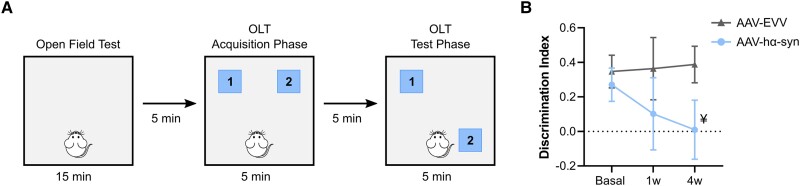
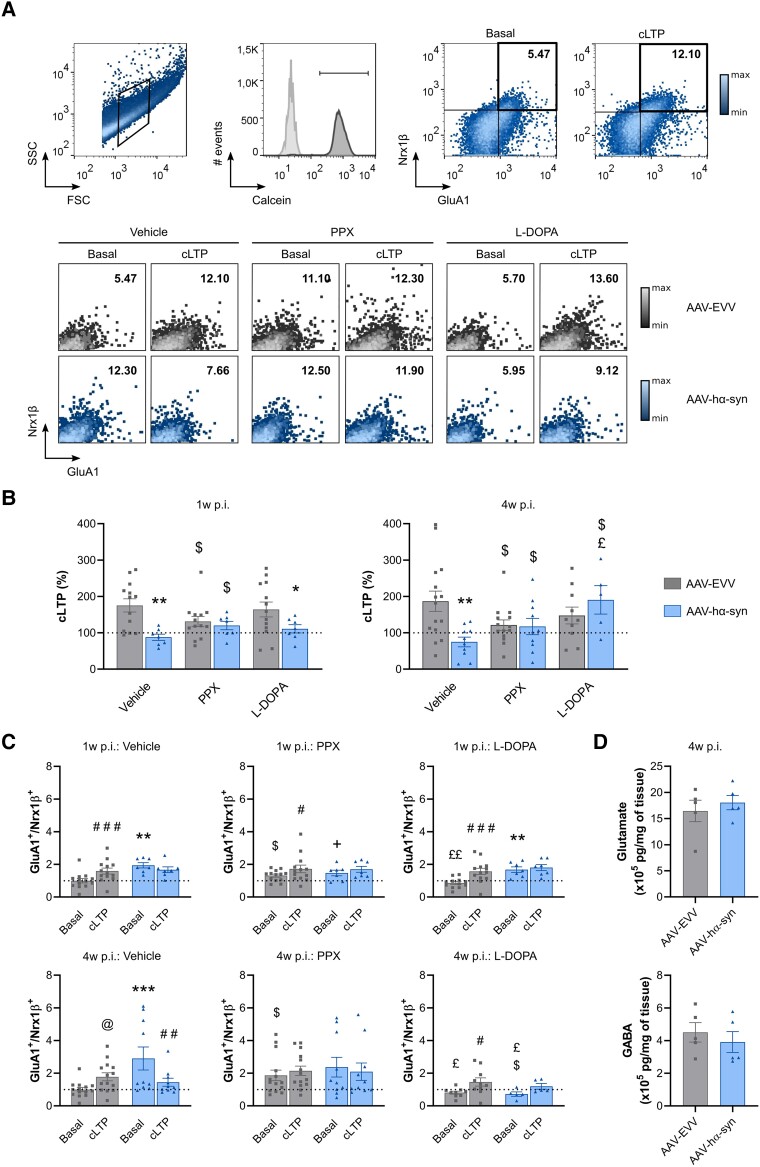
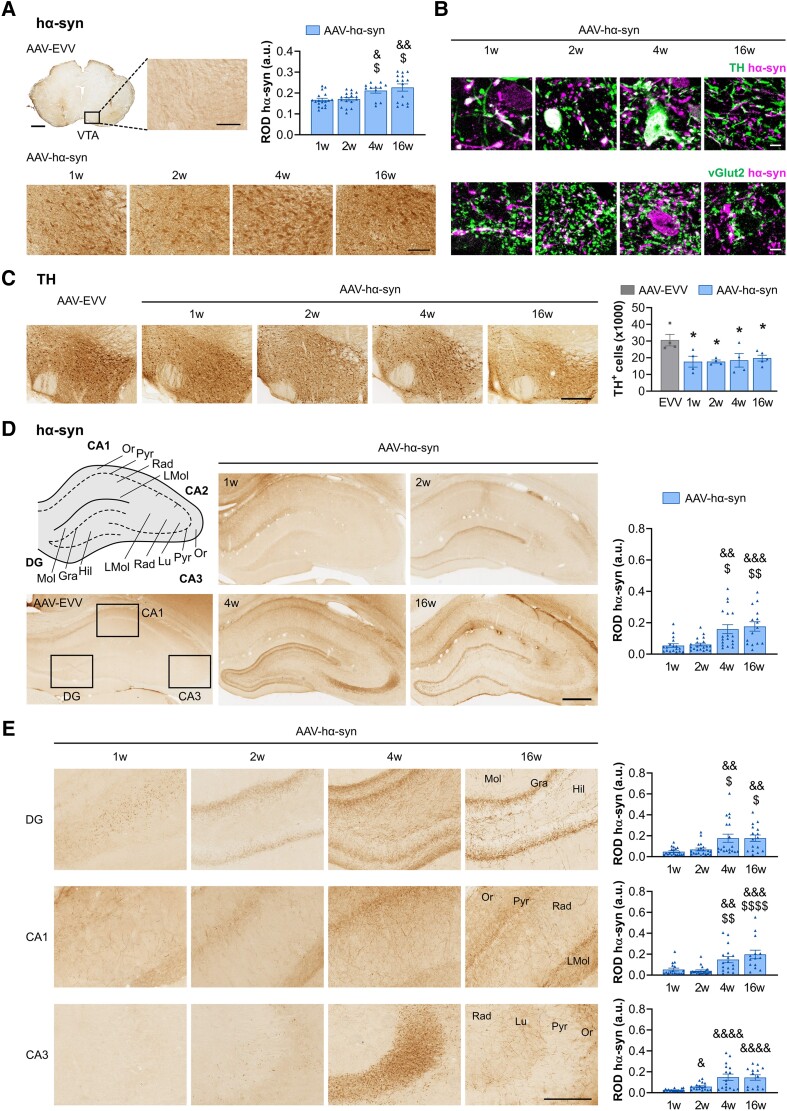
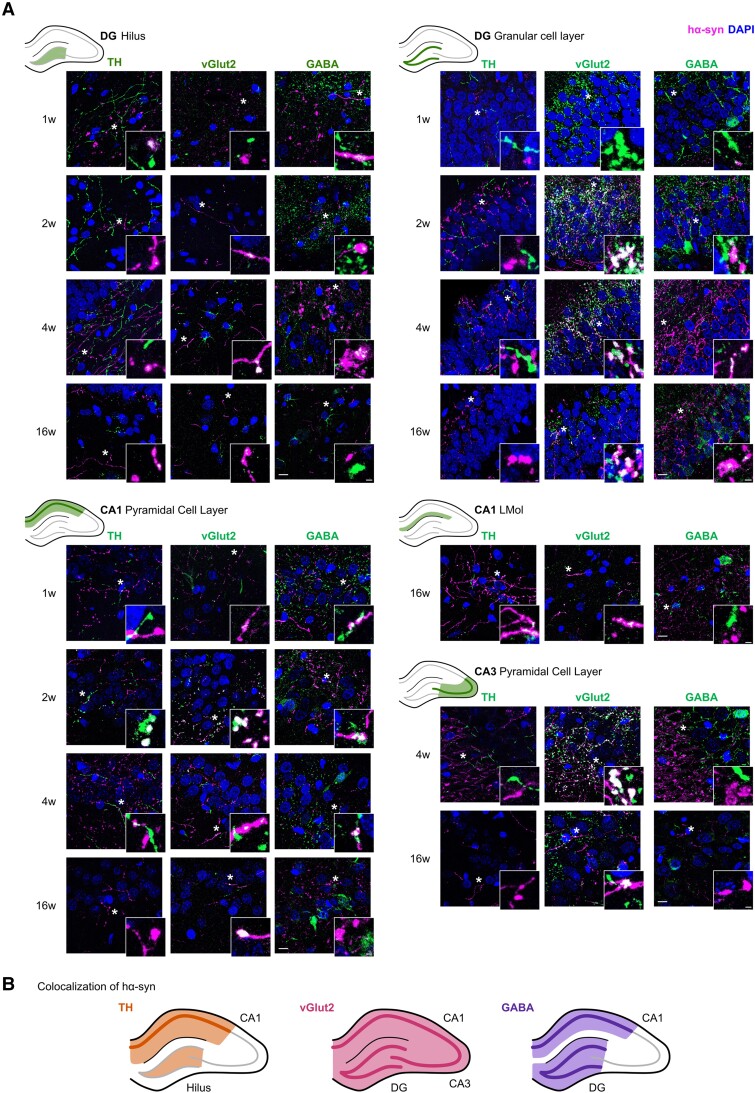
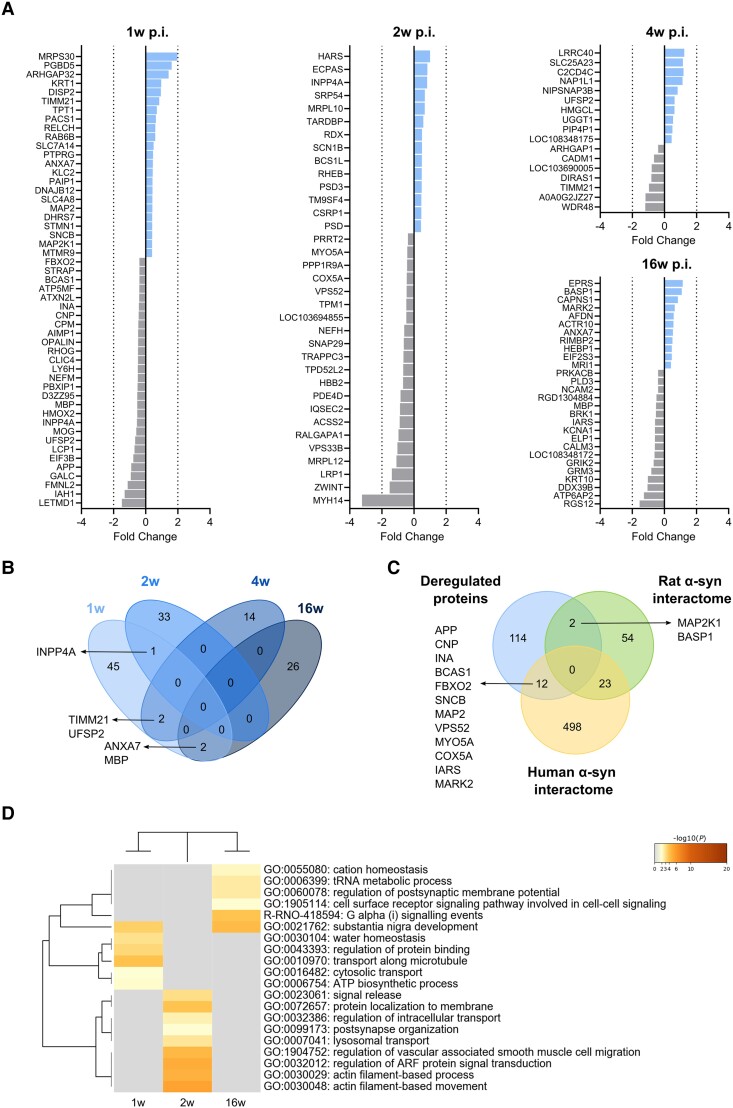
Learning and memory mainly rely on correct synaptic function in the hippocampus and other brain regions. In Parkinson's disease, subtle cognitive deficits may even precede motor signs early in the disease. Hence, we set out to unravel the earliest hippocampal synaptic alterations associated with human α-synuclein overexpression prior to and soon after the appearance of cognitive deficits in a parkinsonism model. We bilaterally injected adeno-associated viral vectors encoding A53T-mutated human α-synuclein into the substantia nigra of rats, and evaluated them 1, 2, 4 and 16 weeks post-inoculation by immunohistochemistry and immunofluorescence to study degeneration and distribution of α-synuclein in the midbrain and hippocampus. The object location test was used to evaluate hippocampal-dependent memory. Sequential window acquisition of all theoretical mass spectrometry-based proteomics and fluorescence analysis of single-synapse long-term potentiation were used to study alterations to protein composition and plasticity in isolated hippocampal synapses. The effect of L-DOPA and pramipexole on long-term potentiation was also tested. Human α-synuclein was found within dopaminergic and glutamatergic neurons of the ventral tegmental area, and in dopaminergic, glutamatergic and GABAergic axon terminals in the hippocampus from 1 week post-inoculation, concomitant with mild dopaminergic degeneration in the ventral tegmental area. In the hippocampus, differential expression of proteins involved in synaptic vesicle cycling, neurotransmitter release and receptor trafficking, together with impaired long-term potentiation were the first events observed (1 week post-inoculation), preceding cognitive deficits (4 weeks post-inoculation). Later on, at 16 weeks post-inoculation, there was a deregulation of proteins involved in synaptic function, particularly those involved in the regulation of membrane potential, ion balance and receptor signalling. Hippocampal long-term potentiation was impaired before and soon after the onset of cognitive deficits, at 1 and 4 weeks post-inoculation, respectively. L-DOPA recovered hippocampal long-term potentiation more efficiently at 4 weeks post-inoculation than pramipexole, which partially rescued it at both time points. Overall, we found impaired synaptic plasticity and proteome dysregulation at hippocampal terminals to be the first events that contribute to the development of cognitive deficits in experimental parkinsonism. Our results not only point to dopaminergic but also to glutamatergic and GABAergic dysfunction, highlighting the relevance of the three neurotransmitter systems in the ventral tegmental area-hippocampus interaction from the earliest stages of parkinsonism. The proteins identified in the current work may constitute potential biomarkers of early synaptic damage in the hippocampus and hence, therapies targeting these could potentially restore early synaptic malfunction and consequently, cognitive deficits in Parkinson's disease.
学习和记忆主要依赖于海马体和其他大脑区域中正确的突触功能。在帕金森病中,即使在疾病早期出现运动症状之前,也可能存在微妙的认知缺陷。因此,我们着手研究在帕金森病模型中认知缺陷出现之前和之后不久,与人类α-突触核蛋白过表达相关的最早的海马体突触改变。我们将编码 A53T 突变型人类α-突触核蛋白的腺相关病毒载体双侧注入大鼠黑质,并通过免疫组织化学和免疫荧光评估它们在接种后 1、2、4 和 16 周时的情况,以研究中脑和海马体中α-突触核蛋白的变性和分布。物体位置测试用于评估海马体依赖性记忆。连续窗口获取所有基于理论的质谱蛋白质组学和单个突触长时程增强的荧光分析用于研究分离的海马突触中蛋白质组成和可塑性的改变。还测试了 L-DOPA 和普拉克索对长时程增强的影响。人类α-突触核蛋白在腹侧被盖区的多巴胺能和谷氨酸能神经元以及海马体的多巴胺能、谷氨酸能和 GABA 能轴突末端中被发现,从接种后 1 周开始,伴随着腹侧被盖区的轻度多巴胺能变性。在海马体中,与突触小泡循环、神经递质释放和受体转运相关的蛋白质的差异表达以及长时程增强受损是观察到的最早事件(接种后 1 周),早于认知缺陷(接种后 4 周)。后来,在接种后 16 周时,与突触功能相关的蛋白质发生了失调,特别是与调节膜电位、离子平衡和受体信号转导相关的蛋白质。在认知缺陷发生之前和之后不久(分别在接种后 1 周和 4 周),海马体的长时程增强受损。与普拉克索相比,L-DOPA 在接种后 4 周时更有效地恢复了海马体的长时程增强,而普拉克索在两个时间点都部分恢复了它。总的来说,我们发现海马体末端的突触可塑性受损和蛋白质组失调是导致实验性帕金森病认知缺陷发展的最早事件。我们的研究结果不仅指向多巴胺能,还指向谷氨酸能和 GABA 能功能障碍,突出了三个神经递质系统在帕金森病早期的腹侧被盖区-海马体相互作用中的相关性。当前工作中鉴定的蛋白质可能构成海马体早期突触损伤的潜在生物标志物,因此针对这些蛋白质的治疗方法可能会恢复早期的突触功能障碍,从而恢复帕金森病患者的认知缺陷。