Department of Computer Science, NTNU, 2819, Gjøvik, Norway.
SINTEF Digital, Smart Sensor Systems, Oslo, Norway.
Sci Rep. 2023 Jul 5;13(1):10857. doi: 10.1038/s41598-023-36883-x.
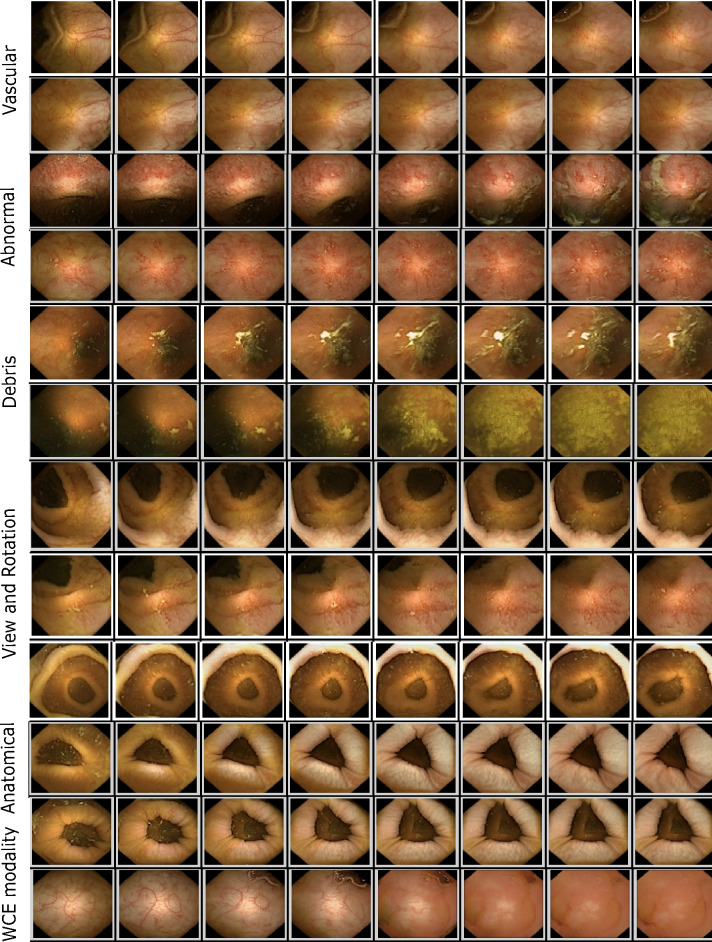
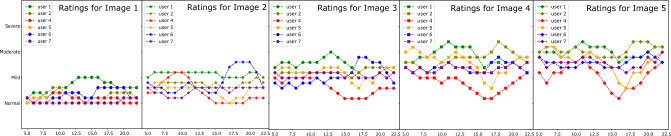
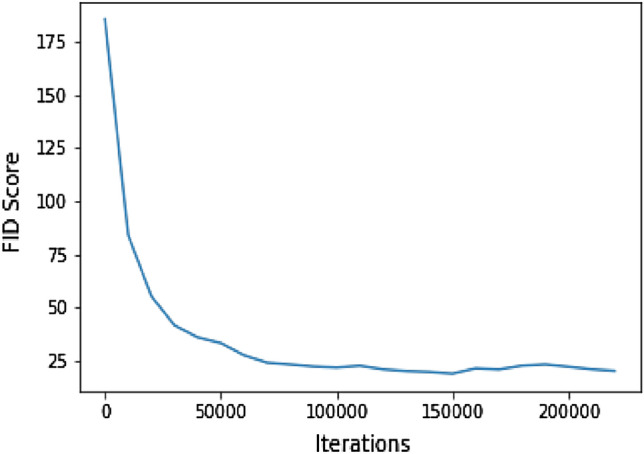
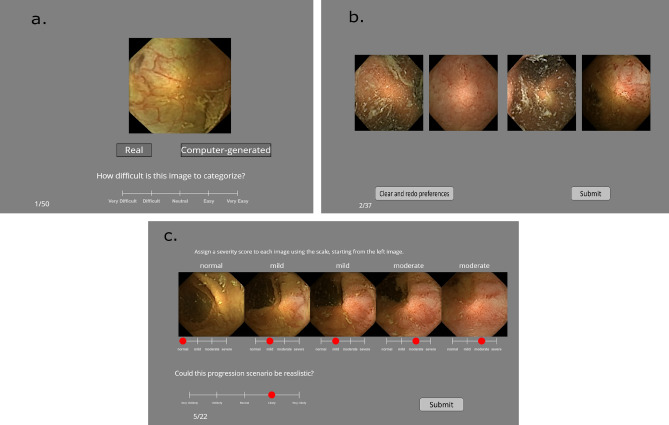
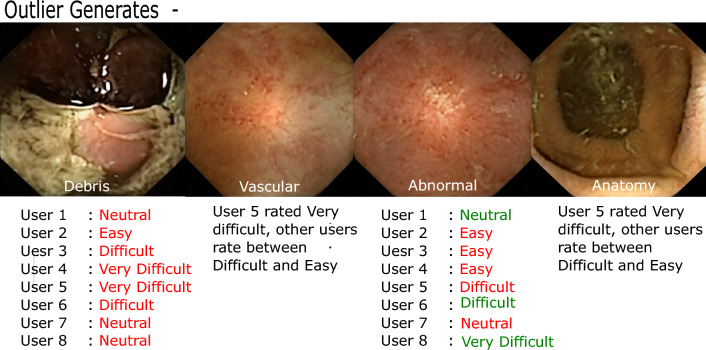
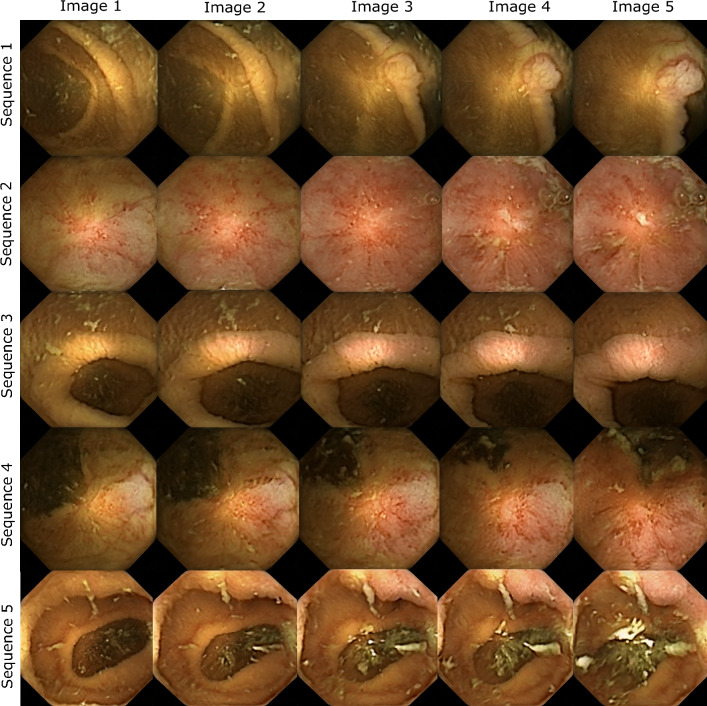
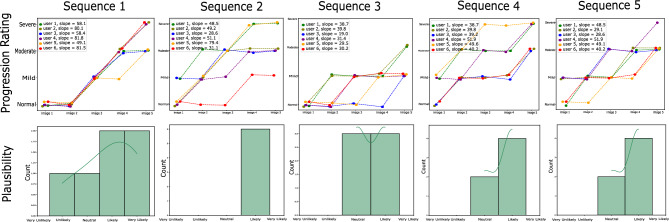
Wireless Capsule Endoscopy (WCE) is being increasingly used as an alternative imaging modality for complete and non-invasive screening of the gastrointestinal tract. Although this is advantageous in reducing unnecessary hospital admissions, it also demands that a WCE diagnostic protocol be in place so larger populations can be effectively screened. This calls for training and education protocols attuned specifically to this modality. Like training in other modalities such as traditional endoscopy, CT, MRI, etc., a WCE training protocol would require an atlas comprising of a large corpora of images that show vivid descriptions of pathologies, ideally observed over a period of time. Since such comprehensive atlases are presently lacking in WCE, in this work, we propose a deep learning method for utilizing already available studies across different institutions for the creation of a realistic WCE atlas using StyleGAN. We identify clinically relevant attributes in WCE such that synthetic images can be generated with selected attributes on cue. Beyond this, we also simulate several disease progression scenarios. The generated images are evaluated for realism and plausibility through three subjective online experiments with the participation of eight gastroenterology experts from three geographical locations and a variety of years of experience. The results from the experiments indicate that the images are highly realistic and the disease scenarios plausible. The images comprising the atlas are available publicly for use in training applications as well as supplementing real datasets for deep learning.
无线胶囊内镜 (WCE) 正越来越多地被用作替代成像方式,用于对胃肠道进行全面且非侵入性的筛查。虽然这有助于减少不必要的住院治疗,但也需要建立 WCE 诊断方案,以便对更多人群进行有效筛查。这就需要制定专门针对该模式的培训和教育方案。就像传统内镜、CT、MRI 等其他模式的培训一样,WCE 培训方案需要一个图集,其中包含大量生动描述病理学的图像,理想情况下是在一段时间内观察到的。由于 WCE 目前缺乏这种全面的图集,在这项工作中,我们提出了一种深度学习方法,用于利用不同机构已有的研究来创建使用 StyleGAN 的现实 WCE 图集。我们确定了 WCE 中的临床相关属性,以便可以根据提示用选定的属性生成合成图像。除此之外,我们还模拟了几种疾病进展场景。通过来自三个地理位置和不同工作年限的八名胃肠病专家参与的三个主观在线实验,对生成的图像进行了真实性和合理性评估。实验结果表明,生成的图像非常逼真,疾病场景也合理。该图集包含的图像可供培训应用程序使用,也可用于补充深度学习的真实数据集。