• 文献检索
  • 文档翻译
  • 深度研究
  • 学术资讯
  • Suppr Zotero 插件Zotero 插件
  • 邀请有礼
  • 套餐&价格
  • 历史记录
应用&插件
Suppr Zotero 插件Zotero 插件浏览器插件Mac 客户端Windows 客户端微信小程序
定价
高级版会员购买积分包购买API积分包
服务
文献检索文档翻译深度研究API 文档MCP 服务
关于我们
关于 Suppr公司介绍联系我们用户协议隐私条款
关注我们

Suppr 超能文献

核心技术专利:CN118964589B侵权必究
粤ICP备2023148730 号-1Suppr @ 2026

文献检索

告别复杂PubMed语法,用中文像聊天一样搜索,搜遍4000万医学文献。AI智能推荐,让科研检索更轻松。

立即免费搜索

文件翻译

保留排版,准确专业,支持PDF/Word/PPT等文件格式,支持 12+语言互译。

免费翻译文档

深度研究

AI帮你快速写综述,25分钟生成高质量综述,智能提取关键信息,辅助科研写作。

立即免费体验

肠道微生物组通过小胶质细胞依赖和非依赖的机制调节星形胶质细胞对淀粉样β淀粉样变性的反应。

The gut microbiome regulates astrocyte reaction to Aβ amyloidosis through microglial dependent and independent mechanisms.

机构信息

Ken and Ruth Davee Department of Neurology, Northwestern University Feinberg School of Medicine, Chicago, IL, 60611, USA.

Medical Scientist Training Program, Northwestern University Feinberg School of Medicine, Chicago, IL, 60611, USA.

出版信息

Mol Neurodegener. 2023 Jul 6;18(1):45. doi: 10.1186/s13024-023-00635-2.

DOI:10.1186/s13024-023-00635-2
PMID:37415149
原文链接:https://pmc.ncbi.nlm.nih.gov/articles/PMC10324210/
Abstract

BACKGROUND

Previous studies show that antibiotic-mediated (abx) alteration of the gut microbiome (GMB) results in a reduction of amyloid beta (Aβ) plaques and proinflammatory microglial phenotype in male APPPS1-21 mice. However, the effect of GMB perturbation on astrocyte phenotypes and microglial-astrocyte communication in the context of amyloidosis has not been examined.

METHODS

To study whether the GMB modulates astrocyte phenotype in the context of amyloidosis, APPPS1-21 male and female mice were treated with broad-spectrum abx leading to GMB perturbation. GFAP + astrocytes, plaque-associated astrocytes (PAA), PAA morphological parameters, and astrocyte complement component C3 levels were quantified using a combination of immunohistochemistry, immunoblotting, widefield microscopy, and confocal microscopy. Furthermore, these same astrocyte phenotypes were assessed in abx-treated APPPS1-21 male mice that received either fecal matter transplant (FMT) from untreated APPPS1-21 male donors to restore their microbiome or vehicle control. To assess complete absence of the GMB on astrocyte phenotypes, the same astrocyte phenotypes were quantified in APPPS1-21 male mice raised in germ-free (GF) or specific-pathogen free conditions (SPF). Lastly, we assessed whether microglia are necessary for abx-induced astrocyte phenotypes by depleting microglia in APPPS1-21 male mice via treatment with a colony-stimulating factor 1 receptor (CSF1R) inhibitor (PLX5622) and vehicle control or PLX5622 and abx.

RESULTS

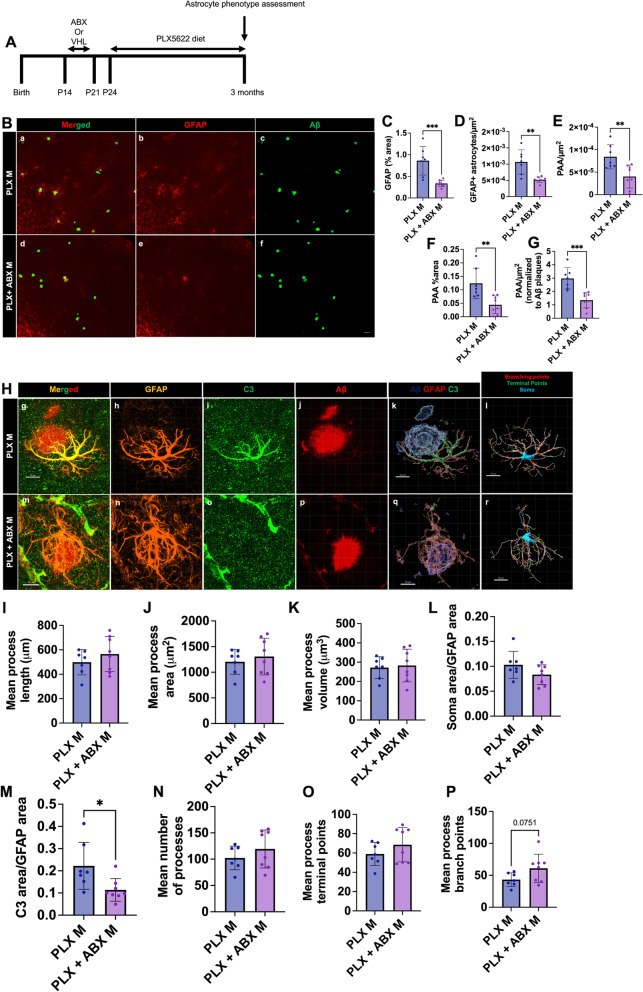
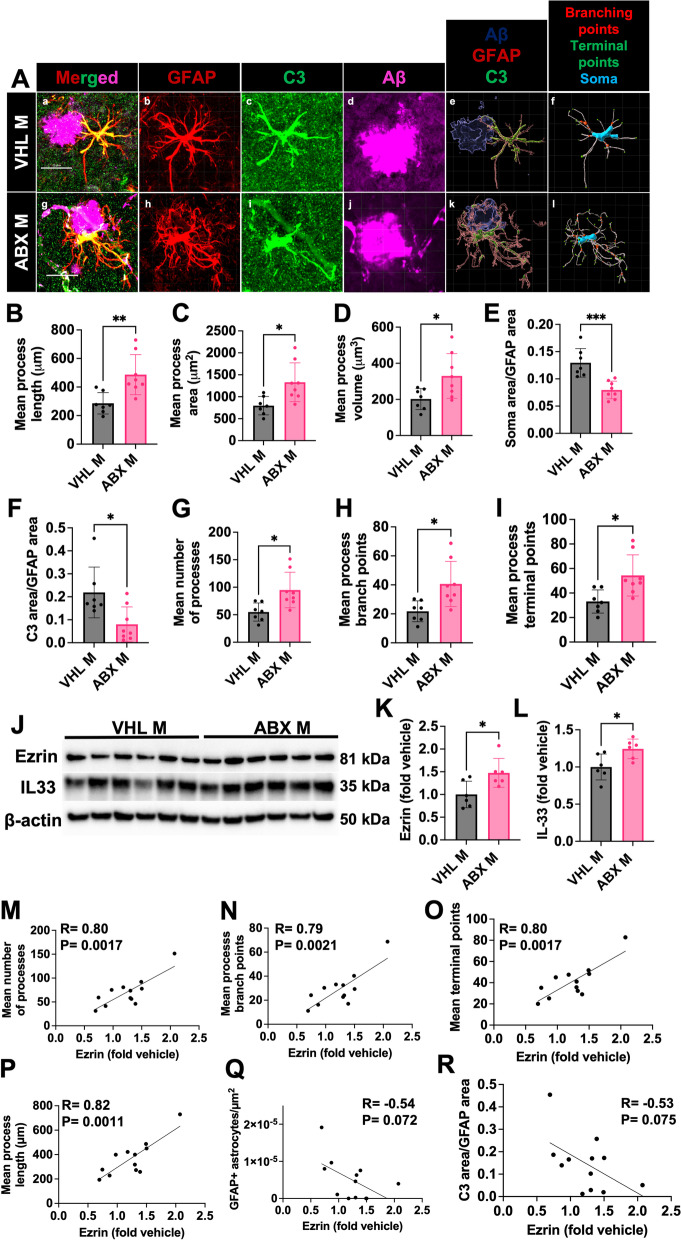
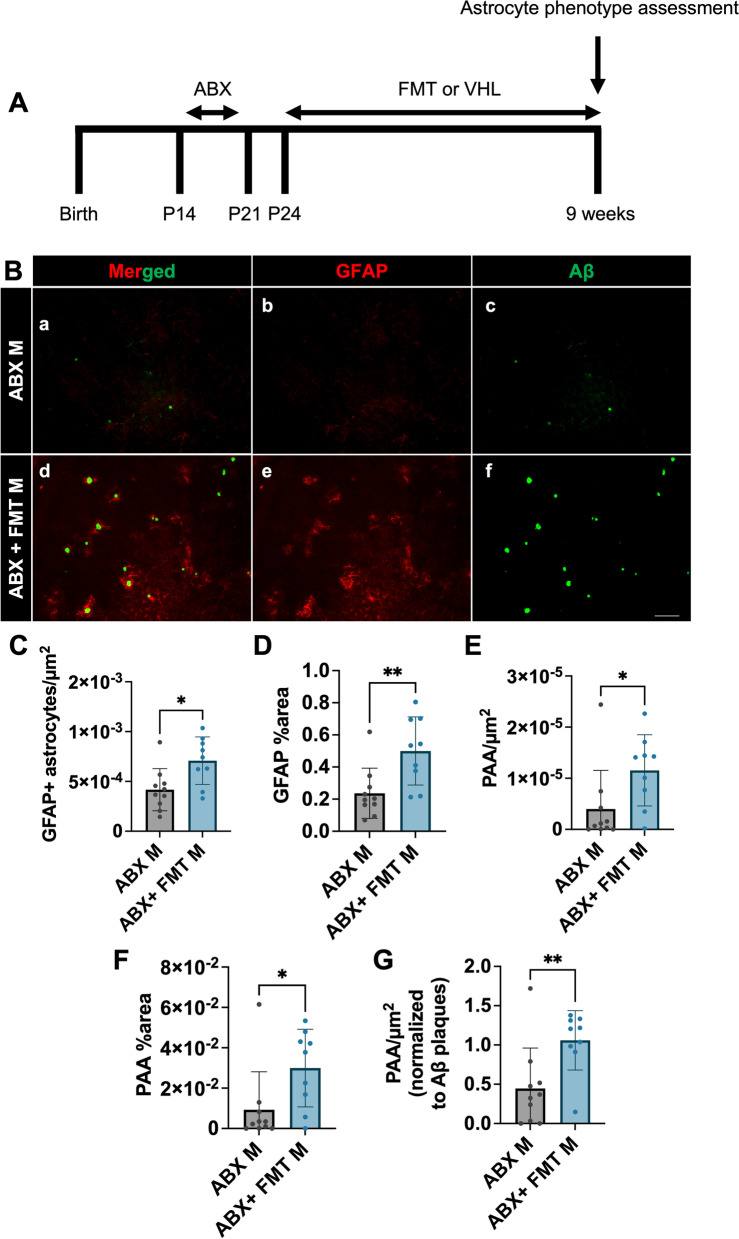
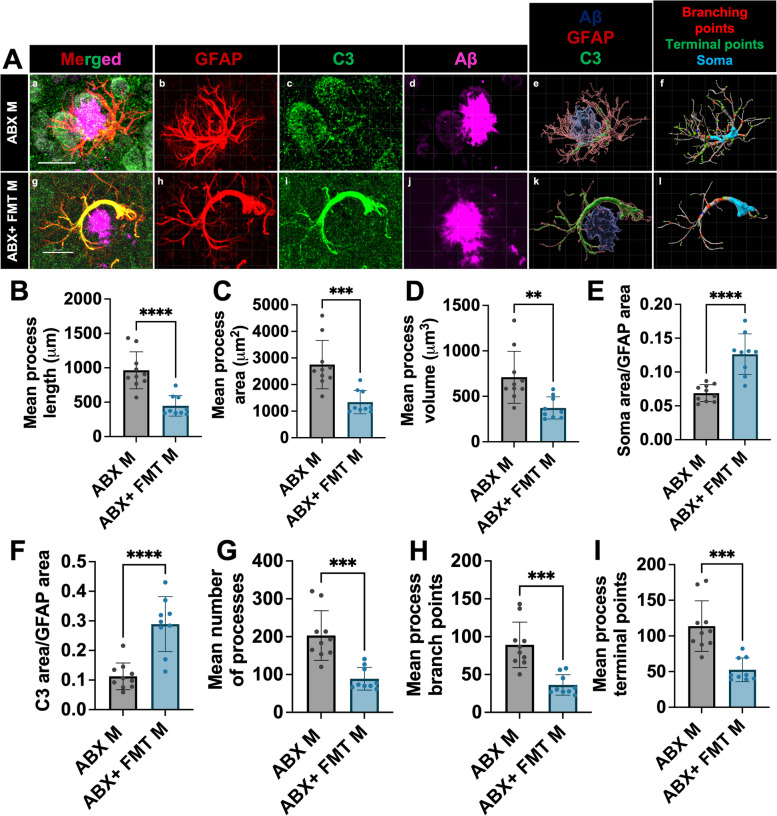
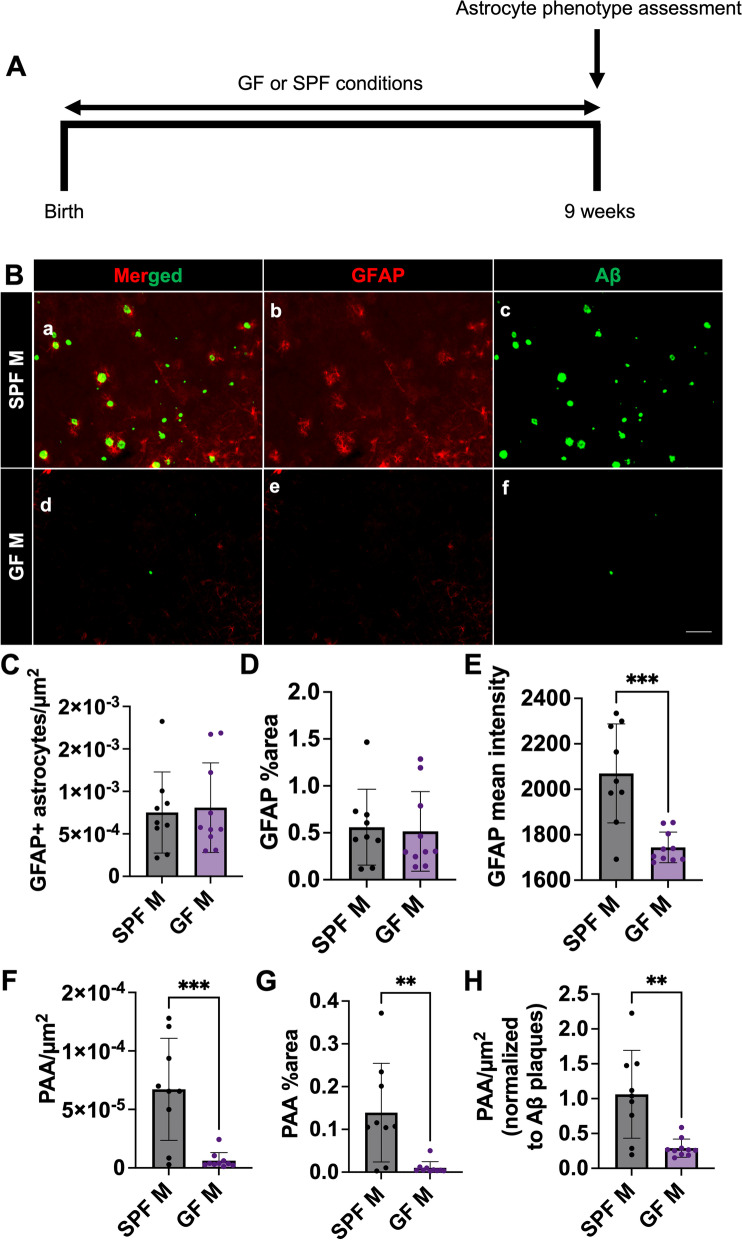
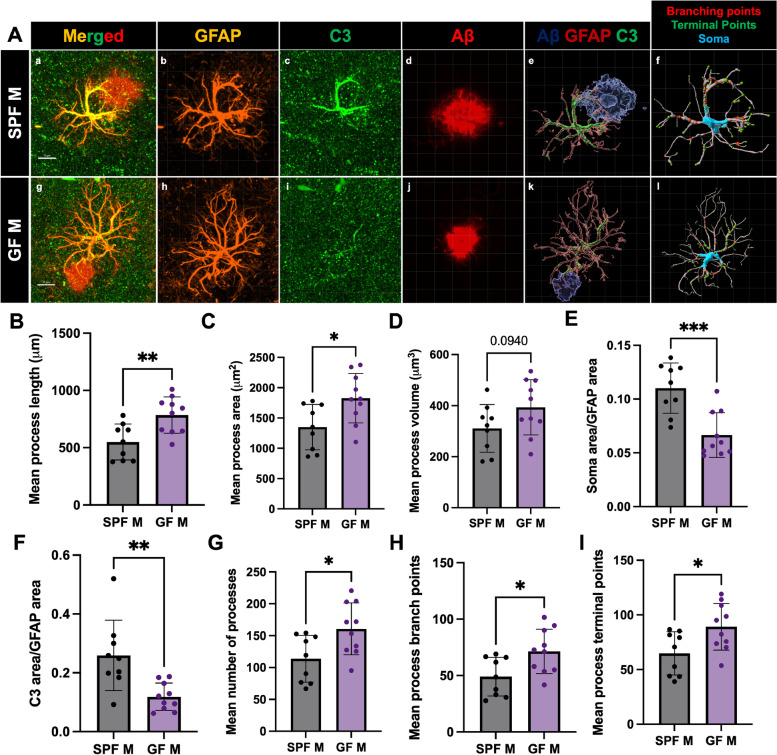
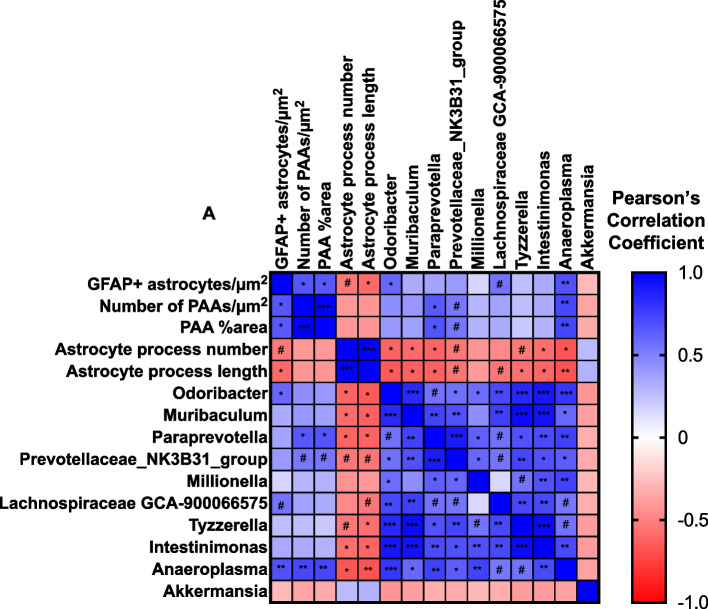
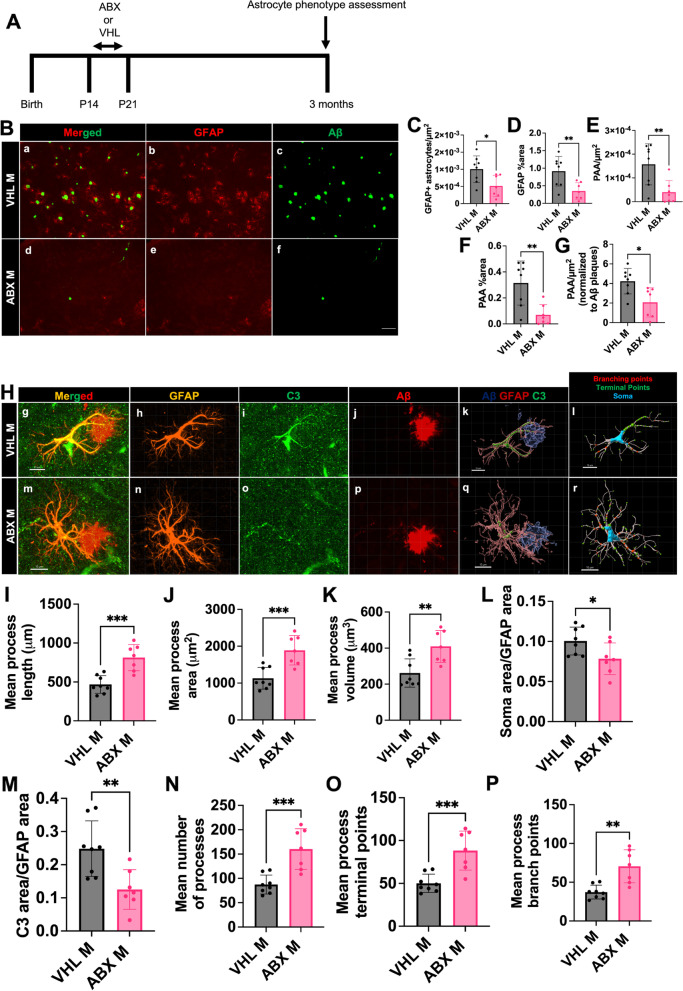
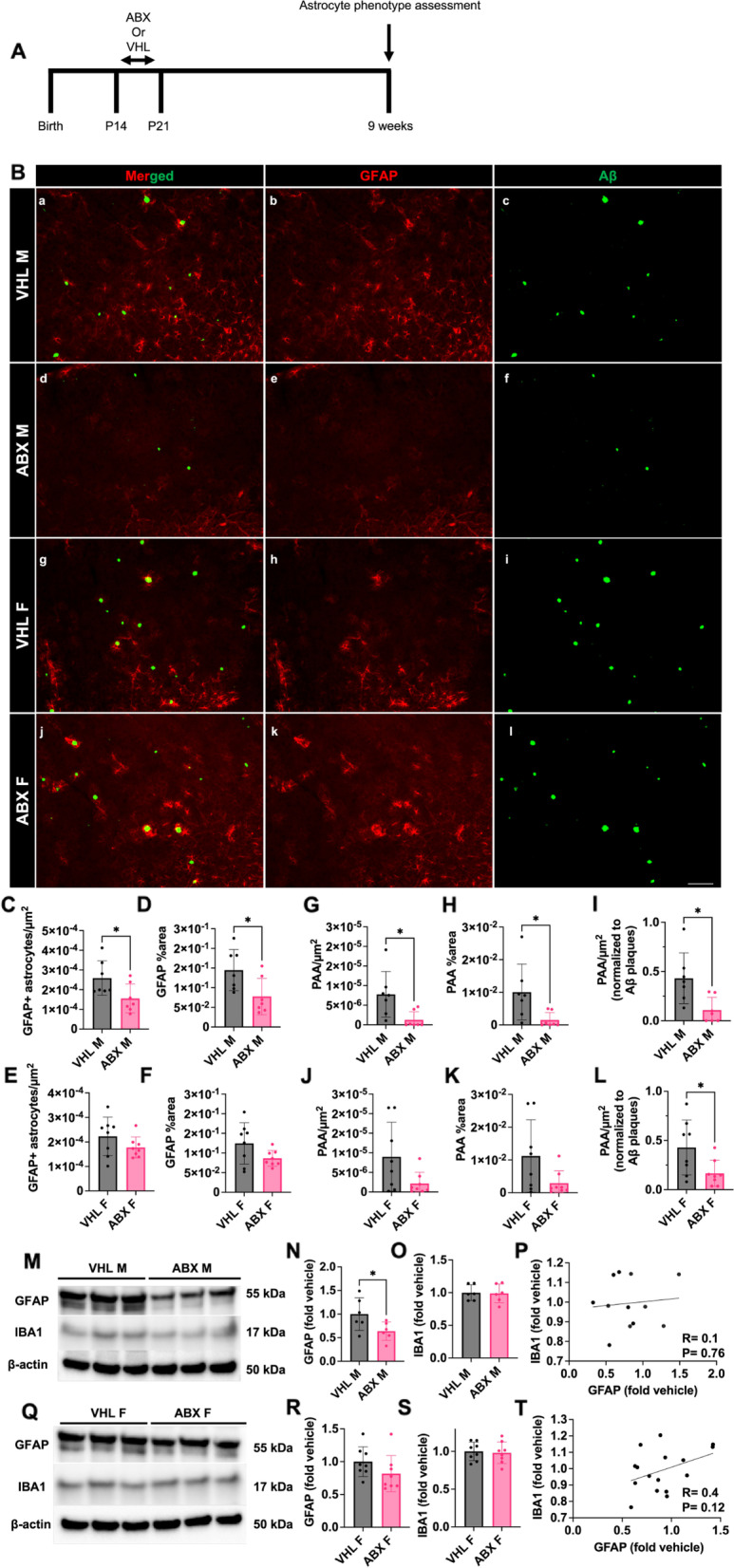
Herein, we demonstrate that postnatal treatment of male APPPS1-21 mice with broad-spectrum abx leading to GMB perturbation reduces GFAP + reactive astrocytes and PAAs, suggesting that the GMB plays a role in regulating reactive astrocyte induction and recruitment to Aβ plaques. Additionally, we show that compared to controls, PAAs in abx-treated male APPPS1-21 mice exhibit an altered morphology with increased number and length of processes and reduced astrocytic complement C3, consistent with a homeostatic phenotype. GFAP + astrocyte reduction, PAA reduction, astrocyte morphological changes, and C3 levels are restored when abx-treated mice are subject to FMT from untreated APPPS1-21 male donor mice. Next, we found that APPPS1-21 male mice raised in GF conditions have similar astrocyte phenotypes as abx-treated male APPPS1-21 male mice. Correlational analysis revealed that pathogenic bacteria depleted by abx correlate with GFAP + astrocytosis, PAAs, and astrocyte morphological changes. Finally, we determined that abx-mediated reduction in GFAP + astrocytosis, PAAs, and astrocytic C3 expression is independent of microglia. However, abx-induced astrocyte morphological alterations are dependent on the presence of microglia, suggesting that there is both microglial independent and dependent GMB control of reactive astrocyte phenotypes.

CONCLUSIONS

We show for the first time, in the context of amyloidosis, that the GMB plays an important role in controlling reactive astrocyte induction, morphology, and astrocyte recruitment to Aβ plaques. GMB regulation of these astrocytic phenotypes is both independent and dependent on microglia.

摘要

背景

先前的研究表明,抗生素介导的肠道微生物组(GMB)改变会导致雄性 APPPS1-21 小鼠的淀粉样蛋白 β(Aβ)斑块和促炎小胶质细胞表型减少。然而,GMB 扰动对淀粉样变性中小胶质细胞-星形胶质细胞通讯的星形胶质细胞表型的影响尚未被研究。

方法

为了研究 GMB 是否调节淀粉样变性中的星形胶质细胞表型,用广谱抗生素处理雄性 APPPS1-21 小鼠,导致 GMB 扰动。使用免疫组织化学、免疫印迹、宽场显微镜和共聚焦显微镜相结合的方法,定量分析 GFAP+星形胶质细胞、斑块相关星形胶质细胞(PAA)、PAA 形态参数和星形胶质细胞补体成分 C3 水平。此外,还评估了接受未处理 APPPS1-21 雄性供体粪便移植(FMT)以恢复其微生物组或载体对照的广谱抗生素处理的 APPPS1-21 雄性小鼠中的相同星形胶质细胞表型。为了评估 GMB 对星形胶质细胞表型的完全缺失,在无菌(GF)或特定病原体自由条件(SPF)下饲养的 APPPS1-21 雄性小鼠中量化了相同的星形胶质细胞表型。最后,我们通过用集落刺激因子 1 受体(CSF1R)抑制剂(PLX5622)和载体对照或 PLX5622 和广谱抗生素处理 APPPS1-21 雄性小鼠来耗尽小胶质细胞,评估小胶质细胞是否对广谱抗生素诱导的星形胶质细胞表型是必要的。

结果

在此,我们证明,雄性 APPPS1-21 小鼠在出生后用广谱抗生素处理,导致 GMB 扰动,减少 GFAP+反应性星形胶质细胞和 PAA,表明 GMB 在调节反应性星形胶质细胞诱导和募集到 Aβ 斑块中起作用。此外,我们还表明,与对照组相比,广谱抗生素处理的雄性 APPPS1-21 小鼠中的 PAA 表现出改变的形态,其过程数量和长度增加,星形胶质细胞补体 C3 减少,与稳态表型一致。当接受未处理的 APPPS1-21 雄性供体小鼠的 FMT 时,广谱抗生素处理的小鼠中的 GFAP+星形胶质细胞减少、PAA 减少、星形胶质细胞形态变化和 C3 水平得到恢复。接下来,我们发现,在无菌条件下饲养的 APPPS1-21 雄性小鼠具有与广谱抗生素处理的雄性 APPPS1-21 雄性小鼠相似的星形胶质细胞表型。相关性分析表明,抗生素耗尽的致病细菌与 GFAP+星形胶质细胞增生、PAA 和星形胶质细胞形态变化相关。最后,我们确定,广谱抗生素介导的 GFAP+星形胶质细胞增生、PAA 和星形胶质细胞 C3 表达减少与小胶质细胞无关。然而,广谱抗生素诱导的星形胶质细胞形态改变依赖于小胶质细胞的存在,表明存在小胶质细胞独立和依赖的 GMB 对反应性星形胶质细胞表型的控制。

结论

我们首次在淀粉样变性的背景下表明,GMB 在控制反应性星形胶质细胞诱导、形态和星形胶质细胞募集到 Aβ 斑块方面起着重要作用。GMB 对这些星形胶质细胞表型的调节既独立于小胶质细胞,也依赖于小胶质细胞。
https://cdn.ncbi.nlm.nih.gov/pmc/blobs/a33f/10324210/5193eb1d4333/13024_2023_635_Fig9_HTML.jpg
https://cdn.ncbi.nlm.nih.gov/pmc/blobs/a33f/10324210/ce89260c5294/13024_2023_635_Fig1_HTML.jpg
https://cdn.ncbi.nlm.nih.gov/pmc/blobs/a33f/10324210/a5e80d125173/13024_2023_635_Fig2_HTML.jpg
https://cdn.ncbi.nlm.nih.gov/pmc/blobs/a33f/10324210/f72e52948bb6/13024_2023_635_Fig3_HTML.jpg
https://cdn.ncbi.nlm.nih.gov/pmc/blobs/a33f/10324210/5a52fb580770/13024_2023_635_Fig4_HTML.jpg
https://cdn.ncbi.nlm.nih.gov/pmc/blobs/a33f/10324210/68f934bfd02b/13024_2023_635_Fig5_HTML.jpg
https://cdn.ncbi.nlm.nih.gov/pmc/blobs/a33f/10324210/dfaedc155111/13024_2023_635_Fig6_HTML.jpg
https://cdn.ncbi.nlm.nih.gov/pmc/blobs/a33f/10324210/a2eb75f0230f/13024_2023_635_Fig7_HTML.jpg
https://cdn.ncbi.nlm.nih.gov/pmc/blobs/a33f/10324210/fc0d60221469/13024_2023_635_Fig8_HTML.jpg
https://cdn.ncbi.nlm.nih.gov/pmc/blobs/a33f/10324210/5193eb1d4333/13024_2023_635_Fig9_HTML.jpg
https://cdn.ncbi.nlm.nih.gov/pmc/blobs/a33f/10324210/ce89260c5294/13024_2023_635_Fig1_HTML.jpg
https://cdn.ncbi.nlm.nih.gov/pmc/blobs/a33f/10324210/a5e80d125173/13024_2023_635_Fig2_HTML.jpg
https://cdn.ncbi.nlm.nih.gov/pmc/blobs/a33f/10324210/f72e52948bb6/13024_2023_635_Fig3_HTML.jpg
https://cdn.ncbi.nlm.nih.gov/pmc/blobs/a33f/10324210/5a52fb580770/13024_2023_635_Fig4_HTML.jpg
https://cdn.ncbi.nlm.nih.gov/pmc/blobs/a33f/10324210/68f934bfd02b/13024_2023_635_Fig5_HTML.jpg
https://cdn.ncbi.nlm.nih.gov/pmc/blobs/a33f/10324210/dfaedc155111/13024_2023_635_Fig6_HTML.jpg
https://cdn.ncbi.nlm.nih.gov/pmc/blobs/a33f/10324210/a2eb75f0230f/13024_2023_635_Fig7_HTML.jpg
https://cdn.ncbi.nlm.nih.gov/pmc/blobs/a33f/10324210/fc0d60221469/13024_2023_635_Fig8_HTML.jpg
https://cdn.ncbi.nlm.nih.gov/pmc/blobs/a33f/10324210/5193eb1d4333/13024_2023_635_Fig9_HTML.jpg

相似文献

1
The gut microbiome regulates astrocyte reaction to Aβ amyloidosis through microglial dependent and independent mechanisms.肠道微生物组通过小胶质细胞依赖和非依赖的机制调节星形胶质细胞对淀粉样β淀粉样变性的反应。
Mol Neurodegener. 2023 Jul 6;18(1):45. doi: 10.1186/s13024-023-00635-2.
2
Translational profiling identifies sex-specific metabolic and epigenetic reprogramming of cortical microglia/macrophages in APPPS1-21 mice with an antibiotic-perturbed-microbiome.转化谱分析鉴定出 APPPS1-21 小鼠皮质小胶质细胞/巨噬细胞的性别特异性代谢和表观遗传重编程,该小鼠具有抗生素扰乱的微生物组。
Mol Neurodegener. 2023 Dec 16;18(1):95. doi: 10.1186/s13024-023-00668-7.
3
Sodium oligomannate alters gut microbiota, reduces cerebral amyloidosis and reactive microglia in a sex-specific manner.寡甘露糖二酸以性别特异性方式改变肠道微生物群,减少脑淀粉样蛋白沉积和反应性小胶质细胞。
Mol Neurodegener. 2024 Feb 17;19(1):18. doi: 10.1186/s13024-023-00700-w.
4
Gut microbiota-driven brain Aβ amyloidosis in mice requires microglia.肠道菌群驱动的小鼠脑内 Aβ 淀粉样变性需要小胶质细胞。
J Exp Med. 2022 Jan 3;219(1). doi: 10.1084/jem.20200895. Epub 2021 Dec 2.
5
Sex-specific effects of microbiome perturbations on cerebral Aβ amyloidosis and microglia phenotypes.微生物组扰动对大脑 Aβ 淀粉样变性和小胶质细胞表型的性别特异性影响。
J Exp Med. 2019 Jul 1;216(7):1542-1560. doi: 10.1084/jem.20182386. Epub 2019 May 16.
6
Selective reduction of astrocyte apoE3 and apoE4 strongly reduces Aβ accumulation and plaque-related pathology in a mouse model of amyloidosis.选择性降低星形胶质细胞载脂蛋白 E3 和载脂蛋白 E4 可明显减少淀粉样变性小鼠模型中的 Aβ 积累和斑块相关病变。
Mol Neurodegener. 2022 Feb 2;17(1):13. doi: 10.1186/s13024-022-00516-0.
7
Synergistic depletion of gut microbial consortia, but not individual antibiotics, reduces amyloidosis in APPPS1-21 Alzheimer's transgenic mice.肠道微生物群落的协同耗竭,而不是单一抗生素的使用,可减少 APPPS1-21 阿尔茨海默病转基因小鼠的淀粉样变性。
Sci Rep. 2020 May 18;10(1):8183. doi: 10.1038/s41598-020-64797-5.
8
Beneficial Effect of ACI-24 Vaccination on Aβ Plaque Pathology and Microglial Phenotypes in an Amyloidosis Mouse Model.ACI-24 疫苗接种对淀粉样变性小鼠模型中 Aβ 斑块病理学和小胶质细胞表型的有益作用。
Cells. 2022 Dec 24;12(1):79. doi: 10.3390/cells12010079.
9
The role of microglial cells and astrocytes in fibrillar plaque evolution in transgenic APP(SW) mice.小胶质细胞和星形胶质细胞在转基因APP(SW)小鼠纤维状斑块演变中的作用。
Neurobiol Aging. 2001 Jan-Feb;22(1):49-61. doi: 10.1016/s0197-4580(00)00181-0.
10
Fibrillar Aβ triggers microglial proteome alterations and dysfunction in Alzheimer mouse models.纤维状 Aβ 在阿尔茨海默病小鼠模型中引发小胶质细胞蛋白质组改变和功能障碍。
Elife. 2020 Jun 8;9:e54083. doi: 10.7554/eLife.54083.

引用本文的文献

1
Microbiota-gut-brain axis in neurodegenerative diseases: molecular mechanisms and therapeutic targets.神经退行性疾病中的微生物群-肠道-脑轴:分子机制与治疗靶点
Mol Biomed. 2025 Sep 15;6(1):64. doi: 10.1186/s43556-025-00307-1.
2
Early-life gut microbiome maturity regulates blood-brain barrier and cognitive development.生命早期肠道微生物群成熟度调节血脑屏障和认知发育。
Gut Microbes. 2025 Dec;17(1):2551879. doi: 10.1080/19490976.2025.2551879. Epub 2025 Aug 31.
3
Probiotic effects on cognitive performance, hippocampal oxidative stress, and structural damage induced by icv STZ in Alzheimer-like rat model.

本文引用的文献

1
Droplet-based forward genetic screening of astrocyte-microglia cross-talk.基于液滴的星形胶质细胞-小胶质细胞相互作用的正向遗传筛选。
Science. 2023 Mar 10;379(6636):1023-1030. doi: 10.1126/science.abq4822. Epub 2023 Mar 9.
2
The Gut Microbiota-Brain Axis during Aging, Mild Cognitive Impairment and Dementia: Role of Tau Protein, β-Amyloid and LPS in Serum and Curli Protein in Stool.肠道微生物群-大脑轴在衰老、轻度认知障碍和痴呆中的作用:tau 蛋白、β-淀粉样蛋白和 LPS 在血清中的作用以及 curli 蛋白在粪便中的作用。
Nutrients. 2023 Feb 13;15(4):932. doi: 10.3390/nu15040932.
3
The gut microbiome in Alzheimer's disease: what we know and what remains to be explored.
益生菌对阿尔茨海默病样大鼠模型中由脑室内注射链脲佐菌素诱导的认知能力、海马氧化应激和结构损伤的影响。
Brain Struct Funct. 2025 Aug 14;230(7):135. doi: 10.1007/s00429-025-03003-6.
4
Gut microbiota distinguishes aging hispanics with Alzheimer's disease: associations with cognitive impairment and severity.肠道微生物群可区分患有阿尔茨海默病的老年西班牙裔人群:与认知障碍及严重程度的关联
Sci Rep. 2025 Aug 5;15(1):28505. doi: 10.1038/s41598-025-13262-2.
5
Thwarting amyloidosis: IL-17 as a disease modifier along the gut/brain axis.对抗淀粉样变性:白细胞介素-17作为肠道/脑轴上的疾病调节因子
J Clin Invest. 2025 Jul 1;135(13). doi: 10.1172/JCI194443.
6
Insulin resistance: fueling oxidative stress and neurodegeneration.胰岛素抵抗:加剧氧化应激与神经退行性变。
J Neural Transm (Vienna). 2025 May 31. doi: 10.1007/s00702-025-02956-6.
7
The gut microbiome controls reactive astrocytosis during Aβ amyloidosis via propionate-mediated regulation of IL-17.肠道微生物群通过丙酸介导的白细胞介素-17调节,在Aβ淀粉样变性过程中控制反应性星形胶质细胞增生。
J Clin Invest. 2025 May 13;135(13). doi: 10.1172/JCI180826. eCollection 2025 Jul 1.
8
The gut-brain axis in Alzheimer's disease is shaped by commensal gut microbiota derived extracellular vesicles.阿尔茨海默病中的肠-脑轴由共生肠道微生物群衍生的细胞外囊泡塑造。
Gut Microbes. 2025 Dec;17(1):2501193. doi: 10.1080/19490976.2025.2501193. Epub 2025 May 12.
9
Multi-site investigation of gut microbiota in CDKL5 deficiency disorder mouse models: Targeting dysbiosis to improve neurological outcomes.CDKL5缺陷障碍小鼠模型中肠道微生物群的多中心研究:针对生态失调改善神经学结局。
Cell Rep. 2025 Apr 22;44(4):115546. doi: 10.1016/j.celrep.2025.115546. Epub 2025 Apr 10.
10
How the gut microbiota impacts neurodegenerative diseases by modulating CNS immune cells.肠道微生物群如何通过调节中枢神经系统免疫细胞影响神经退行性疾病。
J Neuroinflammation. 2025 Mar 3;22(1):60. doi: 10.1186/s12974-025-03371-0.
阿尔茨海默病中的肠道微生物组:已知与待探索。
Mol Neurodegener. 2023 Feb 1;18(1):9. doi: 10.1186/s13024-023-00595-7.
4
ApoE isoform- and microbiota-dependent progression of neurodegeneration in a mouse model of tauopathy.载脂蛋白 E 异构体和微生物群依赖性神经退行性变在tau 病小鼠模型中的进展。
Science. 2023 Jan 13;379(6628):eadd1236. doi: 10.1126/science.add1236.
5
Molecular basis of astrocyte diversity and morphology across the CNS in health and disease.中枢神经系统中星形胶质细胞多样性和形态的分子基础:在健康和疾病中的表现。
Science. 2022 Nov 4;378(6619):eadc9020. doi: 10.1126/science.adc9020.
6
Ezrin deficiency triggers glial fibrillary acidic protein upregulation and a distinct reactive astrocyte phenotype.埃兹蛋白缺乏会引发胶质纤维酸性蛋白上调以及一种独特的反应性星形胶质细胞表型。
Glia. 2022 Dec;70(12):2309-2329. doi: 10.1002/glia.24253. Epub 2022 Aug 5.
7
Chronic-Antibiotics Induced Gut Microbiota Dysbiosis Rescues Memory Impairment and Reduces β-Amyloid Aggregation in a Preclinical Alzheimer's Disease Model.慢性抗生素诱导的肠道微生物失调可改善临床前阿尔茨海默病模型的记忆障碍并减少β-淀粉样蛋白聚集。
Int J Mol Sci. 2022 Jul 26;23(15):8209. doi: 10.3390/ijms23158209.
8
Absence of microglia promotes diverse pathologies and early lethality in Alzheimer's disease mice.小胶质细胞缺失促进阿尔茨海默病小鼠多种病理学改变和早期死亡。
Cell Rep. 2022 Jun 14;39(11):110961. doi: 10.1016/j.celrep.2022.110961.
9
Astrocytes and oligodendrocytes undergo subtype-specific transcriptional changes in Alzheimer's disease.星形胶质细胞和少突胶质细胞在阿尔茨海默病中发生特定亚型的转录变化。
Neuron. 2022 Jun 1;110(11):1788-1805.e10. doi: 10.1016/j.neuron.2022.03.008. Epub 2022 Apr 4.
10
New insights into the genetic etiology of Alzheimer's disease and related dementias.阿尔茨海默病及相关痴呆症的遗传学病因新见解。
Nat Genet. 2022 Apr;54(4):412-436. doi: 10.1038/s41588-022-01024-z. Epub 2022 Apr 4.