Sepúlveda-Rivera Vanessa, Olivieri-Henry Gerianne, Morales-González Hiram, Ruiz-Adames Javier, Herrero-Rivera Carlos, Rentas-Echeverria Alexandra, Cardona-Berdecia Valerie, Soler-Llompart Cecilia, Sala-Morales Ana C, Pérez-Montero Guillermo, Blanco-Ruiz Eric, Godoy-Vitorino Filipa
Internal Medicine Department, University of Puerto Rico, Medical Sciences Campus, San Juan, PR, USA.
Microbiology Department, University of Puerto Rico, Medical Sciences Campus, San Juan, PR, USA.
Sci Rep. 2025 Aug 5;15(1):28505. doi: 10.1038/s41598-025-13262-2.
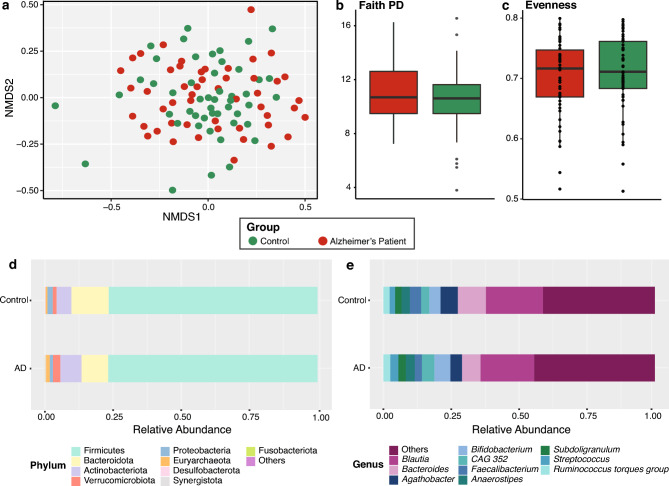
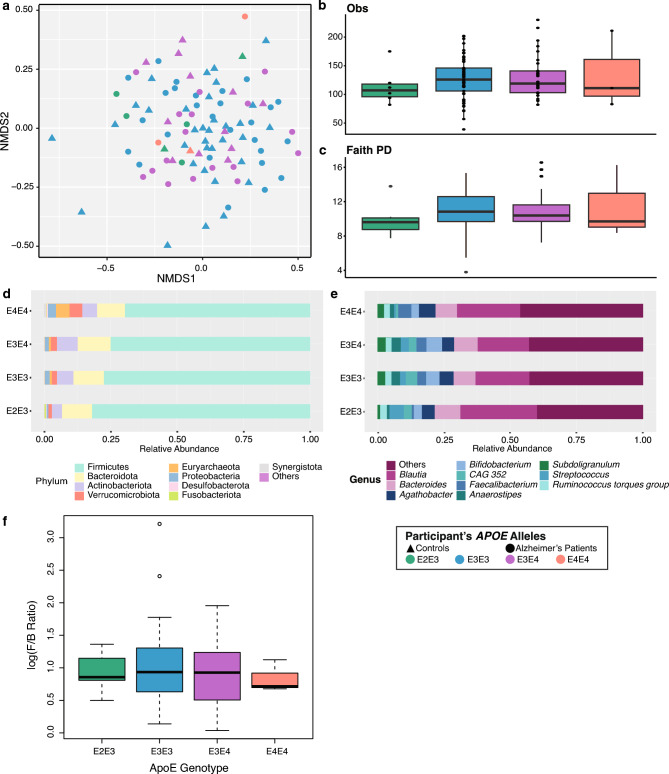
Alzheimer's disease (AD) is a neurodegenerative disorder that begins with memory loss and can lead to death. In Puerto Rico, AD is the fourth leading cause of death, while in the United States, it ranks fifth. Research suggests the gut microbiome contributes to the pathophysiology of AD by promoting inflammation and amyloid buildup in the brain. This study examined the composition and diversity of the gut microbiota in Puerto Ricans with AD compared to controls and its relationship with cognitive impairment severity and APOE status. We recruited 100 participants (50 AD, 50 controls), who underwent clinical and cognitive assessments (MoCA/CDR). While overall microbial diversity and richness showed no significant differences, specific bacterial taxa exhibited subtle differential abundance. Faecalibacterium and Bacteroides were moderately significant and increased on controls compared to AD. Moreover, individuals carrying the APOE E4 allele exhibited lower abundances of butyrate-producing bacteria and an enrichment of potentially pro-inflammatory genera, including Eggerthella and Lachnoclostridium. These findings suggest that gut microbiota dysbiosis may contribute to cognitive decline and AD progression, highlighting the potential for microbiome-targeted therapeutic interventions in AD prevention and treatment.
阿尔茨海默病(AD)是一种神经退行性疾病,始于记忆力丧失,最终可能导致死亡。在波多黎各,AD是第四大死因,而在美国则排名第五。研究表明,肠道微生物群通过促进大脑中的炎症和淀粉样蛋白积累,对AD的病理生理学产生影响。本研究调查了患有AD的波多黎各人肠道微生物群的组成和多样性,并与对照组进行比较,同时研究了其与认知障碍严重程度和载脂蛋白E(APOE)状态的关系。我们招募了100名参与者(50名AD患者,50名对照),他们接受了临床和认知评估(蒙特利尔认知评估量表/临床痴呆评定量表)。虽然总体微生物多样性和丰富度没有显著差异,但特定细菌类群表现出细微的丰度差异。与AD患者相比,粪杆菌属和拟杆菌属在对照组中具有中度显著差异且丰度增加。此外,携带APOE E4等位基因的个体中,产生丁酸盐的细菌丰度较低,而包括埃格特菌属和粪厌氧棒菌属在内的潜在促炎菌属则有所富集。这些发现表明,肠道微生物群失调可能导致认知能力下降和AD病情进展,突出了针对微生物群的治疗干预在AD预防和治疗中的潜力。