Institute of Food and Health and Conway Institute, UCD School of Agriculture and Food Science, UCD, Belfield, Dublin 4, Ireland.
The Rowett Institute, University of Aberdeen, Foresterhill, Aberdeen, AB25 2ZD, United Kingdom.
Redox Biol. 2023 Sep;65:102808. doi: 10.1016/j.redox.2023.102808. Epub 2023 Jul 5.
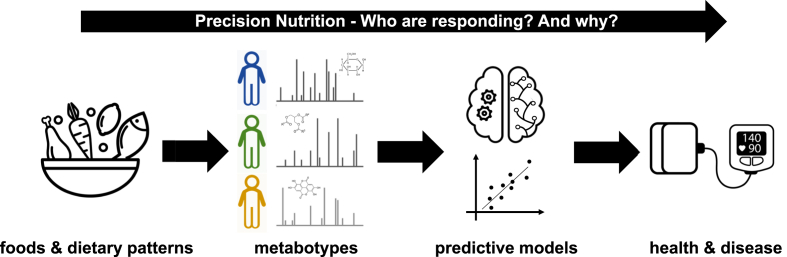
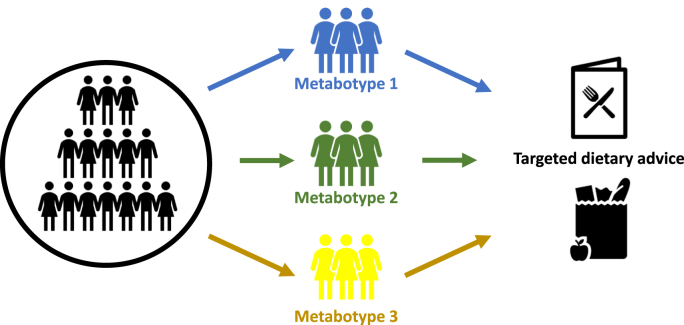
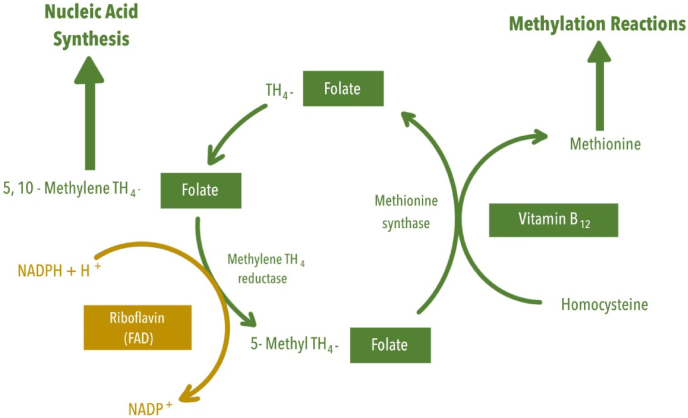
Precision nutrition aims to deliver personalised dietary advice to individuals based on their personal genetics, metabolism and dietary/environmental exposures. Recent advances have demonstrated promise for the use of omic technologies for furthering the field of precision nutrition. Metabolomics in particular is highly attractive as measurement of metabolites can capture information on food intake, levels of bioactive compounds and the impact of diets on endogenous metabolism. These aspects contain useful information for precision nutrition. Furthermore using metabolomic profiles to identify subgroups or metabotypes is attractive for the delivery of personalised dietary advice. Combining metabolomic derived metabolites with other parameters in prediction models is also an exciting avenue for understanding and predicting response to dietary interventions. Examples include but not limited to role of one carbon metabolism and associated co-factors in blood pressure response. Overall, while evidence exists for potential in this field there are also many unanswered questions. Addressing these and clearly demonstrating that precision nutrition approaches enable adherence to healthier diets and improvements in health will be key in the near future.
精准营养旨在根据个人的基因、代谢以及饮食/环境暴露情况为个体提供个性化的饮食建议。最近的进展表明,利用组学技术在精准营养领域具有广阔的应用前景。代谢组学尤其具有吸引力,因为代谢物的测量可以捕捉有关食物摄入、生物活性化合物水平以及饮食对内源性代谢影响的信息。这些方面包含了精准营养的有用信息。此外,使用代谢组图谱来识别亚组或代谢类型对于提供个性化的饮食建议也很有吸引力。将衍生的代谢物与预测模型中的其他参数相结合也是理解和预测饮食干预反应的一个令人兴奋的途径。例如,但不限于一碳代谢及其在血压反应中的相关辅助因子的作用。总的来说,尽管该领域有应用的潜力,但也有许多尚未解决的问题。解决这些问题,并明确表明精准营养方法能够促进更健康饮食的遵守和健康状况的改善,将是未来的关键。