Computational Health Informatics Group, Institute of Biomedicine of Seville, IBiS/Virgen del Rocío University Hospital/CSIC/University of Seville, Avenue Manuel Siurot S/N, 41013, Seville, Spain.
Internal Medicine Department, Virgen del Rocío University Hospital, Seville, Spain.
Health Res Policy Syst. 2023 Jul 10;21(1):70. doi: 10.1186/s12961-023-01026-1.
Digital transformation in healthcare and the growth of health data generation and collection are important challenges for the secondary use of healthcare records in the health research field. Likewise, due to the ethical and legal constraints for using sensitive data, understanding how health data are managed by dedicated infrastructures called data hubs is essential to facilitating data sharing and reuse.
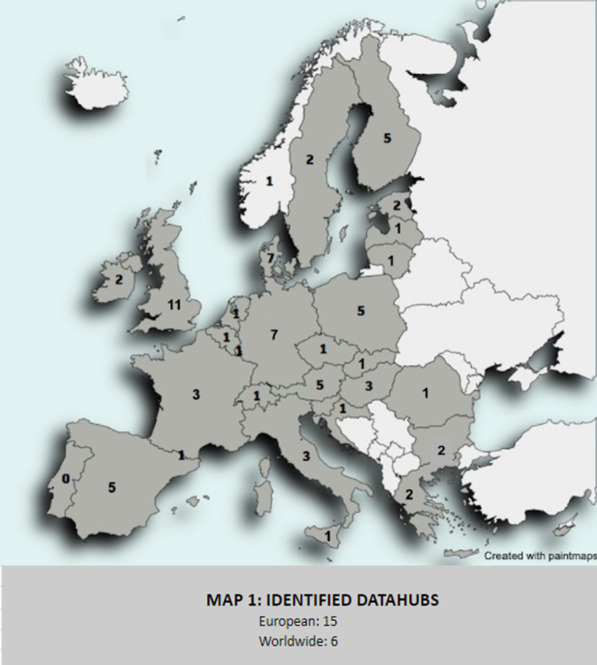
To capture the different data governance behind health data hubs across Europe, a survey focused on analysing the feasibility of linking individual-level data between data collections and the generation of health data governance patterns was carried out. The target audience of this study was national, European, and global data hubs. In total, the designed survey was sent to a representative list of 99 health data hubs in January 2022.
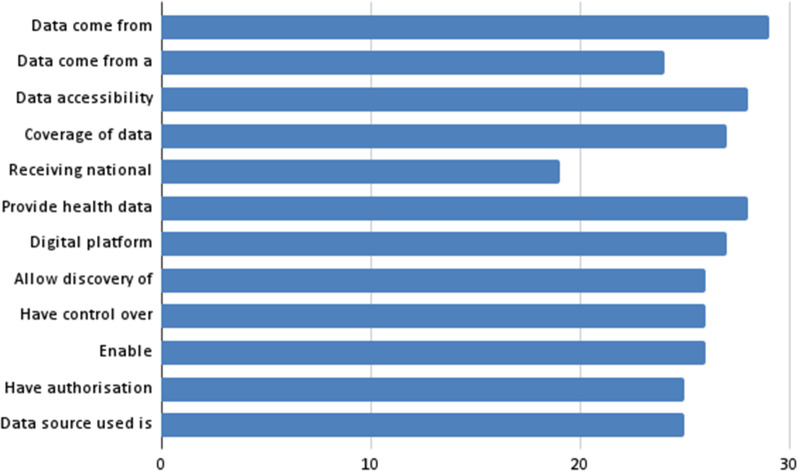
In total, 41 survey responses received until June 2022 were analysed. Stratification methods were performed to cover the different levels of granularity identified in some data hubs' characteristics. Firstly, a general pattern of data governance for data hubs was defined. Afterward, specific profiles were defined, generating specific data governance patterns through the stratifications in terms of the kind of organization (centralized versus decentralized) and role (data controller or data processor) of the health data hub respondents.
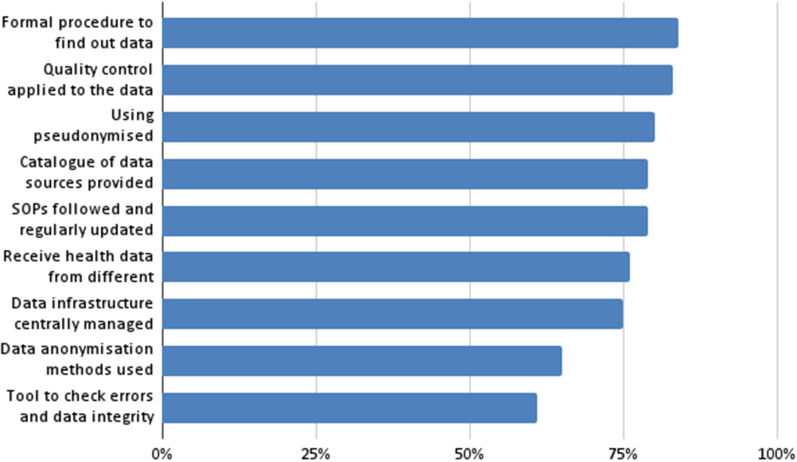
The analysis of the responses from health data hub respondents across Europe provided a list of the most frequent aspects, which concluded with a set of specific best practices on data management and governance, taking into account the constraints of sensitive data. In summary, a data hub should work in a centralized way, providing a Data Processing Agreement and a formal procedure to identify data providers, as well as data quality control, data integrity and anonymization methods.
医疗保健领域的数字化转型以及健康数据生成和收集的增长,是医疗记录在健康研究领域得到二次利用的重要挑战。同样,由于使用敏感数据的道德和法律限制,了解专门的数据中心基础设施如何管理数据对于促进数据共享和重用至关重要。
为了捕捉欧洲各地数据中心背后的不同数据治理方式,我们进行了一项侧重于分析在数据集合之间链接个人级别数据的可行性的调查,以及生成健康数据治理模式。本研究的目标受众是国家、欧洲和全球的数据中心。总共,在 2022 年 1 月向代表名单中的 99 个健康数据中心发送了设计好的调查。
截至 2022 年 6 月,共收到 41 份调查回复,对其进行了分析。进行了分层方法,以涵盖一些数据中心特征中确定的不同粒度级别。首先,为数据中心定义了一般的数据治理模式。之后,通过数据中心受访者的组织形式(集中式与分散式)和角色(数据控制者或数据处理者)进行分层,定义了具体的档案,生成了特定的数据治理模式。
对欧洲各地数据中心受访者的回复进行分析,列出了最常见的方面,并提出了一套具体的数据管理和治理最佳实践,同时考虑到敏感数据的限制。总之,数据中心应该以集中的方式运作,提供数据处理协议和正式程序来识别数据提供者,以及数据质量控制、数据完整性和匿名化方法。