Departamento de Ciencias Médicas Básicas, Universidad de la Laguna, Tenerife, Spain.
Instituto de Tecnologías Biomédicas, Universidad de la Laguna, Tenerife, Spain.
Brain Behav. 2023 Aug;13(8):e3049. doi: 10.1002/brb3.3049. Epub 2023 Jul 11.
Rehabilitation after a stroke is widely considered fundamental to improve secondary functional impairments. Accessible methods based on motor learning, motor transfer and virtual environments are necessary to help to improve stroke patients' quality of life.
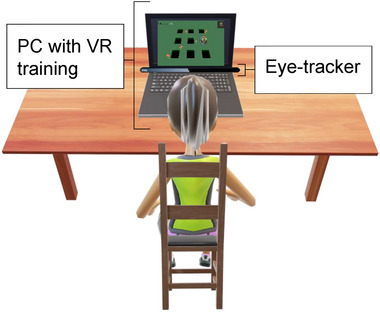
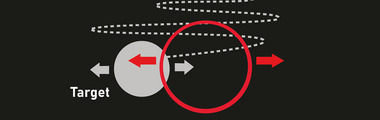
Continuing the line of our previous studies, this work investigated the effect of our new and innovative game-based virtual reality training using the control of virtual objects with gaze in three chronic stroke survivors.
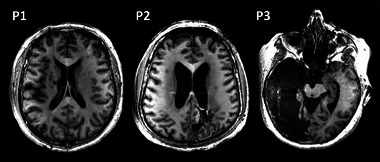
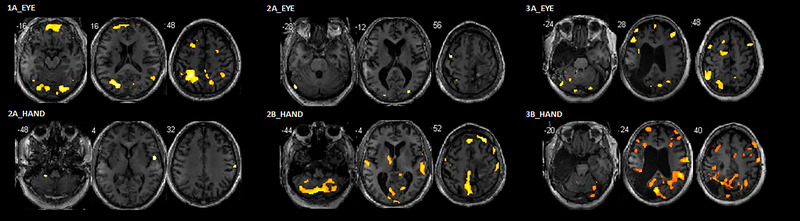
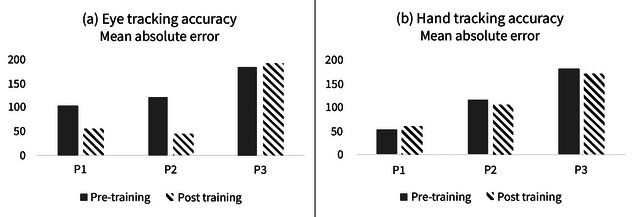
All participants performed an eye-controlled virtual training task for 4 weeks. Pre- and post-training evaluation were carried out with the Fugl-Meyer Assessment for upper extremity scale as well as performing a tracking task inside an MRI scanner with a MRI-compatible eye-tracker or a joystick.
Neural results for each participant show the increase of activity in the motor cortex, basal ganglia and cerebellum for both effectors (hand or eye).
These promising results have a potential application as a new game-based neurorehabilitation approach to enhance the motor activity of stroke patients.
脑卒中后的康复被广泛认为是改善继发性功能障碍的基础。基于运动学习、运动转移和虚拟环境的可及方法对于提高脑卒中患者的生活质量是必要的。
延续我们之前研究的思路,本研究调查了我们使用注视控制虚拟对象的新型创新基于游戏的虚拟现实训练对 3 名慢性脑卒中幸存者的影响。
所有参与者均进行了为期 4 周的眼控虚拟训练任务。在训练前后,使用 Fugl-Meyer 上肢评估量表以及使用与 MRI 兼容的眼动追踪器或操纵杆在 MRI 扫描仪内进行跟踪任务进行评估。
每位参与者的神经结果都显示出,对于两种效应器(手或眼),运动皮层、基底节和小脑的活动都增加了。
这些有前景的结果可作为一种新的基于游戏的神经康复方法应用,以增强脑卒中患者的运动活动能力。