Intensive Care Unit, The First Affiliated Hospital of Zhengzhou University, Zhengzhou, Henan Province, China.
Department of Neurology, The First Affiliated Hospital of Zhengzhou University, Zhengzhou, Henan Province, China.
Front Cell Infect Microbiol. 2023 Jun 26;13:1192931. doi: 10.3389/fcimb.2023.1192931. eCollection 2023.
Early and effective application of antimicrobial medication has been evidenced to improve outcomes of patients with bloodstream infection (BSI). However, conventional microbiological tests (CMTs) have a number of limitations that hamper a rapid diagnosis.
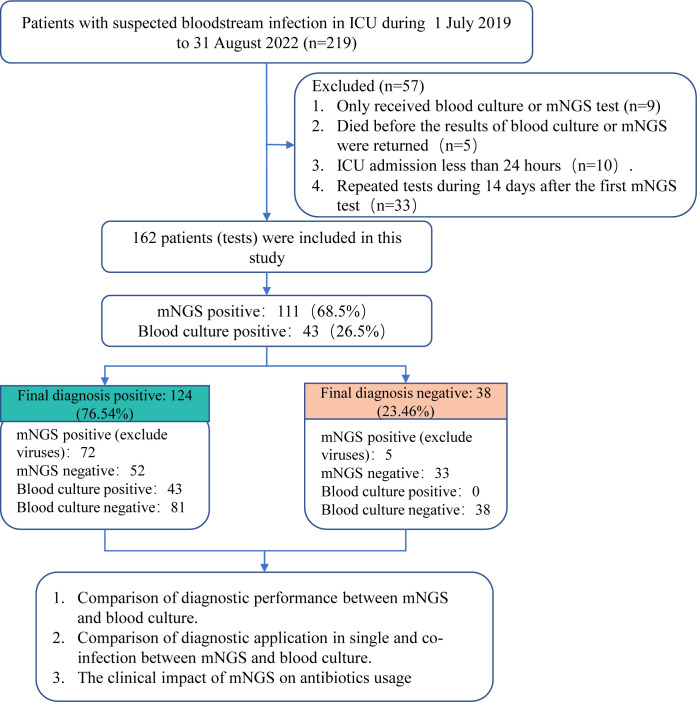
We retrospectively collected 162 cases suspected BSI from intensive care unit with blood metagenomics next-generation sequencing (mNGS) results, to comparatively evaluate the diagnostic performance and the clinical impact on antibiotics usage of mNGS.
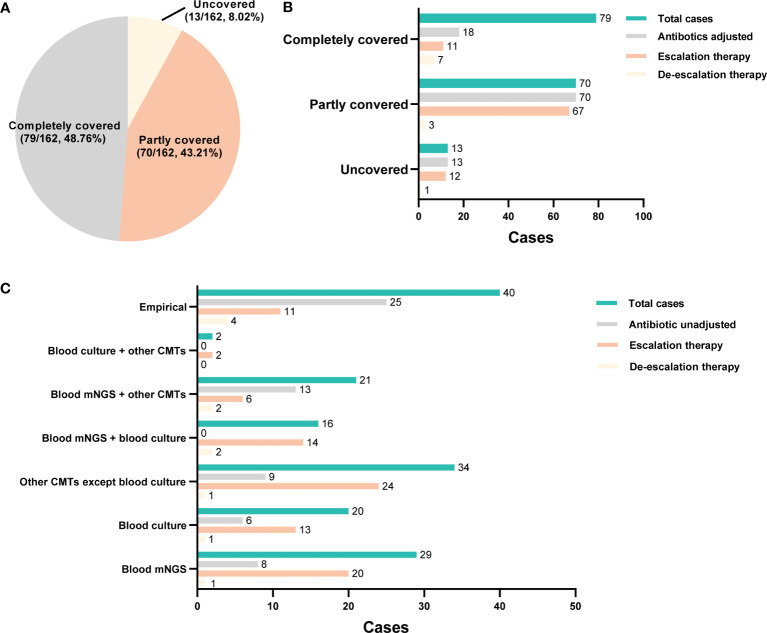
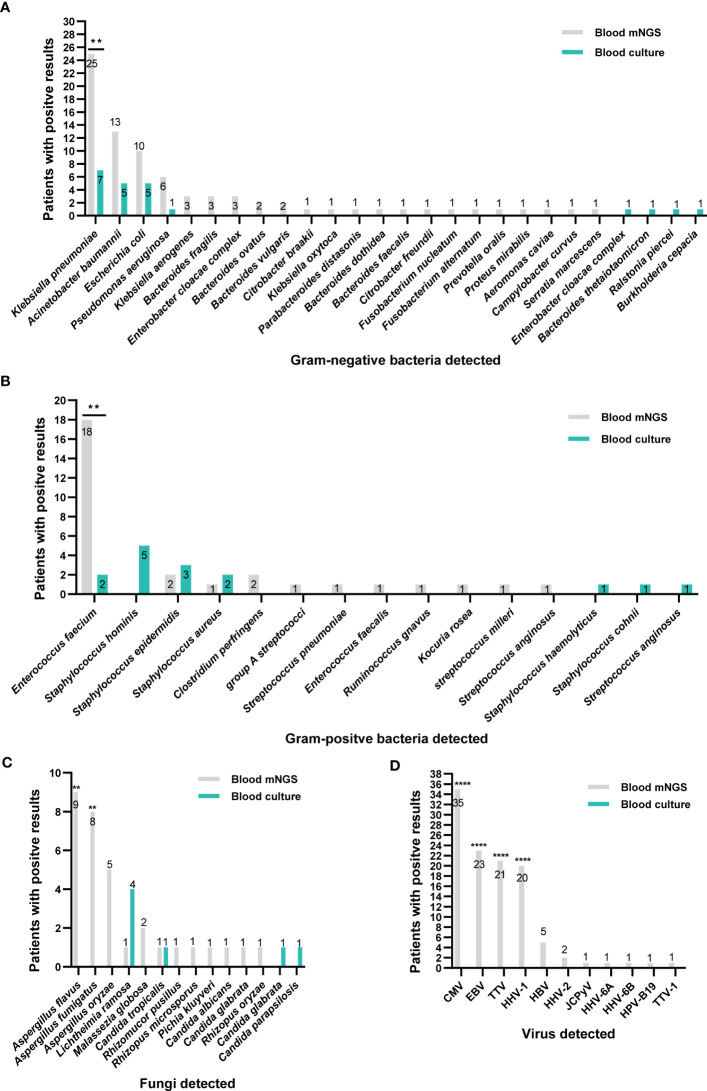
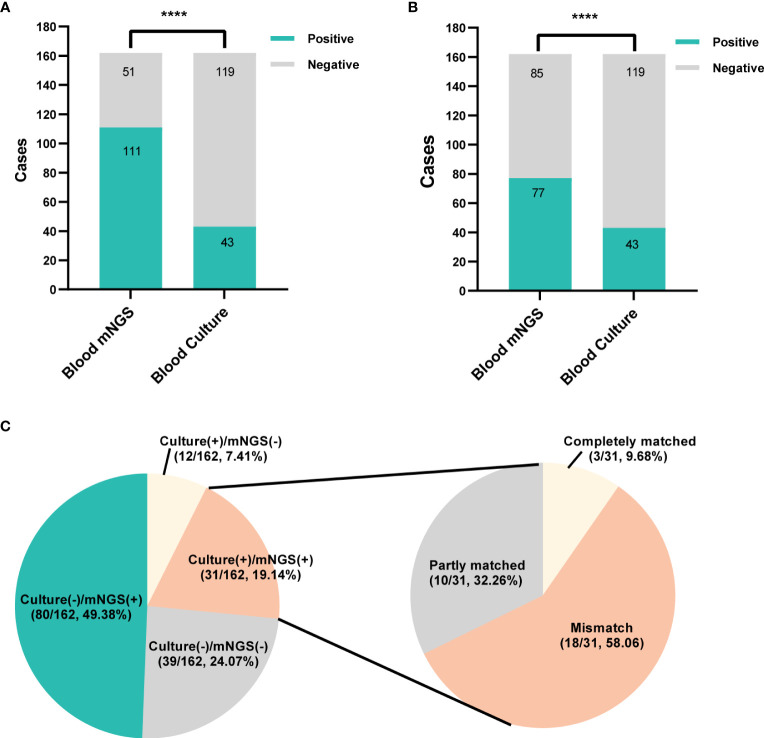
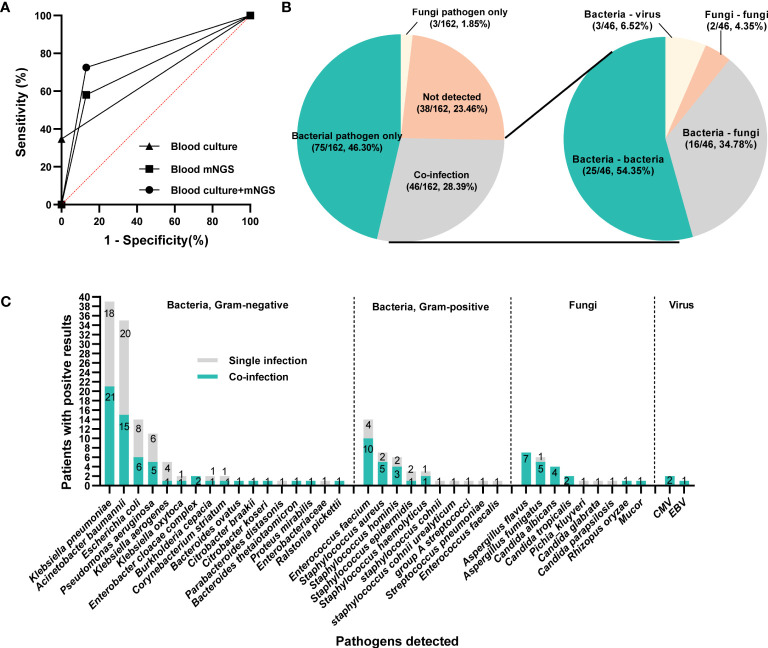
Results showed that compared with blood culture, mNGS detected a greater number of pathogens, especially for , and yielded a significantly higher positive rate. With the final clinical diagnosis as the standard, the sensitivity of mNGS (excluding viruses) was 58.06%, significantly higher than that of blood culture (34.68%, <0.001). Combing blood mNGS and culture results, the sensitivity improved to 72.58%. Forty-six patients had infected by mixed pathogens, among which and contributed most. Compared to monomicrobial, cases with polymicrobial BSI exhibited dramatically higher level of SOFA, AST, hospitalized mortality and 90-day mortality (<0.05). A total of 101 patients underwent antibiotics adjustment, among which 85 were adjusted according to microbiological results, including 45 cases based on the mNGS results (40 cases escalation and 5 cases de-escalation) and 32 cases on blood culture. Collectively, for patients suspected BSI in critical condition, mNGS results can provide valuable diagnostic information and contribute to the optimizing of antibiotic treatment. Combining conventional tests with mNGS may significantly improve the detection rate for pathogens and optimize antibiotic treatment in critically ill patients with BSI.
早期和有效的抗菌药物应用已被证明可以改善血流感染(BSI)患者的预后。然而,传统的微生物学检测(CMTs)存在许多限制,阻碍了快速诊断。
我们回顾性收集了 162 例来自重症监护病房的疑似 BSI 患者的血基因宏基因组下一代测序(mNGS)结果,以比较评估 mNGS 的诊断性能和对抗生素使用的临床影响。
结果表明,与血培养相比,mNGS 检测到更多的病原体,特别是真菌和病毒,阳性率显著更高。以最终临床诊断为标准,mNGS(不包括病毒)的敏感性为 58.06%,显著高于血培养(34.68%,<0.001)。将血 mNGS 和培养结果结合起来,敏感性提高到 72.58%。46 例患者感染混合病原体,其中和占比最高。与单一致病菌相比,多病原体 BSI 患者的 SOFA、AST 水平更高,住院死亡率和 90 天死亡率更高(<0.05)。共有 101 例患者进行了抗生素调整,其中 85 例根据微生物学结果进行了调整,包括 45 例基于 mNGS 结果(40 例升级和 5 例降级)和 32 例基于血培养的结果。总体而言,对于病情危急的疑似 BSI 患者,mNGS 结果可以提供有价值的诊断信息,并有助于优化抗生素治疗。将传统检测与 mNGS 相结合可能会显著提高病原体的检出率,并优化重症 BSI 患者的抗生素治疗。