Menges Stephanie, Michaelis Martin, Kleinschmidt-Dörr Kerstin
Merck Healthcare KGaA, Darmstadt, Germany.
Merck KGaA, Darmstadt, Germany.
Front Physiol. 2023 Jun 26;14:1201328. doi: 10.3389/fphys.2023.1201328. eCollection 2023.
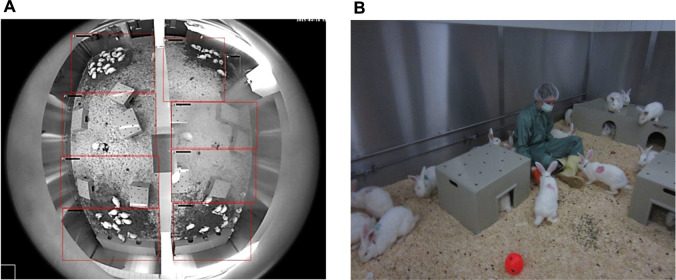
Osteoarthritis (OA) is a common joint disorder often affecting the knee. It is characterized by alterations of various joint tissues including subchondral bone and by chronic pain. Anti-nerve growth factor (NGF) antibodies have demonstrated improvement in pain associated with OA in phase 3 clinical trials but have not been approved due to an increased risk of developing rapidly progressive OA. The aim of this study was to investigate effects of systemic anti-NGF-treatment on structure and symptoms in rabbits with surgically induced joint instability. This was elicited by anterior cruciate ligament transection and partial resection of the medial meniscus in right knee of 63 female rabbits, housed altogether in a 56 m floor husbandry. Rabbits received either 0.1, 1 or 3 mg/kg anti-NGF antibody intra-venously at weeks 1, 5 and 14 after surgery or vehicle. During in-life phase, static incapacitance tests were performed and joint diameter was measured. Following necropsy, gross morphological scoring and micro-computed tomography analysis of subchondral bone and cartilage were performed. After surgery, rabbits unloaded operated joints, which was improved with 0.3 and 3 mg/kg anti-NGF compared to vehicle injection during the first half of the study. The diameter of operated knee joints increased over contralateral measures. This increase was bigger in anti-NGF treated rabbits beginning 2 weeks after the first IV injection and became dose-dependent and more pronounced with time. In the 3 mg/kg anti-NGF group, the bone volume fraction and trabecular thickness increased in the medio-femoral region of operated joints compared to contralateral and to vehicle-treated animals, while cartilage volume and to a lesser extent thickness decreased. Enlarged bony areas were found in right medio-femoral cartilage surfaces of animals receiving 1 and 3 mg/kg anti-NGF. Alterations of all structural parameters were particularly distinct in a subgroup of three rabbits, which also exhibited more prominent symptomatic improvement. This study showed that anti-NGF administration exerted negative impact on structure in destabilized joints of rabbits, while pain-induced unloading of joints was improved. Our findings open up the possibility to better understand the effects of systemic anti-NGF, particularly on subchondral bone, and thus the occurrence of rapidly progressive OA in patients.
骨关节炎(OA)是一种常见的关节疾病,常累及膝关节。其特征是包括软骨下骨在内的各种关节组织发生改变,并伴有慢性疼痛。抗神经生长因子(NGF)抗体在3期临床试验中已显示出对与OA相关的疼痛有改善作用,但由于发生快速进展性OA的风险增加而未获批准。本研究的目的是调查全身抗NGF治疗对手术诱导关节不稳定的兔的结构和症状的影响。这是通过切断63只雌性兔右膝的前交叉韧带并部分切除内侧半月板来诱发的,这些兔子共同饲养在一个56平方米的饲养场中。兔子在术后第1、5和14周静脉注射0.1、1或3mg/kg抗NGF抗体或赋形剂。在实验期间,进行静态失能测试并测量关节直径。尸检后,对软骨下骨和软骨进行大体形态评分和微计算机断层扫描分析。手术后,兔子卸载手术关节,在研究的前半段,与注射赋形剂相比,0.3和3mg/kg抗NGF可改善这种情况。手术膝关节的直径相对于对侧测量值增加。这种增加在首次静脉注射后2周开始在抗NGF治疗的兔子中更大,并变得剂量依赖性且随时间更明显。在3mg/kg抗NGF组中,与对侧和赋形剂治疗的动物相比,手术关节的中股骨区域的骨体积分数和小梁厚度增加,而软骨体积以及在较小程度上软骨厚度减少。在接受1和3mg/kg抗NGF的动物的右中股骨软骨表面发现骨面积增大。所有结构参数的改变在三只兔子的亚组中尤为明显,该亚组也表现出更显著的症状改善。本研究表明,抗NGF给药对兔不稳定关节的结构产生负面影响,而疼痛引起的关节卸载得到改善。我们的研究结果为更好地理解全身抗NGF的作用,特别是对软骨下骨的作用,以及患者中快速进展性OA的发生提供了可能性。