Department of Geriatrics, Jiangsu Provincial Key Laboratory of Geriatrics, the First Affiliated Hospital of Nanjing Medical University, Nanjing 210029, China.
Department of Anesthesiology, First Affiliated Hospital of Nanjing Medical University, Nanjing 210029, China.
Theranostics. 2023 Jul 3;13(11):3856-3871. doi: 10.7150/thno.82607. eCollection 2023.
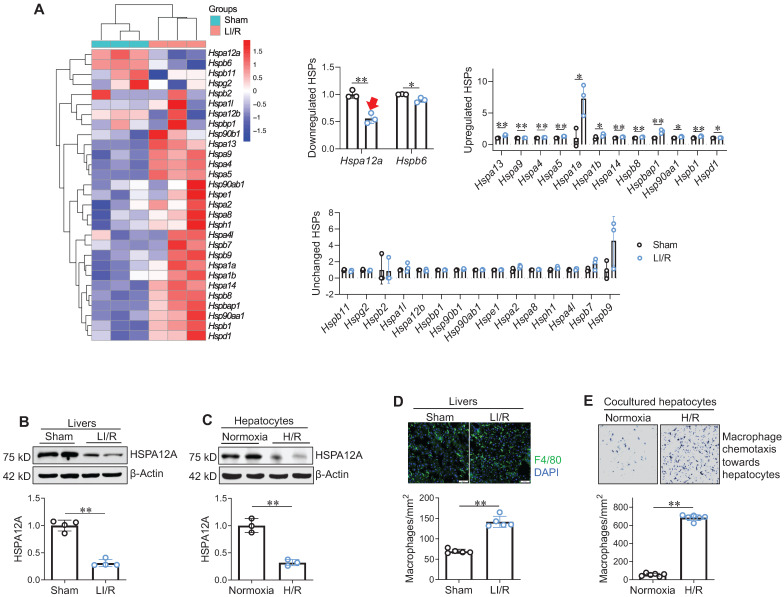
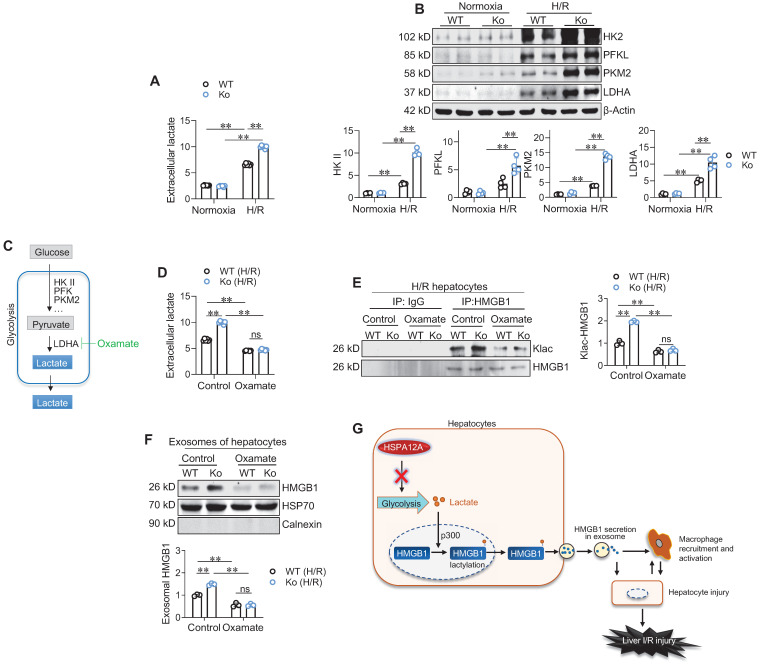
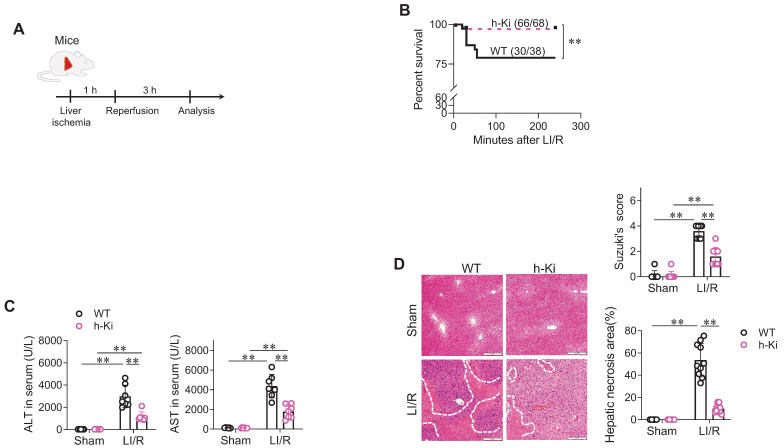
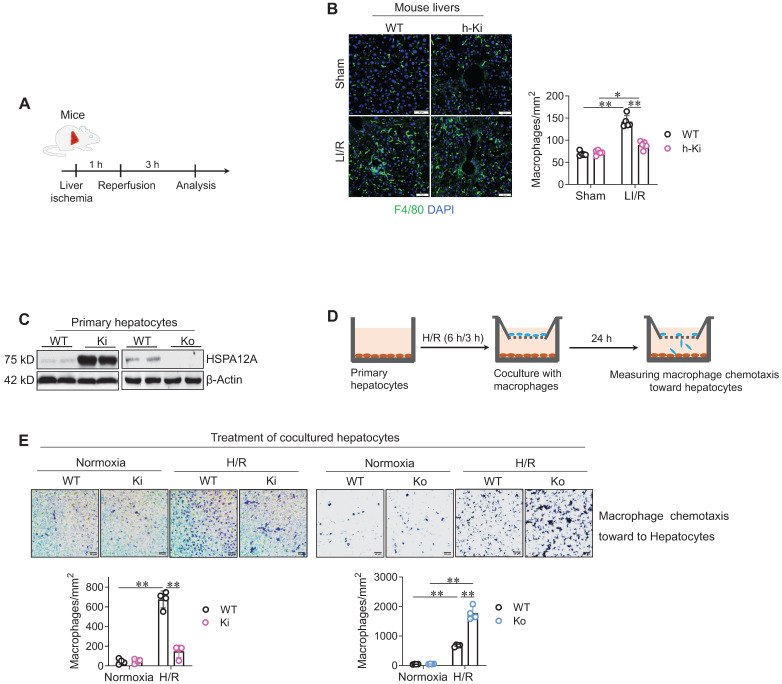
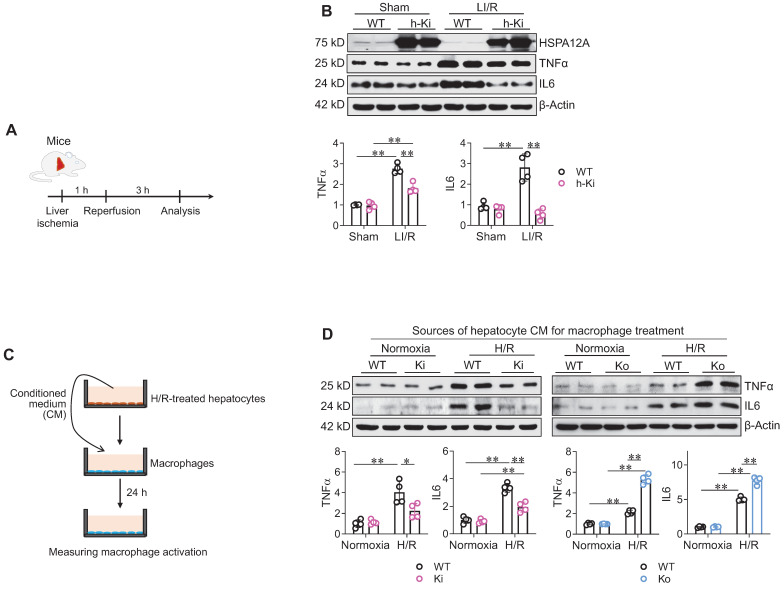
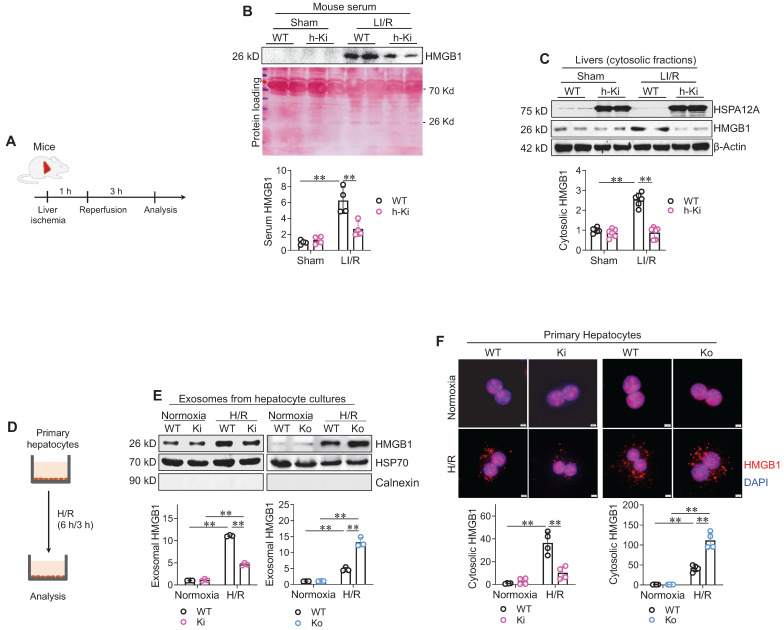
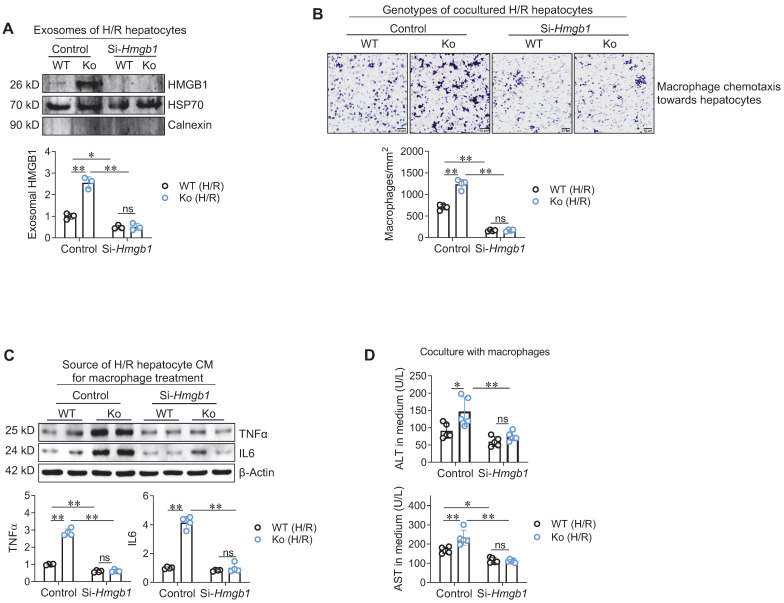
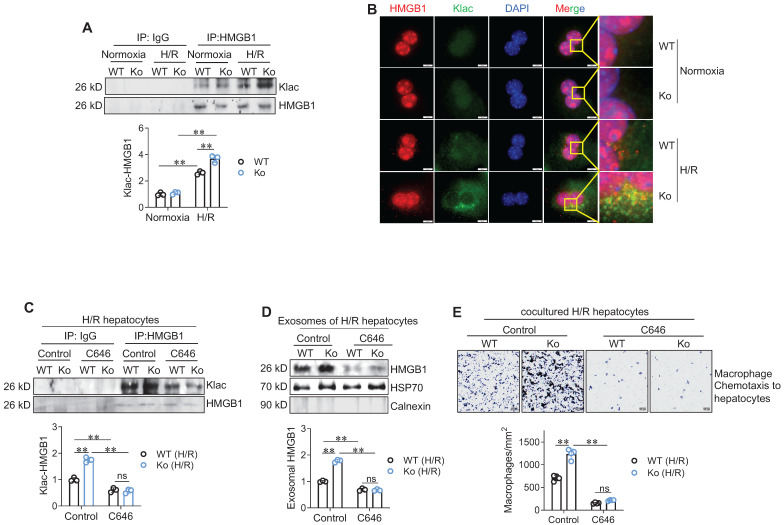
Liver ischemia-reperfusion (LI/R) injury is characterized by two interconnected phases: local ischemia that causes hepatic cell damage to release damage-associated molecular pattern (DAMPs), and DAMPs that recruit immune cells to elicit inflammatory cascade for further injury of hepatocytes. High-mobility group box 1 (HMGB1) is a representative DAMP. Studies in macrophages demonstrated that HMGB1 is secreted after lactylation during sepsis. However, whether lactylation mediates HMGB1 secretion from hepatocytes after LI/R is known. Heat shock protein A12A (HSPA12A) is an atypical member of HSP70 family. Gene expression was examined by microarray analysis and immunoblotting. The hepatic injury was analyzed using released ALT and AST activities assays. Hepatic macrophage chemotaxis was evaluated by Transwell chemotaxis assays. Inflammatory mediators were evaluated by immunoblotting. HMGB1 secretion was examined in exosomes or serum. HMGB1 lactylation was determined using immunoprecipitation and immunoblotting. Here, we report that LI/R decreased HSPA12A expression in hepatocytes, while hepatocyte-specific HSPA12A overexpression attenuated LI/R-induced hepatic dysfunction and mortality of mice. We also noticed that hepatocyte HSPA12A overexpression suppressed macrophage chemotaxis to LI/R-exposed livers and to hypoxia/reoxygenation (H/R)-exposed hepatocytes . The LI/R-increased serum HMGB1 levels of mice and the H/R-increased HMGB1 lactylation and secretion levels of hepatocytes were also inhibited by hepatocyte HSPA12A overexpression. By contrast, HSPA12A knockout in hepatocytes promoted not only H/R-induced HMGB1 lactylation and secretion of hepatocytes but also the effects of H/R-hepatocytes on macrophage chemotaxis and inflammatory activation, while all these deleterious effects of HSPA12A knockout were reversed following hepatocyte HMGB1 knockdown. Further molecular analyses showed that HSPA12A overexpression reduced glycolysis-generated lactate, thus decreasing HMGB1 lactylation and secretion from hepatocytes, thereby inhibiting not only macrophage chemotaxis but also the subsequent inflammatory cascade, which ultimately protecting against LI/R injury. Taken together, these findings suggest that hepatocyte HSPA12A is a novel regulator that protects livers from LI/R injury by suppressing glycolysis-mediated HMGB1 lactylation and secretion from hepatocytes to inhibit macrophage chemotaxis and inflammatory activation. Therefore, targeting hepatocyte HSPA12A may have therapeutic potential in the management of LI/R injury in patients.
肝缺血再灌注(LI/R)损伤的特征在于两个相互关联的阶段:局部缺血导致肝细胞损伤释放损伤相关分子模式(DAMPs),DAMPs 募集免疫细胞引发炎症级联反应,进一步损伤肝细胞。高迁移率族蛋白 B1(HMGB1)是一种代表性的 DAMPs。在巨噬细胞中的研究表明,HMGB1 在脓毒症期间发生乳酰化后被分泌。然而,尚不清楚乳酰化是否介导 LI/R 后肝细胞中 HMGB1 的分泌。热休克蛋白 A12A(HSPA12A)是 HSP70 家族的非典型成员。通过微阵列分析和免疫印迹检查基因表达。通过释放 ALT 和 AST 活性测定分析肝损伤。通过 Transwell 趋化实验评估肝巨噬细胞趋化性。通过免疫印迹评估炎症介质。通过外泌体或血清检查 HMGB1 的分泌。通过免疫沉淀和免疫印迹测定 HMGB1 乳酰化。在这里,我们报告说,LI/R 降低了肝细胞中的 HSPA12A 表达,而肝细胞特异性 HSPA12A 过表达减轻了 LI/R 诱导的肝功能障碍和小鼠死亡率。我们还注意到,肝细胞 HSPA12A 过表达抑制了巨噬细胞向 LI/R 暴露的肝脏和缺氧/复氧(H/R)暴露的肝细胞的趋化性。LI/R 增加的小鼠血清 HMGB1 水平和 H/R 增加的肝细胞 HMGB1 乳酰化和分泌水平也被肝细胞 HSPA12A 过表达抑制。相比之下,肝细胞 HSPA12A 敲除不仅促进了 H/R 诱导的肝细胞 HMGB1 乳酰化和分泌,还促进了 H/R-肝细胞对巨噬细胞趋化和炎症激活的作用,而肝细胞 HMGB1 敲低逆转了肝细胞 HSPA12A 敲除的所有这些有害作用。进一步的分子分析表明,HSPA12A 过表达减少了糖酵解产生的乳酸,从而降低了肝细胞中 HMGB1 的乳酰化和分泌,不仅抑制了巨噬细胞趋化作用,还抑制了随后的炎症级联反应,最终防止了 LI/R 损伤。综上所述,这些发现表明,肝细胞 HSPA12A 是一种新的调节剂,通过抑制糖酵解介导的肝细胞 HMGB1 乳酰化和分泌来抑制巨噬细胞趋化和炎症激活,从而保护肝脏免受 LI/R 损伤。因此,靶向肝细胞 HSPA12A 可能具有治疗 LI/R 损伤患者的治疗潜力。