
重复配种母牛综合征的当前见解
Current Insights in the Repeat Breeder Cow Syndrome.
作者信息
Pérez-Marín Carlos Carmelo, Quintela Luis Angel
机构信息
Department of Animal Medicine and Surgery, Faculty of Veterinary Medicine, University of Cordoba, 14014 Cordoba, Spain.
Unit of Reproduction and Obstetrics, Department of Animal Pathology, Faculty of Veterinary Medicine, Universidade de Santiago de Compostela, 27002 Lugo, Spain.
出版信息
Animals (Basel). 2023 Jul 3;13(13):2187. doi: 10.3390/ani13132187.
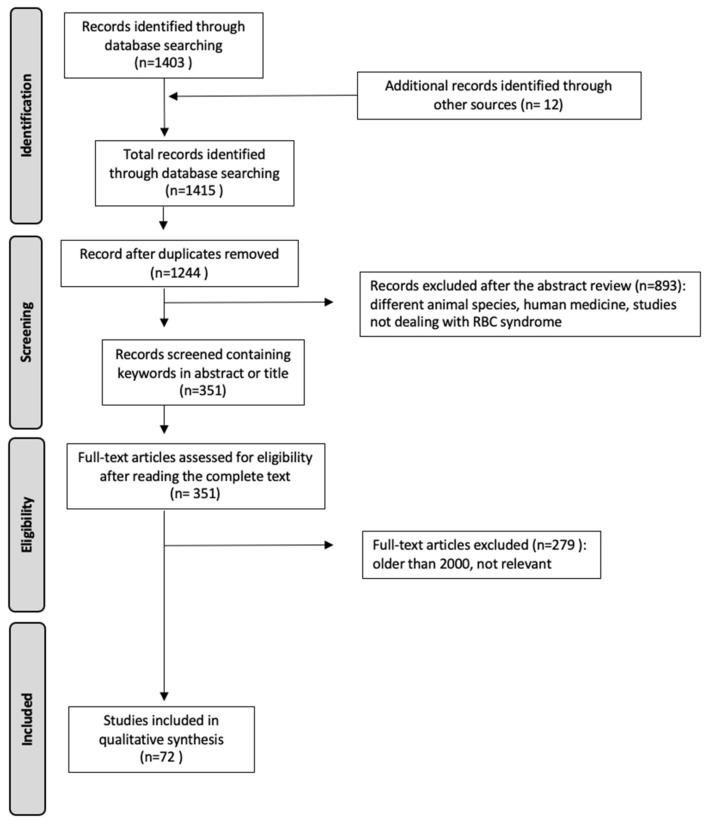
Cows can have difficulties becoming pregnant, and in certain cases, these reproductive failures do not have an evident cause. Furthermore, when these failures are repeated three or more times with estrous cycles of normal duration and in the absence of evident clinical signs, it is considered repeat breeder cow (RBC) syndrome. A substantive incidence of RBC syndrome has been reported all over the world, which severely affects the farm economy. This paper reviews those studies particularly focused on RBC syndrome from 2000 to 2023 but also includes consolidated information until this date. Hormonal imbalances, undetectable oviductal or uterine defects, or poor oocyte or embryo quality have been reported as causes of RBC syndrome, while subclinical endometritis has been considered a relevant causal agent. However, it is unresolved why this condition is recurrent in certain animals, despite the implementation of corrective management actions or treatments. Recent studies evaluate the putative role of certain genes, factors, hormones, or proteins in the pathogenesis of RBC syndrome. Numerous risk factors contribute to the appearance of this syndrome, and some of them could be mitigated to partially prevent this infertility, while others cannot be changed. Due to the complexity of this syndrome, it is important to increase knowledge about the mechanisms involved, develop new diagnostic tools to differentiate causal agents, and implement new treatments to restore fertility. There is consensus about the huge repercussions of this syndrome on farm profitability, but further studies are now needed to describe its economic impact.
奶牛受孕可能会遇到困难,在某些情况下,这些繁殖失败并无明显原因。此外,当这些失败在正常发情周期且无明显临床症状的情况下重复出现三次或更多次时,就被认为是屡配不孕奶牛(RBC)综合征。世界各地都报道了RBC综合征的大量发病情况,这严重影响了农场经济。本文回顾了2000年至2023年特别关注RBC综合征的那些研究,但也包括截至目前的综合信息。激素失衡、无法检测到的输卵管或子宫缺陷、或卵母细胞或胚胎质量差已被报道为RBC综合征的病因,而亚临床子宫内膜炎被认为是一个相关的致病因素。然而,尽管采取了纠正管理措施或治疗方法,这种情况为何在某些动物中反复出现仍未得到解决。最近的研究评估了某些基因、因子、激素或蛋白质在RBC综合征发病机制中的假定作用。许多风险因素导致了这种综合征的出现,其中一些可以减轻以部分预防这种不孕症,而另一些则无法改变。由于这种综合征的复杂性,增加对其涉及机制的了解、开发新的诊断工具以区分致病因素以及实施新疗法以恢复生育能力非常重要。人们一致认为这种综合征对农场盈利能力有巨大影响,但现在需要进一步研究来描述其经济影响。

 Zotero 插件