Faculty of Health Sciences, Ontario Tech University, 2000 Simcoe St. N, Oshawa, ON L1G 0C5, Canada.
Int J Environ Res Public Health. 2023 Jun 29;20(13):6249. doi: 10.3390/ijerph20136249.
This review aimed to identify and synthesize the existing literature on the effects of socioeconomic status (SES) changes on health.
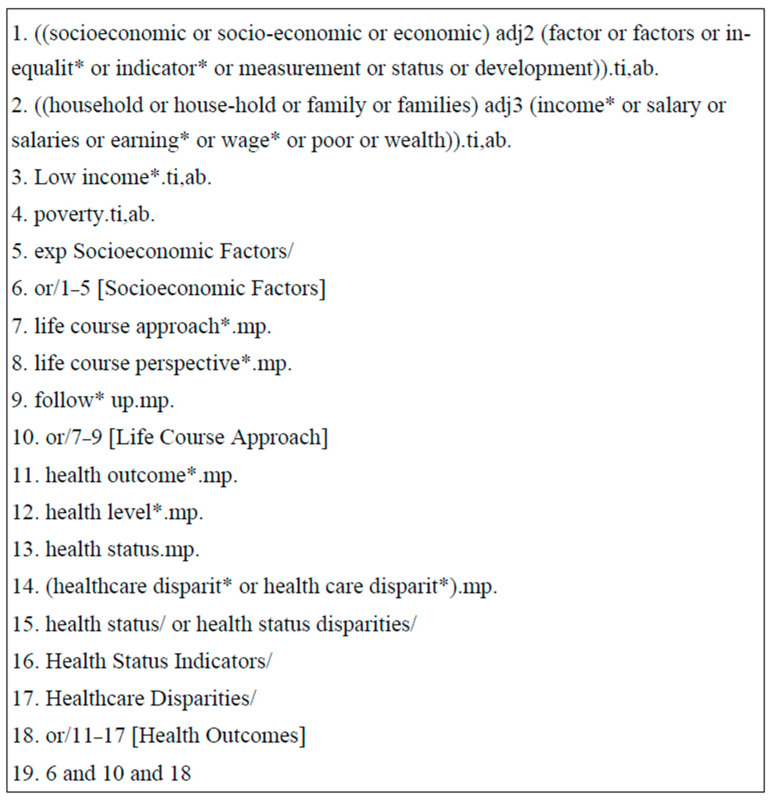
A review was conducted using Medline, Cochrane library, and CINAHL (Cumulative Index to Nursing and Allied Health Literature). All longitudinal or cross-sectional studies that examined links between changes to SES across different time periods and measured health outcomes were included. Screening was conducted using select inclusion and exclusion criteria in order of title, abstract, and full text. Two independent reviewers assessed the quality of the full text articles using the Downs and Black checklist.
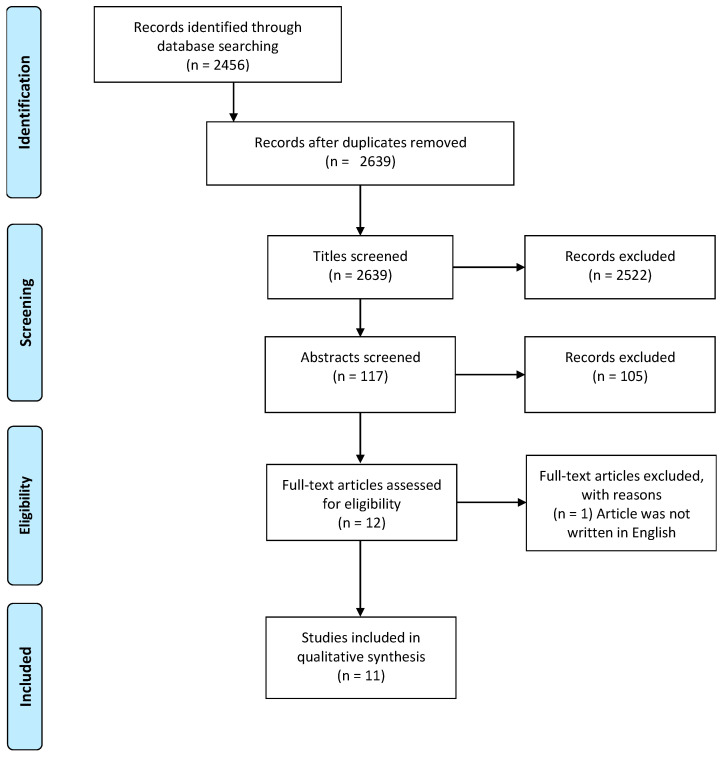
Our literature search led to 2719 peer reviewed articles, 2639 of which were title screened after duplicates were removed. A total of 117 abstracts and 12 full text articles were screened. Overall, findings from 11 articles form the basis of this review. Eight different types of measures of changes to SES were identified. These include education, occupation, economic security, income sufficiency, home ownership, car ownership, health insurance, and marital status. Assessed outcomes included measures related to physical health, cardiovascular disease, mental health, and oral health. A large proportion of studies found that an SES change impacts health. Evidence suggests that those with consistently high SES have the best health outcomes, followed by those who report their SES change from low to high (upward social mobility). Evidence on the relative health effects for those who report their SES change from high to low (downward social mobility) compared to those who report consistently low SES is inconsistent.
Current evidence suggests that an SES change has an impact on an individual's health. More research on the effects of SES changes on health outcomes in adulthood is needed and can inform various areas of health research including health resiliency and development. Future studies should focus on individual SES indicators and their effects on health outcomes at multiple points throughout life.
本综述旨在确定并综合现有关于社会经济地位(SES)变化对健康影响的文献。
使用 Medline、Cochrane 图书馆和 CINAHL(护理和联合健康文献累积索引)进行综述。所有研究 SES 在不同时间段内变化与健康结果之间关系的纵向或横断面研究均被纳入。筛选采用标题、摘要和全文的选择性纳入和排除标准进行。两名独立评审员使用 Downs 和 Black 清单评估全文文章的质量。
我们的文献检索导致了 2719 篇同行评议文章,其中 2639 篇在去除重复项后进行了标题筛选。共筛选了 117 篇摘要和 12 篇全文文章。总体而言,11 篇文章的研究结果构成了本综述的基础。确定了 8 种不同类型的 SES 变化衡量标准。这些包括教育、职业、经济保障、收入充足、住房所有权、汽车所有权、医疗保险和婚姻状况。评估的结果包括与身体健康、心血管疾病、心理健康和口腔健康相关的指标。大量研究发现 SES 变化会影响健康。证据表明,SES 一直较高的人健康状况最好,其次是报告 SES 从低到高变化(向上社会流动)的人。与报告 SES 一直较低的人相比,报告 SES 从高到低变化(向下社会流动)的人相对健康影响的证据不一致。
目前的证据表明 SES 变化对个体的健康有影响。需要更多关于 SES 变化对成年期健康结果影响的研究,可以为包括健康复原力和发展在内的各个健康研究领域提供信息。未来的研究应侧重于个体 SES 指标及其对整个生命周期内多个时间点健康结果的影响。