Saitta Lorena, Rizzo Giuliana, Tosto Claudio, Cicala Gianluca, Blanco Ignazio, Pergolizzi Eugenio, Ciobanu Romeo, Recca Giuseppe
Department of Civil Engineering and Architecture, University of Catania, Via Santa Sofia 64, 95125 Catania, Italy.
INSTM-UDR CT, Viale Andrea Doria 6, 95125 Catania, Italy.
Polymers (Basel). 2023 Jun 25;15(13):2809. doi: 10.3390/polym15132809.
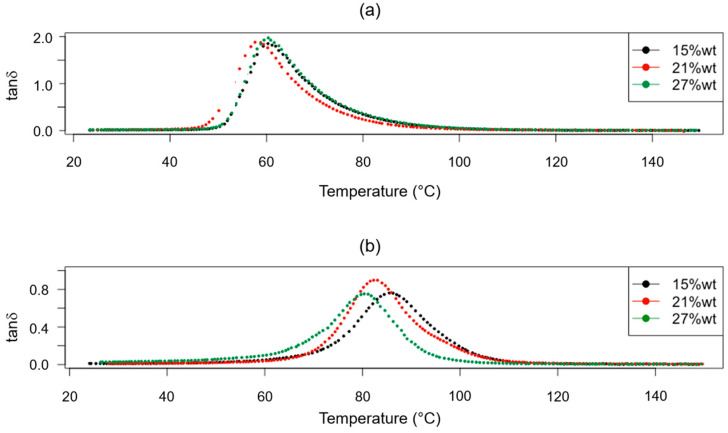
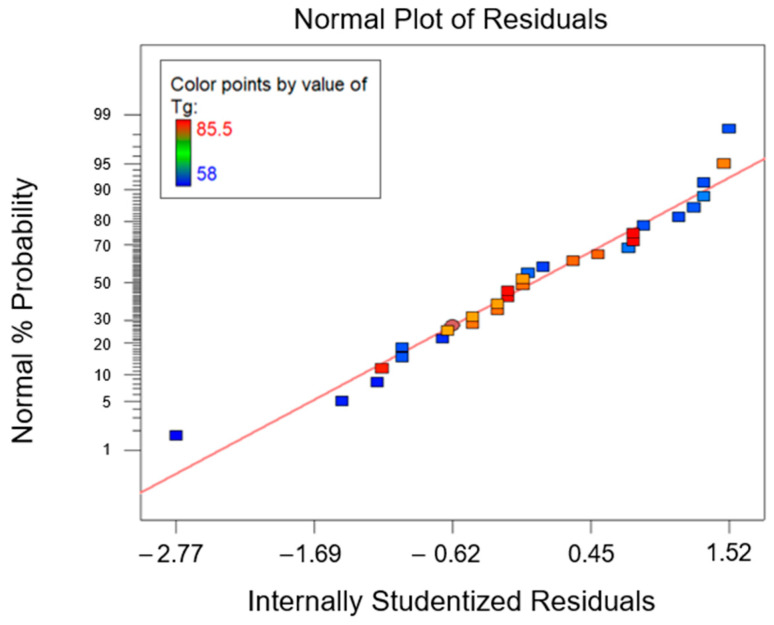
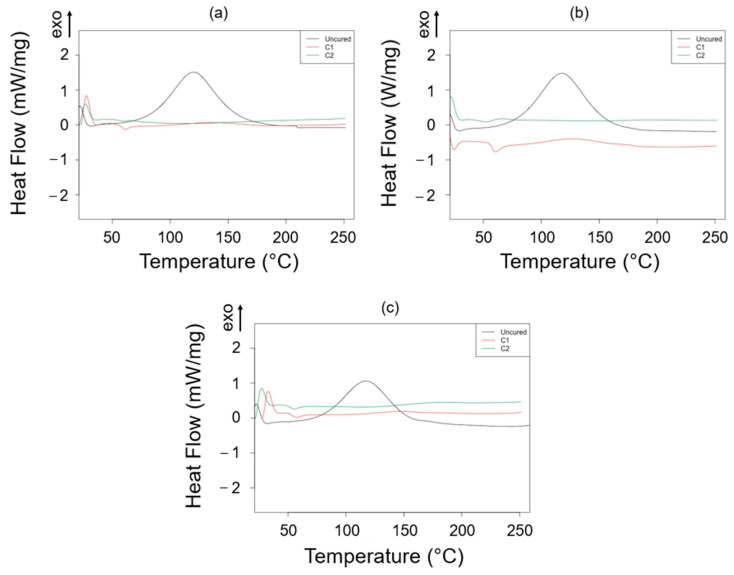
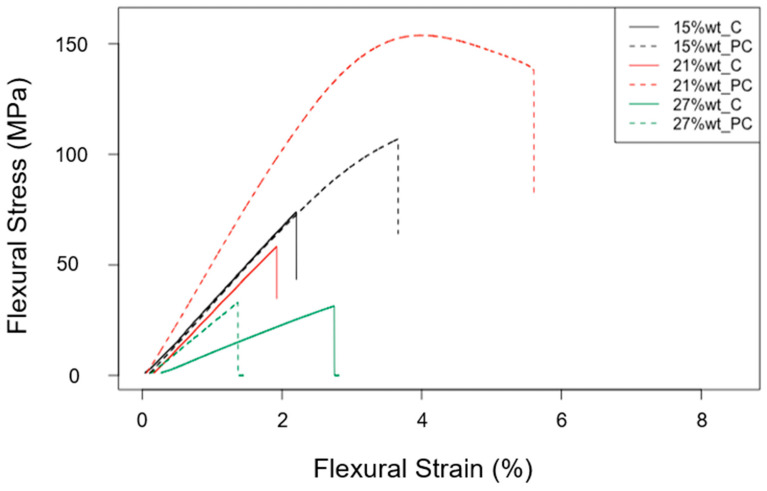
Currently, the epoxy resin market is expressing concerns about epoxy resins' non-recyclability, which can hinder their widespread use. Moreover, epoxy monomers are synthesized via petroleum-based raw materials, which also limits their use. So, it is crucial to find more environmentally friendly alternative solution for their formulation. Within this context, the aim of this paper is to exploit a Cradle-to-Cradle approach, which consists of remodeling and reshaping the productive cycle of consumer products to make sure that they can be infinitely reused rather than just being recycled with a downgrading of their properties or uses, according to the principle of the complete circular economy. Indeed, after starting with a fully-recyclable bio-based epoxy formulation and assessing its recyclability as having a process yield of 99%, we obtained a recycled polymer that could be reused, mixing with the same bio-based epoxy formulation with percentages varying from 15 wt% to 27 wt%. The formulation obtained was thoroughly characterized by a dynamic-mechanical analysis, differential scanning calorimetry, and flexural tests. This approach had two advantages: (1) it represented a sustainable disposal route for the epoxy resin, with nearly all the epoxy resin recovered, and (2) the obtained recycled polymer could be used as a green component of the primary bio-based epoxy matrix. In the end, by using replicated general factorial designs (as statistical tools) combined with a proper optimization process, after carrying out a complete thermo-mechanical characterization of the developed epoxy formulations, the right percentage of recycled polymer content was selected with the aim of identifying the most performing epoxy matrix formulation in terms of its thermo-mechanical properties.
目前,环氧树脂市场对环氧树脂的不可回收性表示担忧,这可能会阻碍其广泛应用。此外,环氧单体是通过石油基原料合成的,这也限制了它们的使用。因此,为其配方找到更环保的替代解决方案至关重要。在此背景下,本文的目的是采用从摇篮到摇篮的方法,该方法包括重塑和重新塑造消费品的生产周期,以确保它们能够无限期地重复使用,而不是仅仅进行回收,同时避免其性能或用途下降,这符合完全循环经济的原则。事实上,从一种完全可回收的生物基环氧配方开始,并评估其回收性,其工艺产率为99%,我们得到了一种可重复使用的回收聚合物,它可以与相同的生物基环氧配方以15 wt%至27 wt%的不同比例混合。通过动态力学分析、差示扫描量热法和弯曲试验对所得配方进行了全面表征。这种方法有两个优点:(1)它为环氧树脂提供了一条可持续的处置途径,几乎所有的环氧树脂都得到了回收;(2)所得的回收聚合物可以用作主要生物基环氧基体的绿色组分。最后,通过使用重复的通用因子设计(作为统计工具)并结合适当的优化过程,在对所开发的环氧配方进行完整的热机械表征之后,选择了合适的回收聚合物含量百分比,旨在确定在热机械性能方面表现最佳的环氧基体配方。