Department of Psychology, University of British Columbia, Vancouver, BC V6T 1Z4, Canada.
HealthQb Technologies Inc., Vancouver, BC V6K 1B5, Canada.
Sensors (Basel). 2023 Jun 24;23(13):5863. doi: 10.3390/s23135863.
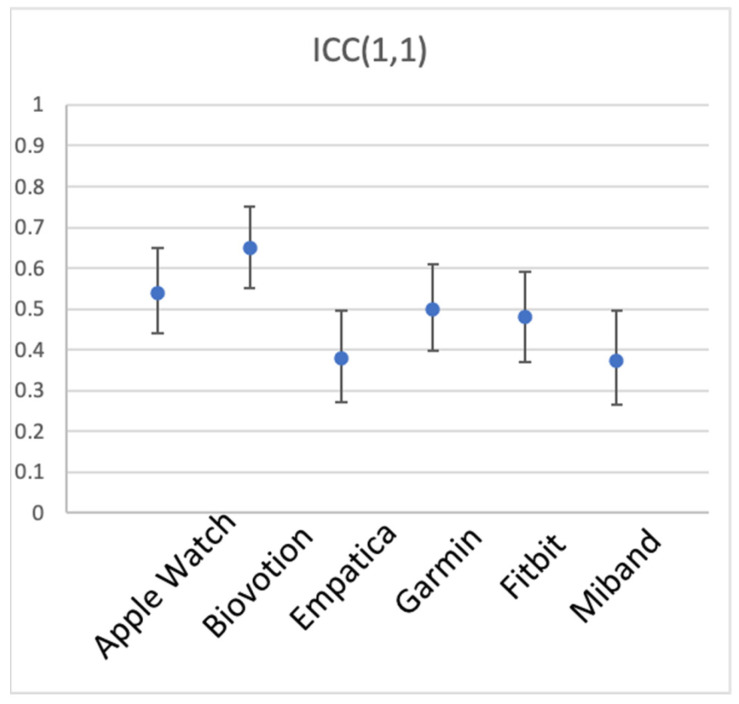
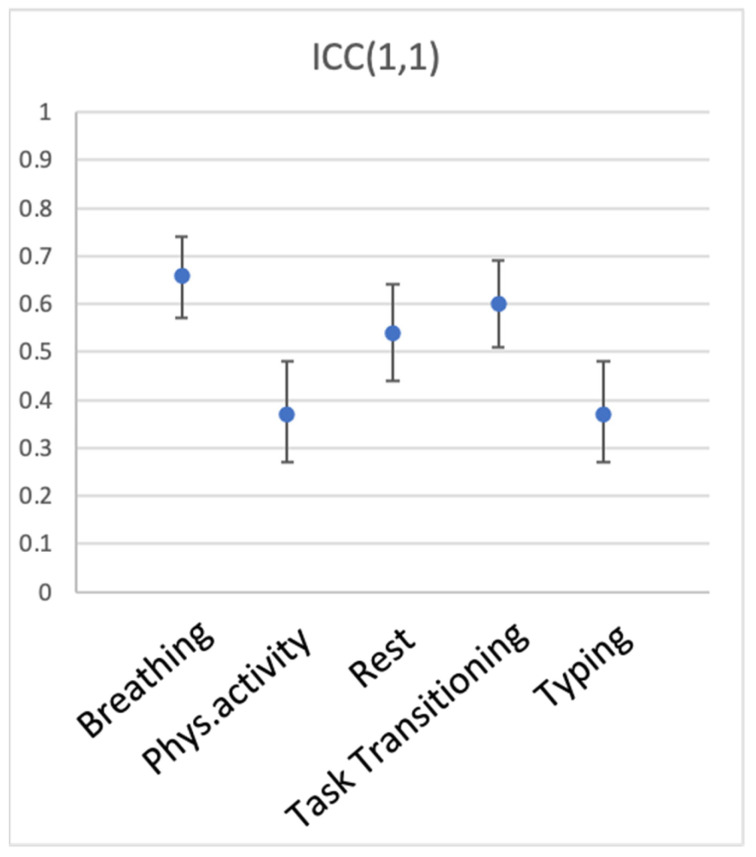
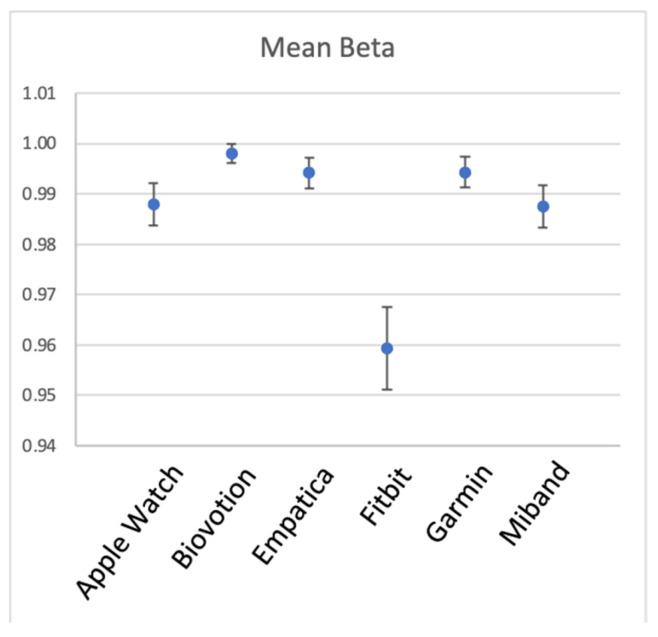
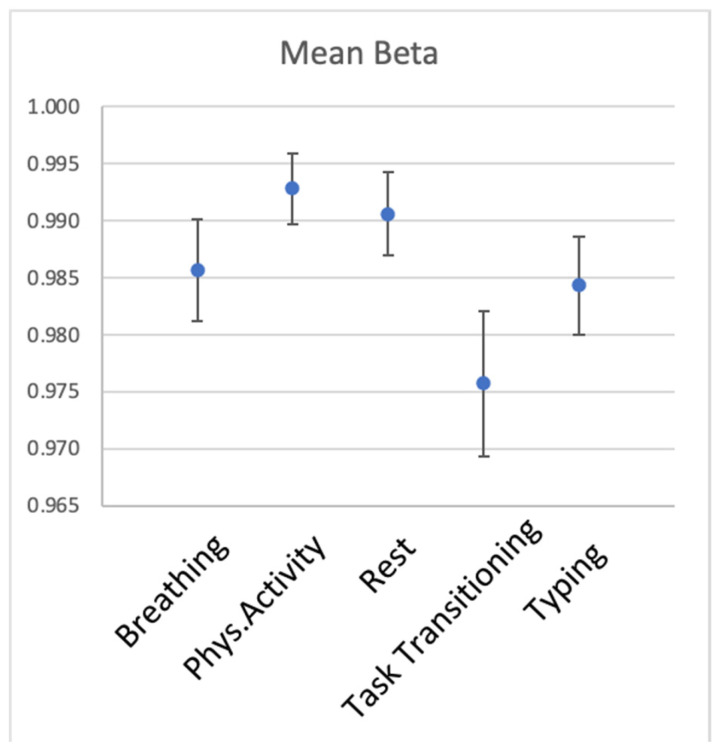
Wearable sensors are quickly making their way into psychophysiological research, as they allow collecting data outside of a laboratory and for an extended period of time. The present tutorial considers fidelity of physiological measurement with wearable sensors, focusing on reliability. We elaborate on why ensuring reliability for wearables is important and offer statistical tools for assessing wearable reliability for between participants and within-participant designs. The framework offered here is illustrated using several brands of commercially available heart rate sensors. Measurement reliability varied across sensors and, more importantly, across the situations tested, and was highest during sleep. Our hope is that by systematically quantifying measurement reliability, researchers will be able to make informed choices about specific wearable devices and measurement procedures that meet their research goals.
可穿戴传感器正在迅速进入心理生理学研究领域,因为它们可以在实验室外和延长的时间内收集数据。本教程考虑了可穿戴传感器的生理测量保真度,重点是可靠性。我们详细说明了为什么确保可穿戴设备的可靠性很重要,并提供了用于评估参与者间和参与者内设计的可穿戴设备可靠性的统计工具。这里提供的框架使用了几种市售的心率传感器品牌进行了说明。测量可靠性因传感器而异,更重要的是,因测试情况而异,在睡眠期间最高。我们希望通过系统地量化测量可靠性,研究人员能够根据他们的研究目标做出有关特定可穿戴设备和测量程序的明智选择。