Putzolu Martina, Manzini Virginia, Gambaro Matteo, Cosentino Carola, Bonassi Gaia, Botta Alessandro, Ravizzotti Elisa, Avanzino Laura, Pelosin Elisa, Mezzarobba Susanna
Department of Experimental Medicine, Section of Human Physiology, University of Genoa, Genoa, Italy.
La Colletta Hospital, Azienda Sanitaria Locale 3, Arenzano, Italy.
Front Neurol. 2023 Jun 28;14:1205386. doi: 10.3389/fneur.2023.1205386. eCollection 2023.
Parkinson's disease (PD) patients experience deterioration in mobility with consequent inactivity and worsened health and social status. Physical activity and physiotherapy can improve motor impairments, but several barriers dishearten PD patients to exercise regularly. Home-based approaches (e.g., via mobile apps) and remote monitoring, could help in facing this issue.
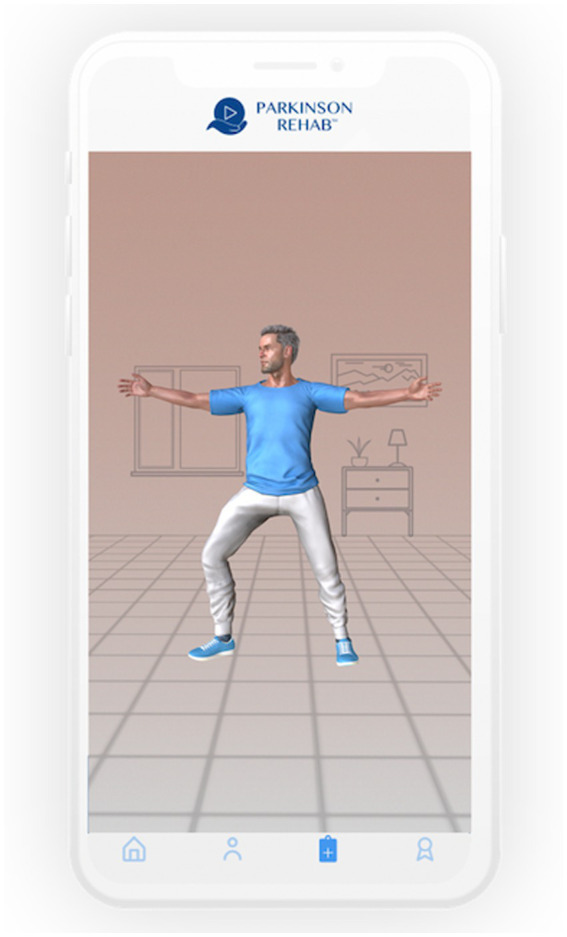
This study aimed at testing the feasibility, usability and training effects of a home-based exercise program using a customized version of Parkinson Rehab® application.
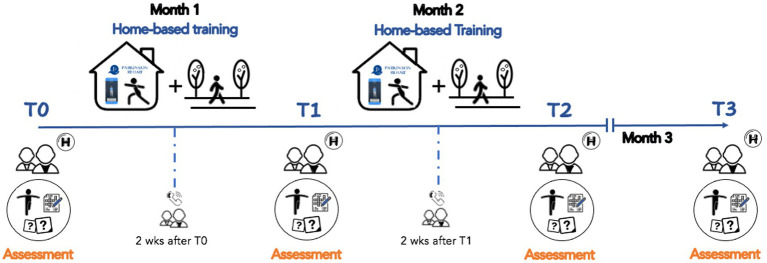
Twenty PD subjects participated in a two-month minimally supervised home-based training. Daily session consisted in performing PD-specific exercises plus a walking training. We measured: (i) feasibility (training adherence), usability and satisfaction (via an online survey); (ii) safety; (iii) training effects on PD severity, mobility, cognition, and mood. Evaluations were performed at: baseline, after 1-month of training, at the end of training (T2), and at 1-month follow-up (T3).
Eighteen out of twenty participants completed the study without important adverse events. Participants' adherence was 91% ± 11.8 for exercise and 105.9% ± 30.6 for walking training. Usability and satisfaction survey scored 70.9 ± 7.7 out of 80. Improvements in PD severity, mobility and cognition were found at T2 and maintained at follow-up.
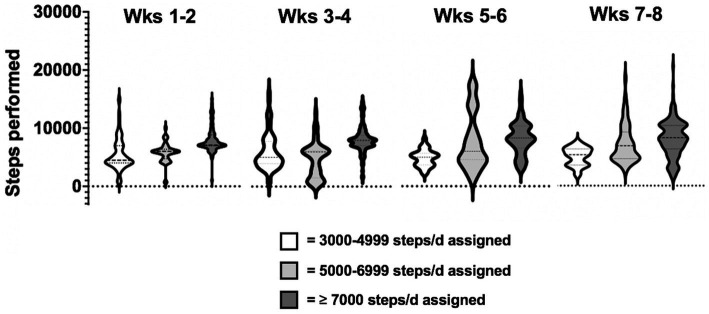
The home-based training was feasible, safe and seems to positively act on PD-related symptoms, mobility, and cognition in patients with mild to moderate stage of PD disease. Additionally, the results suggest that the use of a mobile app might increase the amount of daily physical activity in our study population. Remote monitoring and tailored exercise programs appear to be key elements for promoting exercise. Future studies in a large cohort of PD participants at different stages of disease are needed to confirm these findings.
帕金森病(PD)患者的运动能力会逐渐下降,导致活动减少,健康和社会状况恶化。体育活动和物理治疗可以改善运动障碍,但一些障碍使PD患者不愿定期锻炼。基于家庭的方法(例如通过移动应用程序)和远程监测有助于解决这一问题。
本研究旨在测试使用定制版帕金森康复®应用程序的家庭锻炼计划的可行性、可用性和训练效果。
20名PD受试者参加了为期两个月的最低限度监督的家庭训练。每日训练包括进行特定于PD的锻炼以及步行训练。我们测量了:(i)可行性(训练依从性)、可用性和满意度(通过在线调查);(ii)安全性;(iii)训练对PD严重程度、运动能力、认知和情绪的影响。评估在基线、训练1个月后、训练结束时(T2)和1个月随访时(T3)进行。
20名参与者中有18名完成了研究,没有发生重大不良事件。参与者的锻炼依从率为91%±11.8,步行训练依从率为105.9%±30.6。可用性和满意度调查在80分中得分为70.9±7.7。在T2时发现PD严重程度、运动能力和认知有所改善,并在随访中保持。
基于家庭的训练是可行的、安全的,并且似乎对轻度至中度PD疾病患者的PD相关症状、运动能力和认知有积极作用。此外,结果表明,在我们的研究人群中,使用移动应用程序可能会增加日常身体活动量。远程监测和量身定制的锻炼计划似乎是促进锻炼的关键因素。需要在不同疾病阶段的大量PD参与者队列中进行进一步研究以证实这些发现。