Department of Psychology, University of Warwick, University Road, Coventry, CV4 7AL, UK.
Department of Psychology, Bielefeld University, Bielefeld, Germany.
BMC Public Health. 2021 Apr 23;21(1):782. doi: 10.1186/s12889-021-10794-w.
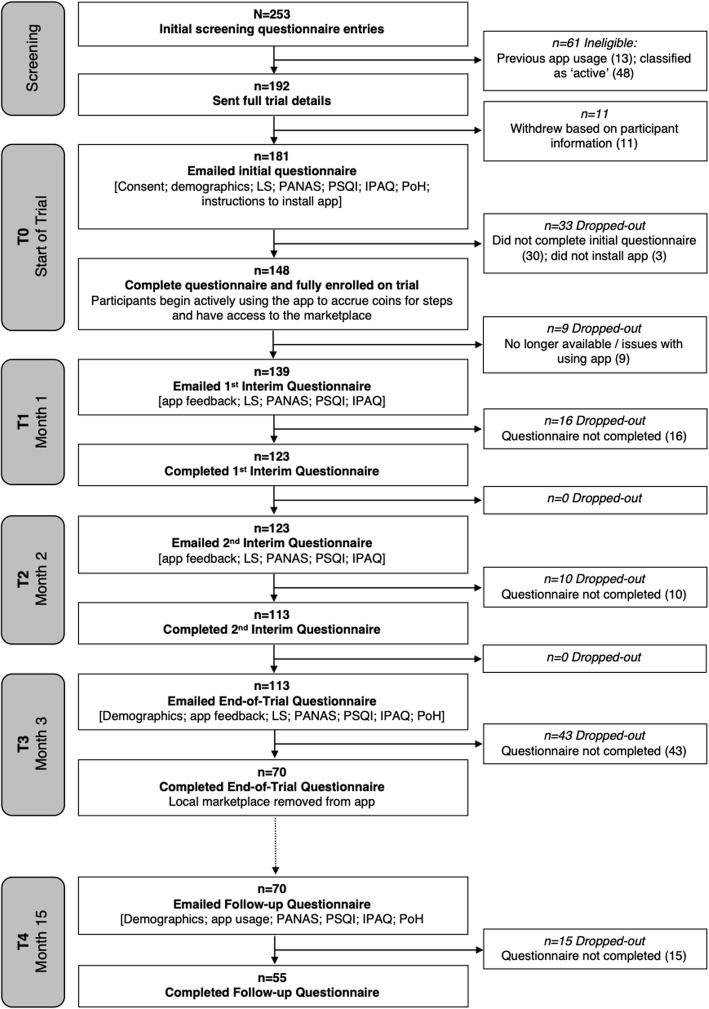
This study examined the impact of a 'rewards-for-exercise' mobile application on physical activity, subjective well-being and sleep quality among 148 employees in a UK university with low to moderate physical activity levels.
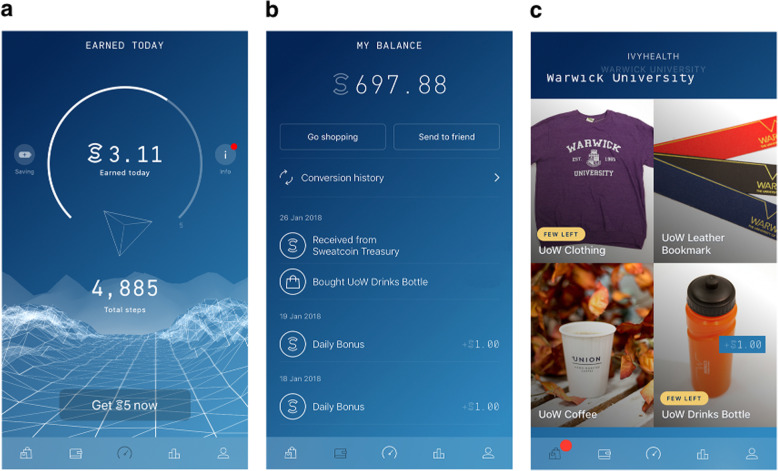
A three-month open-label single-arm trial with a one-year follow-up after the end of the trial. Participants used the Sweatcoin application which converted their outdoor steps into a virtual currency used for the purchase of products available at the university campus' outlets, using an in-app marketplace. The primary outcome measure was self-reported physical activity. Secondary measures included device-measured physical activity, subjective well-being (i.e., life satisfaction, positive affect, negative affect), and self-reported sleep quality.
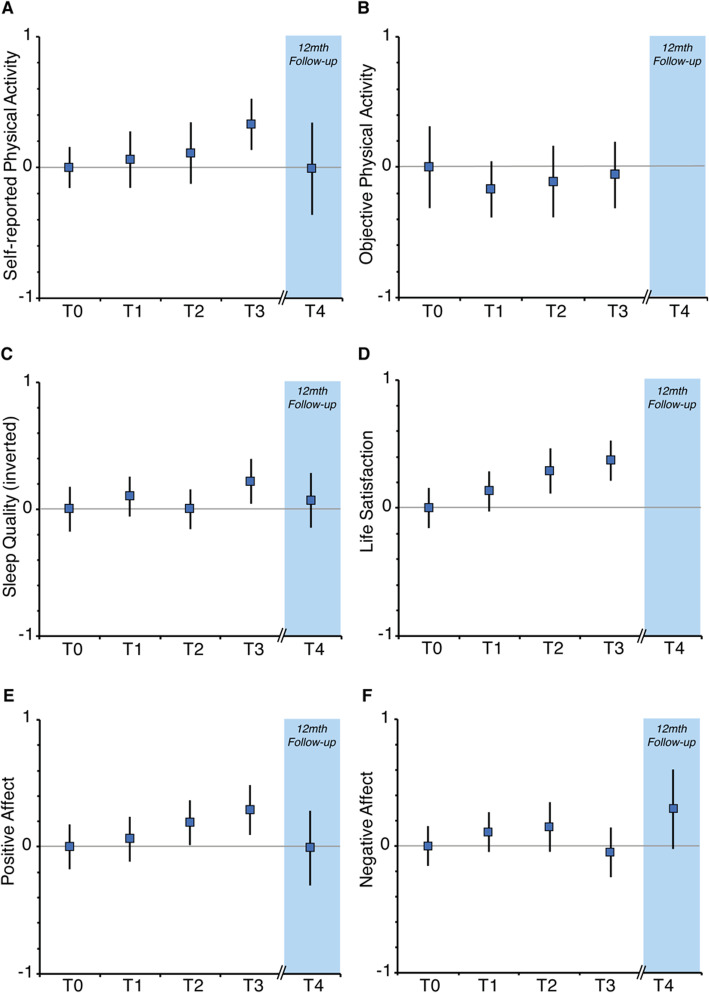
The findings show an increase in self-reported physical activity (d = 0.34), life satisfaction (d = 0.31), positive affect (d = 0.29), and sleep quality (d = 0.22) during the three-month trial period.
The study suggests that mobile incentives-for-exercise applications might increase physical activity levels, positive affect, and sleep quality, at least in the short term. The observed changes were not sustained 12 months after the end of the trial.
本研究考察了一款“运动奖励”手机应用程序对英国一所大学中低至中度身体活动水平的 148 名员工的身体活动、主观幸福感和睡眠质量的影响。
一项为期三个月的开放性单臂试验,试验结束一年后进行随访。参与者使用 Sweatcoin 应用程序,该程序将他们的户外步数转换为一种虚拟货币,可用于购买大学校园网点的产品,使用应用内市场。主要结局指标为自我报告的身体活动。次要指标包括设备测量的身体活动、主观幸福感(即生活满意度、积极情绪、消极情绪)和自我报告的睡眠质量。
研究结果表明,在三个月的试验期间,自我报告的身体活动(d=0.34)、生活满意度(d=0.31)、积极情绪(d=0.29)和睡眠质量(d=0.22)有所增加。
该研究表明,移动激励运动应用程序可能会增加身体活动水平、积极情绪和睡眠质量,至少在短期内是如此。在试验结束 12 个月后,观察到的变化并未持续。