Medical Microbiology and Immunology Department, Faculty of Medicine, Minia University, Minia, Egypt.
Pediatric Department, Faculty of Medicine, Minia University, Minia, Egypt.
BMC Infect Dis. 2023 Jul 17;23(1):475. doi: 10.1186/s12879-023-08449-9.
There are few epidemiological or molecular data on Escherichia coli (E. coli) strains resistant to fosfomycin. In this study, we described the occurrence and characterization of fosfomycin-resistant uropathogenic E. coli (UPEC) isolated from children.
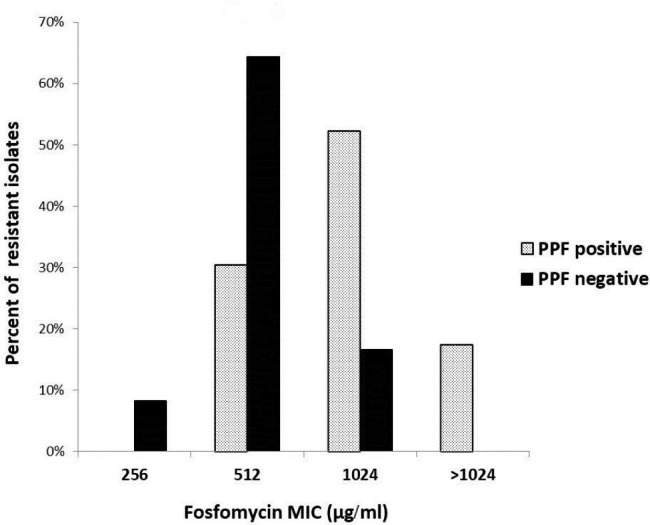
This study was carried out on 96 E. coli isolates obtained from children with urinary tract infections. Two methods were performed to detect fosfomycin resistance: The agar dilution method and the rapid fosfomycin test. The disc diffusion method was done to detect the antimicrobial susceptibility pattern of all isolates. The phylogenetic grouping of all isolates was done according to the modified Clermont method. Conventional PCR was performed to detect plasmid-mediated fosfomycin-resistant genes (fos genes) and the bla gene.
Analyses of data were performed by SPSS software. A high percentage of fosfomycin resistance (37/96; 38.5%) was reported among UPEC isolates. The fosfomycin-resistant strains showed a higher resistance rate than fosfomycin-susceptible isolates to different antibiotics. E group (62.2%) was the most predominant phylogenetic group among the fosfomycin-resistant UPEC isolates, followed by Group B2 (21.6%) and group D (13.5%). The fos genes were detected in 21 isolates with the fosA3 gene as the most frequent, which was detected in 11 isolates followed by fosA (8), fosC2 (4), fosA4(1), and fosA5(1) genes.
This is the first report of a high prevalence of plasmid-mediated fosfomycin-resistant UPEC in Egypt. All of these isolates were multidrug-resistant to the tested antibiotics. Close monitoring of such strains is mandatory to prevent widespread dissemination of the genes code for antibiotic resistance.
目前关于耐磷霉素大肠埃希菌(E. coli)菌株的流行病学或分子数据较少。本研究描述了从儿童尿路感染中分离出的耐磷霉素尿源大肠埃希菌(UPEC)的发生和特征。
本研究共检测了 96 株从患有尿路感染的儿童中分离出的大肠埃希菌。采用琼脂稀释法和快速磷霉素试验两种方法检测磷霉素耐药性。采用纸片扩散法检测所有分离株的抗菌药物敏感性模式。根据改良的 Clermont 方法对所有分离株进行了进化群分组。采用常规 PCR 检测质粒介导的磷霉素耐药基因(fos 基因)和 bla 基因。
数据分析采用 SPSS 软件进行。UPEC 分离株中报告了较高的磷霉素耐药率(37/96;38.5%)。耐药株对不同抗生素的耐药率均高于磷霉素敏感株。在耐磷霉素 UPEC 分离株中,E 群(62.2%)是最主要的进化群,其次是 B2 群(21.6%)和 D 群(13.5%)。在 21 株耐磷霉素的菌株中检测到了 fos 基因,其中 fosA3 基因最为常见,检测到 11 株,其次是 fosA(8 株)、fosC2(4 株)、fosA4(1 株)和 fosA5(1 株)。
这是首次在埃及报道高流行的质粒介导的耐磷霉素 UPEC。所有这些分离株对测试的抗生素均具有多重耐药性。必须密切监测这些菌株,以防止抗生素耐药基因的广泛传播。