Section of Investigative Medicine, Department of Metabolism, Digestion and Reproduction, Imperial College School of Medicine, Imperial College London, London, W12 0NN, UK.
Department of Diabetes and Endocrinology, Imperial College Healthcare NHS Trust, 72 Du Cane Rd, London, W12 0HS, UK.
Endocr Rev. 2024 Jan 4;45(1):30-68. doi: 10.1210/endrev/bnad023.
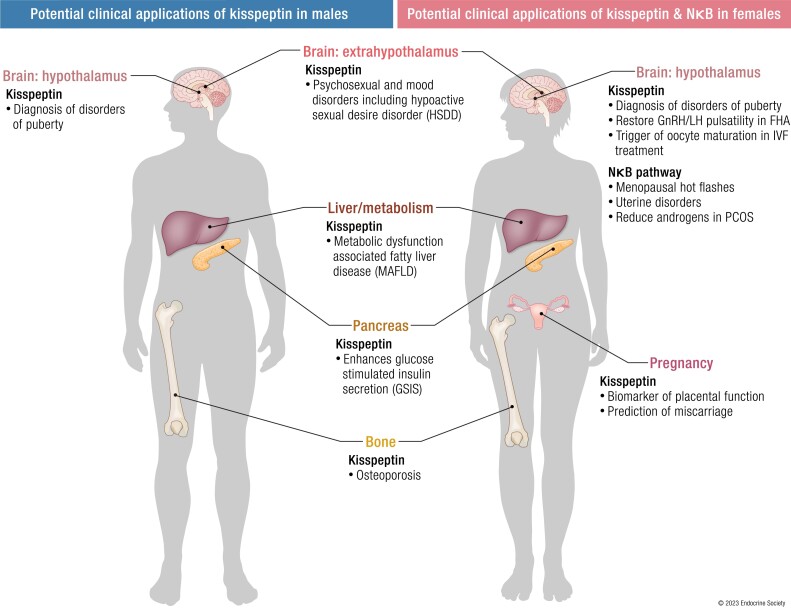
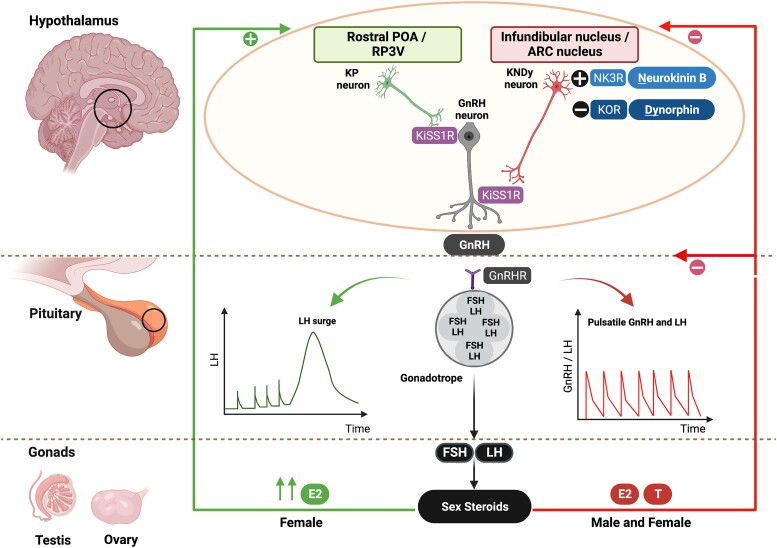
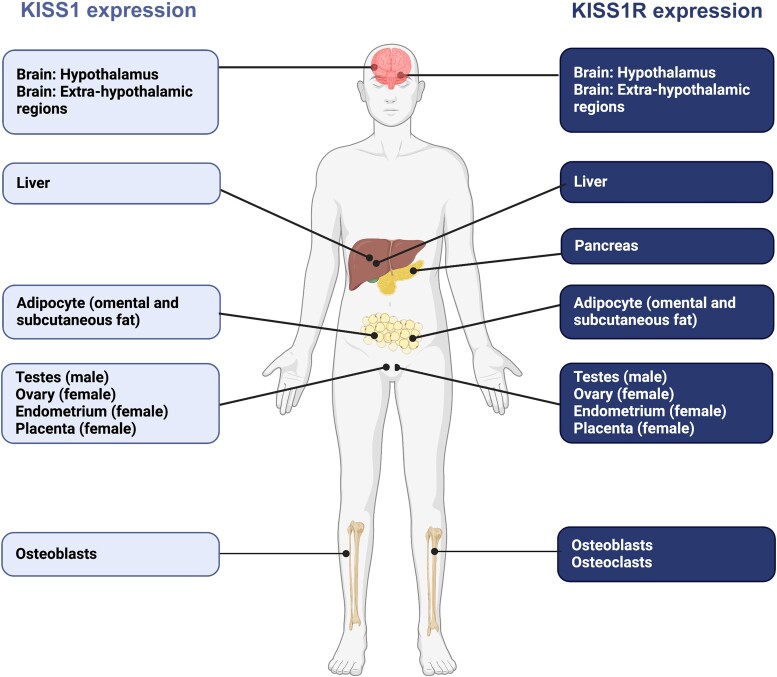
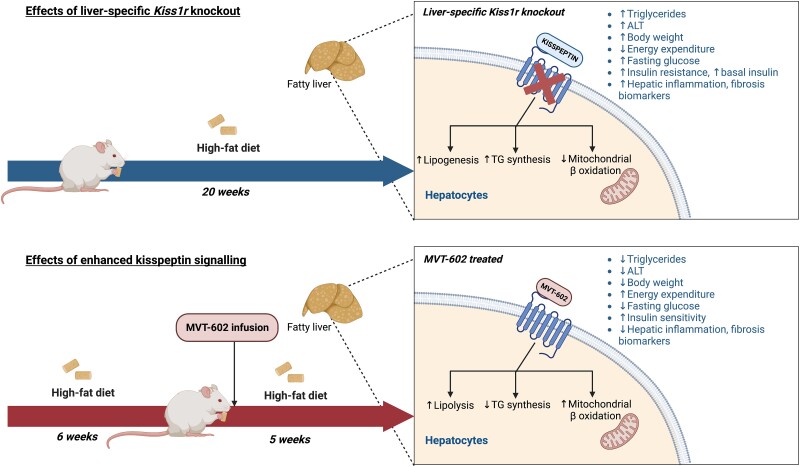
Kisspeptin (KP) and neurokinin B (NKB) are neuropeptides that govern the reproductive endocrine axis through regulating hypothalamic gonadotropin-releasing hormone (GnRH) neuronal activity and pulsatile GnRH secretion. Their critical role in reproductive health was first identified after inactivating variants in genes encoding for KP or NKB signaling were shown to result in congenital hypogonadotropic hypogonadism and a failure of pubertal development. Over the past 2 decades since their discovery, a wealth of evidence from both basic and translational research has laid the foundation for potential therapeutic applications. Beyond KP's function in the hypothalamus, it is also expressed in the placenta, liver, pancreas, adipose tissue, bone, and limbic regions, giving rise to several avenues of research for use in the diagnosis and treatment of pregnancy, metabolic, liver, bone, and behavioral disorders. The role played by NKB in stimulating the hypothalamic thermoregulatory center to mediate menopausal hot flashes has led to the development of medications that antagonize its action as a novel nonsteroidal therapeutic agent for this indication. Furthermore, the ability of NKB antagonism to partially suppress (but not abolish) the reproductive endocrine axis has supported its potential use for the treatment of various reproductive disorders including polycystic ovary syndrome, uterine fibroids, and endometriosis. This review will provide a comprehensive up-to-date overview of the preclinical and clinical data that have paved the way for the development of diagnostic and therapeutic applications of KP and NKB.
Kisspeptin(KP)和神经激肽 B(NKB)是两种神经肽,通过调节下丘脑促性腺激素释放激素(GnRH)神经元的活性和 GnRH 的脉冲式分泌来控制生殖内分泌轴。在发现它们的 20 多年里,基础和转化研究的大量证据为其潜在的治疗应用奠定了基础。除了在下丘脑的作用外,KP 还在胎盘、肝脏、胰腺、脂肪组织、骨骼和边缘区域表达,为妊娠、代谢、肝脏、骨骼和行为障碍的诊断和治疗开辟了几条研究途径。NKB 刺激下丘脑体温调节中心的作用介导了更年期热潮红,这导致了拮抗其作用的药物的开发,作为该适应症的新型非甾体治疗药物。此外,NKB 拮抗作用部分抑制(但不消除)生殖内分泌轴的能力支持了其用于治疗各种生殖障碍的潜力,包括多囊卵巢综合征、子宫肌瘤和子宫内膜异位症。这篇综述将提供一个全面的、最新的临床前和临床数据概述,为 KP 和 NKB 的诊断和治疗应用的发展铺平了道路。