College of Stomatology, Chongqing Medical University, 426# Songshi-bei Road, Yubei District, Chongqing, 401147, China.
Chongqing Key Laboratory of Oral Diseases and Biomedical Sciences, Chongqing, China.
J Nanobiotechnology. 2023 Jul 19;21(1):229. doi: 10.1186/s12951-023-01912-4.
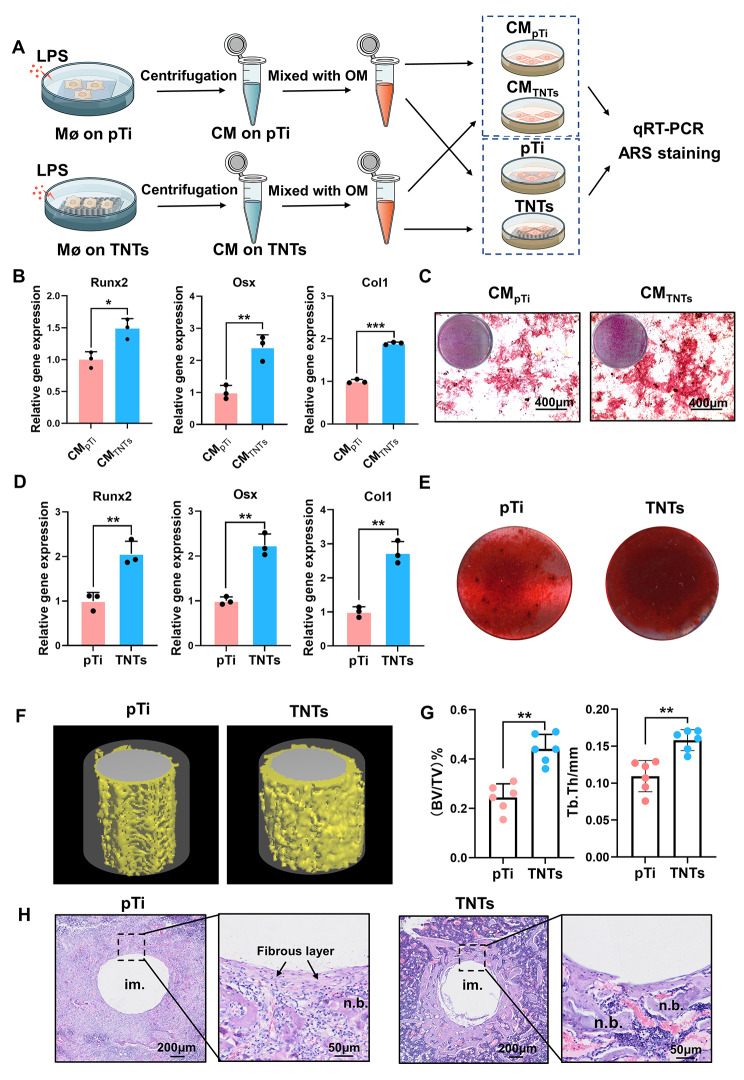
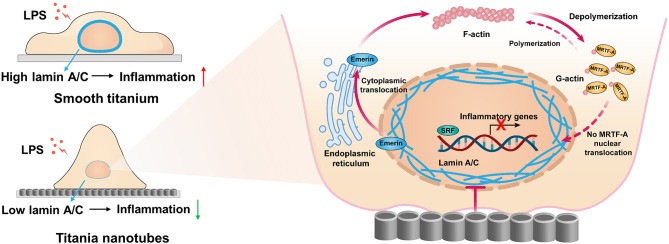
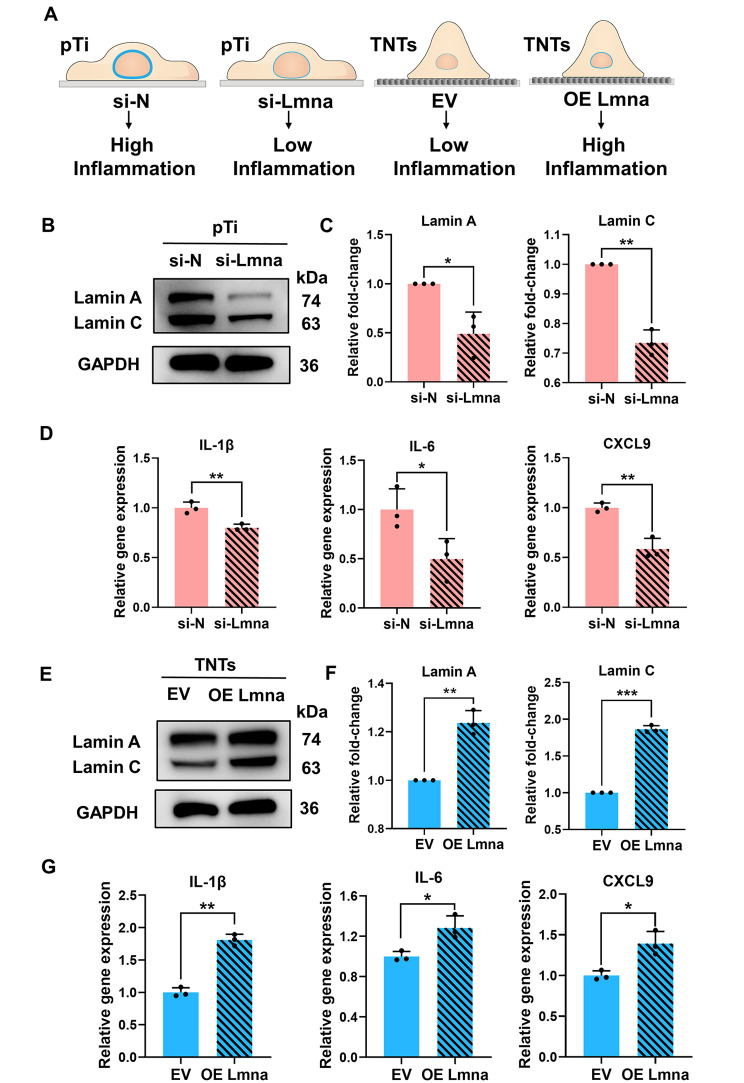
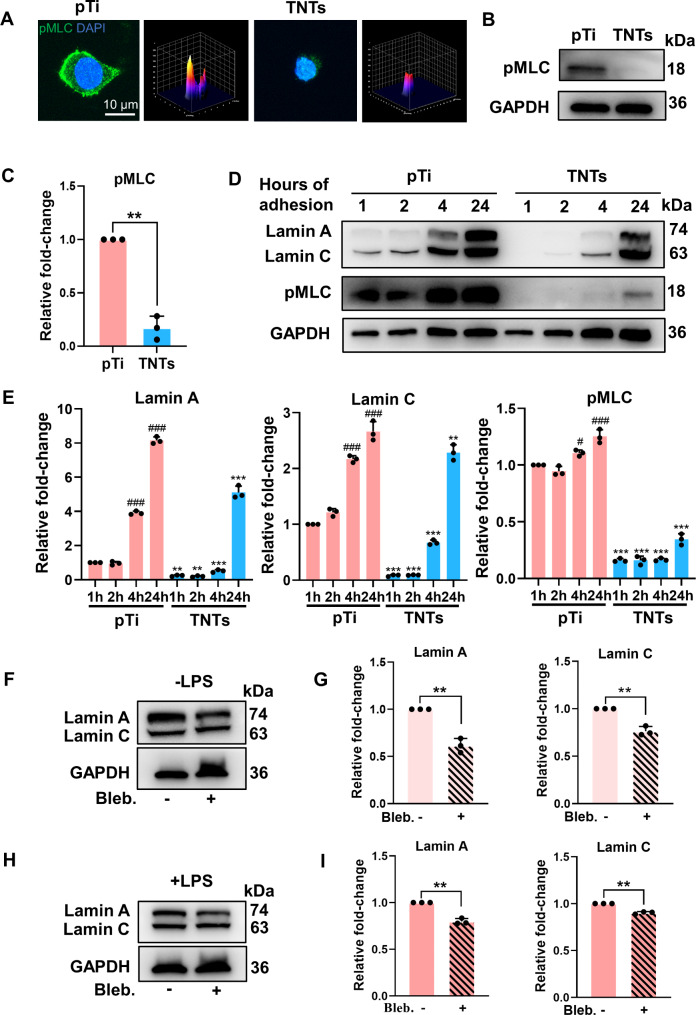
The inflammatory immune environment surrounding titanium bone implants determines the formation of osseointegration, and nanopatterning on implant surfaces modulates the immune microenvironment in the implant region. Among many related mechanisms, the mechanism by which nanopatterning controls macrophage inflammatory response still needs to be elucidated. In this paper, we found that inhibition of the nuclear envelope protein lamin A/C by titania nanotubes (TNTs) reduced the macrophage inflammatory response. Knockdown of lamin A/C reduced macrophage inflammatory marker expression, while overexpression of lamin A/C significantly elevated inflammatory marker expression. We further found that suppression of lamin A/C by TNTs limited actin polymerization, thereby reducing the nuclear translocation of the actin-dependent transcriptional cofactor MRTF-A, which subsequently reduced the inflammatory response. In addition, emerin, which is a key link between lamin A/C and actin, was delocalized from the nucleus in response to mechanical stimulation by TNTs, resulting in reduced actin organization. Under inflammatory conditions, TNTs exerted favourable osteoimmunomodulatory effects on the osteogenic differentiation of mouse bone marrow-derived stem cells (mBMSCs) in vitro and osseointegration in vivo. This study shows and confirms for the first time that lamin A/C-mediated nuclear mechanotransduction controls macrophage inflammatory response, and this study provides a theoretical basis for the future design of immunomodulatory nanomorphologies on the surface of metallic bone implants.
钛骨植入物周围的炎症免疫环境决定了骨整合的形成,而植入物表面的纳米图案化调节了植入区域的免疫微环境。在许多相关机制中,纳米图案化控制巨噬细胞炎症反应的机制仍需要阐明。在本文中,我们发现二氧化钛纳米管(TNTs)抑制核膜蛋白核纤层蛋白 A/C 可减少巨噬细胞炎症反应。核纤层蛋白 A/C 的敲低可降低巨噬细胞炎症标志物的表达,而过表达核纤层蛋白 A/C 则可显著提高炎症标志物的表达。我们进一步发现,TNTs 抑制核纤层蛋白 A/C 可限制肌动蛋白聚合,从而减少肌动蛋白依赖性转录共激活因子 MRTF-A 的核易位,进而降低炎症反应。此外,TNTs 对机械刺激的反应可使连接核纤层蛋白 A/C 和肌动蛋白的关键蛋白 emerin 从核内易位,导致肌动蛋白组织减少。在炎症条件下,TNTs 对体外培养的小鼠骨髓来源干细胞(mBMSCs)的成骨分化和体内骨整合具有有利的骨免疫调节作用。本研究首次表明,核机械转导介导的核纤层蛋白 A/C 可控制巨噬细胞炎症反应,并为未来在金属骨植入物表面设计免疫调节纳米形态提供了理论依据。