Department of Orthopedic Surgery, Shanghai Jiao Tong University Affiliated Sixth People's Hospital, Shanghai, 200233, China.
Department of Orthopedic Surgery, and Shanghai Institute of Microsurgery on Extremities, Shanghai Jiao Tong University Affiliated Sixth People's Hospital, Shanghai, 200233, China.
J Nanobiotechnology. 2022 Feb 5;20(1):68. doi: 10.1186/s12951-022-01277-0.
Femoral stem of titanium alloy has been widely used for hip arthroplasty with considerable efficacy; however, the application of this implant in patients with osteoporosis is limited due to excessive bone resorption. Macrophages participate in the regulation of inflammatory response and have been a topic of increasing research interest in implant field. However, few study has explored the link between macrophage polarization and osteogenic-osteoclastic differentiation. The present study aims to develop a novel hierarchical biofunctionalized 3D-printed porous Ti6Al4V scaffold with enhanced osteoporotic osseointegration through immunotherapy.
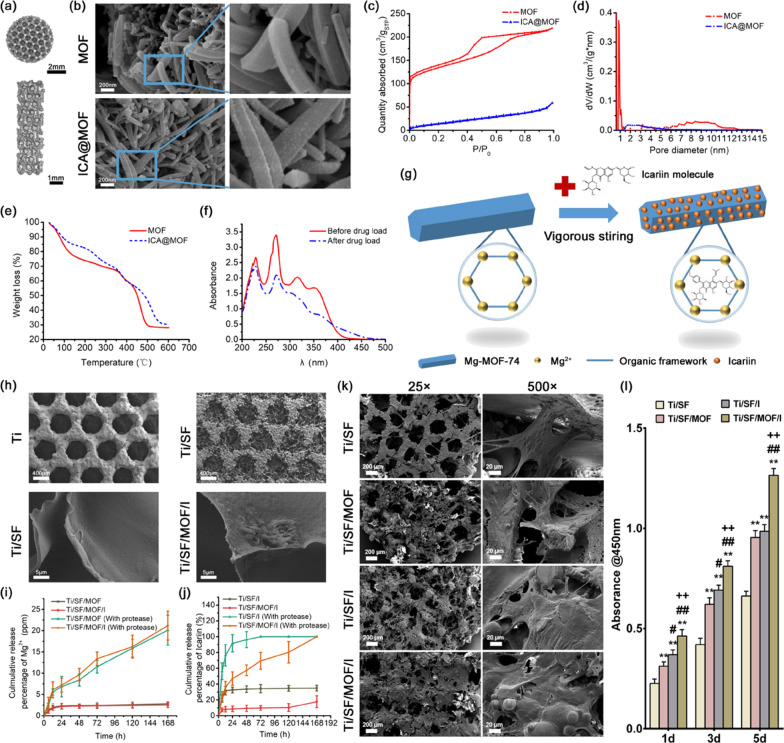
To improve the osteointegration under osteoporosis, we developed a hierarchical biofunctionalized 3D-printed porous Ti6Al4V scaffold (PT). Biomimetic extracellular matrix (ECM) was constructed inside the interconnected pores of PT in micro-scale. And in nano-scale, a drug cargo icariin@Mg-MOF-74 (ICA@MOF) was wrapped in ECM-like structure that can control release of icariin and Mg.
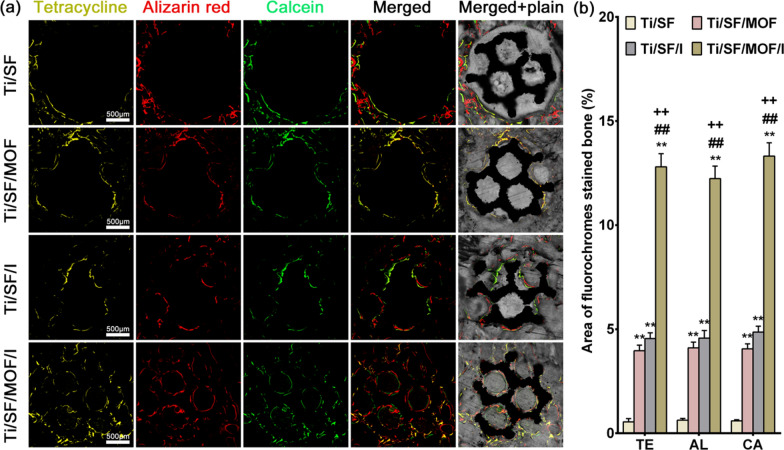
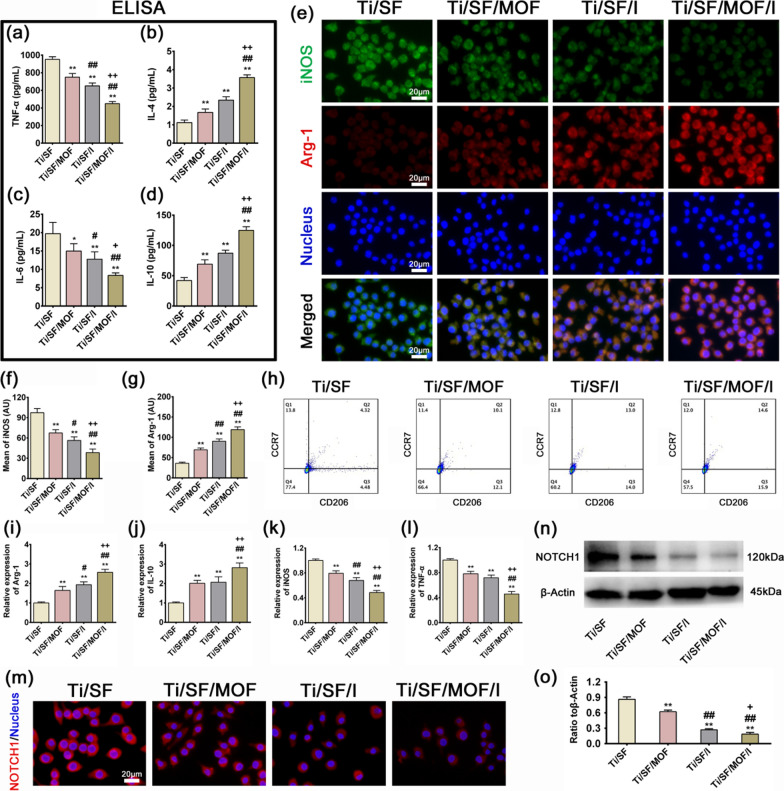
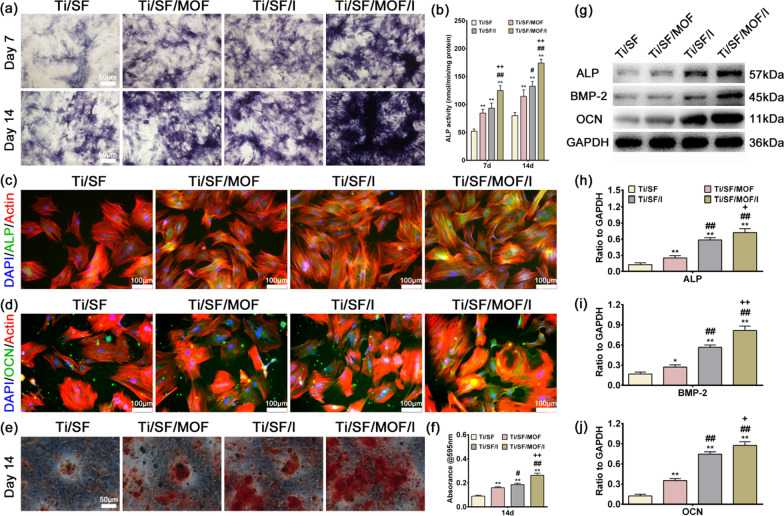
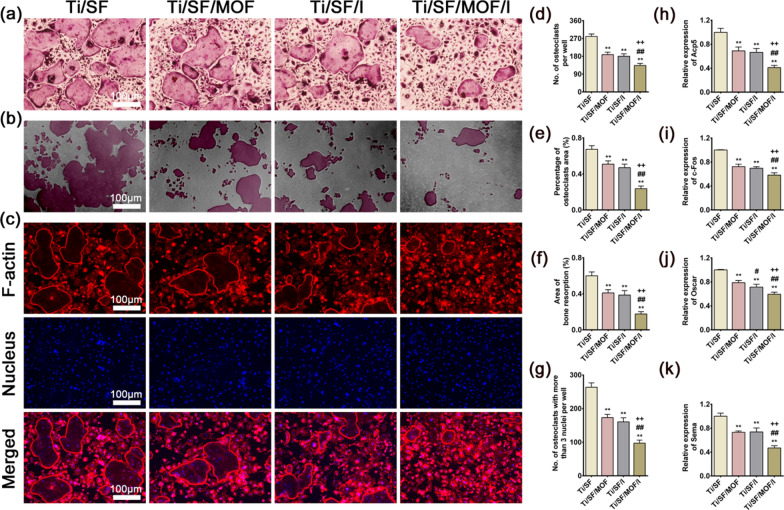
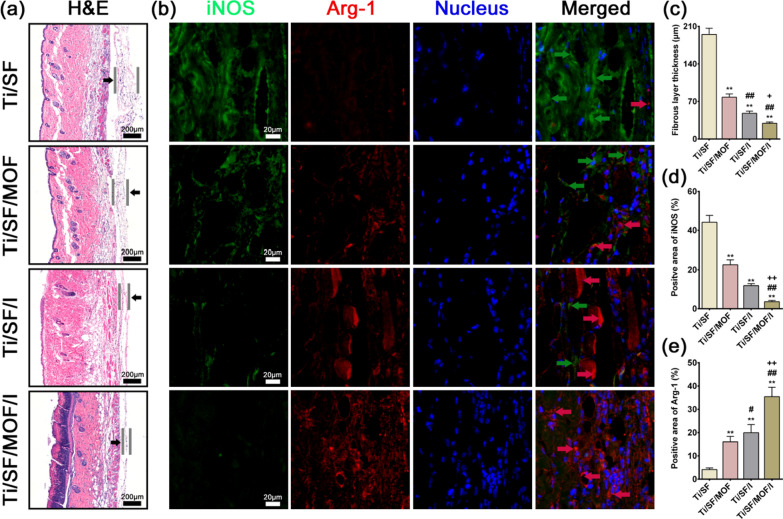
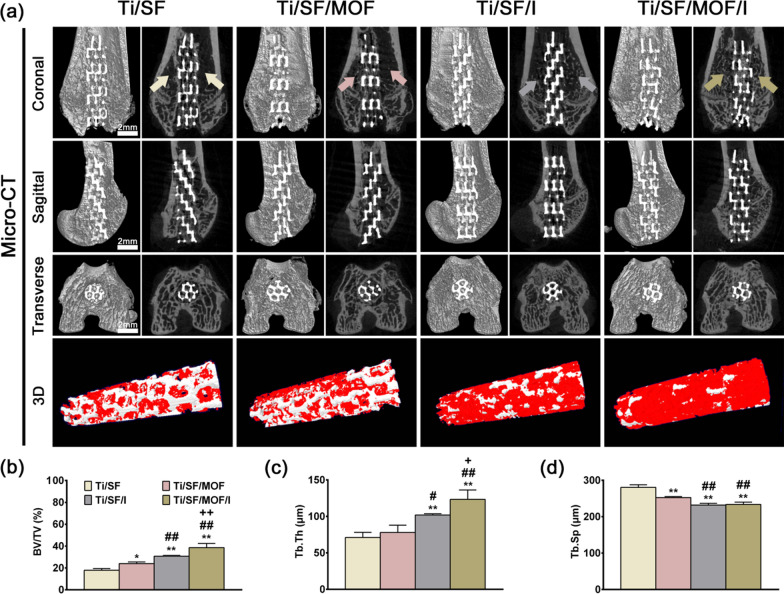
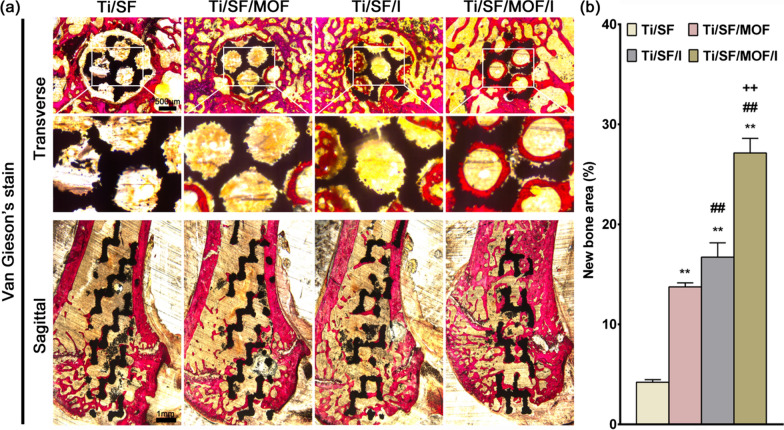
In this novel hierarchical biofunctionalized 3D-printed porous Ti6Al4V scaffold, the macroporous structure provides mechanical support, the microporous structure facilitates cell adhesion and enhances biocompatibility, and the nanostructure plays a biological effect. We also demonstrate the formation of abundant new bone at peripheral and internal sites after intramedullary implantation of the biofunctionalized PT into the distal femur in osteoporotic rats. We further find that the controlled-release of icariin and Mg from the biofunctionalized PT can significantly improve the polarization of M0 macrophages to M2-type by inhibiting notch1 signaling pathway and induce the secretion of anti-inflammatory cytokines; thus, it significantly ameliorates bone metabolism, which contributes to improving the osseointegration between the PT and osteoporotic bone.
The therapeutic potential of hierarchical PT implants containing controlled release system are effective in geriatric orthopaedic osseointegration.
钛合金股骨柄已广泛应用于髋关节置换术,疗效确切;然而,由于过度的骨质吸收,该植入物在骨质疏松症患者中的应用受到限制。巨噬细胞参与炎症反应的调节,在植入物领域已成为研究热点。然而,很少有研究探讨巨噬细胞极化与成骨-破骨分化之间的联系。本研究旨在通过免疫疗法开发一种新型分级生物功能化 3D 打印多孔 Ti6Al4V 支架,以增强骨质疏松性骨整合。
为了提高骨质疏松症下的骨整合能力,我们开发了一种分级生物功能化 3D 打印多孔 Ti6Al4V 支架(PT)。仿生细胞外基质(ECM)在 PT 的互连孔的微尺度内构建。在纳米尺度上,将药物货物淫羊藿苷@Mg-MOF-74(ICA@MOF)包裹在 ECM 样结构中,可控制淫羊藿苷和 Mg 的释放。
在这种新型分级生物功能化 3D 打印多孔 Ti6Al4V 支架中,大孔结构提供机械支撑,微孔结构促进细胞黏附并提高生物相容性,纳米结构发挥生物效应。我们还证明了在骨质疏松症大鼠的股骨远端髓内植入生物功能化 PT 后,在周围和内部部位形成了丰富的新骨。我们进一步发现,生物功能化 PT 中淫羊藿苷和 Mg 的控释可通过抑制 notch1 信号通路显著促进 M0 巨噬细胞向 M2 型极化,并诱导抗炎细胞因子的分泌;从而显著改善骨代谢,有助于提高 PT 与骨质疏松骨之间的骨整合。
含有控释系统的分级 PT 植入物的治疗潜力在老年骨科骨整合中是有效的。