Al-Mamun Md Rashid, Iqbal Rokon Md Zaveed, Rahim Md Abdur, Hossain Md Ikram, Islam Md Shahinoor, Ali Md Romzan, Bacchu Md Sadek, Waizumi Hiroki, Komeda Tadahiro, Hossain Khan Md Zaved
Department of Chemical Engineering, Jashore University of Science and Technology (JUST), Jashore 7408, Bangladesh.
Department of Civil and Environmental Engineering, University of Alberta, Edmonton T6G 1H9, Alberta, Canada.
Heliyon. 2023 May 22;9(6):e16506. doi: 10.1016/j.heliyon.2023.e16506. eCollection 2023 Jun.
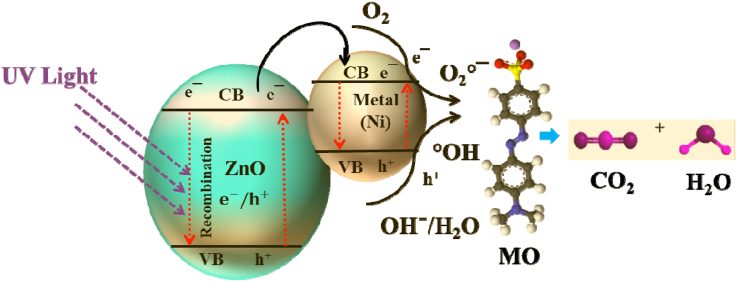
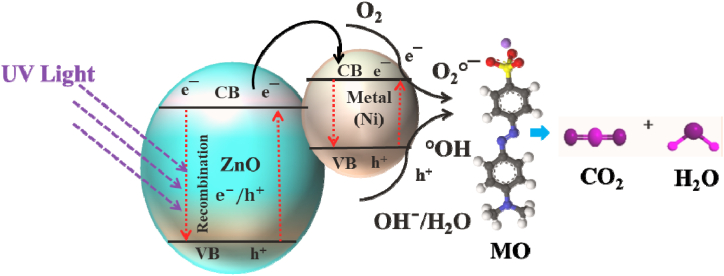
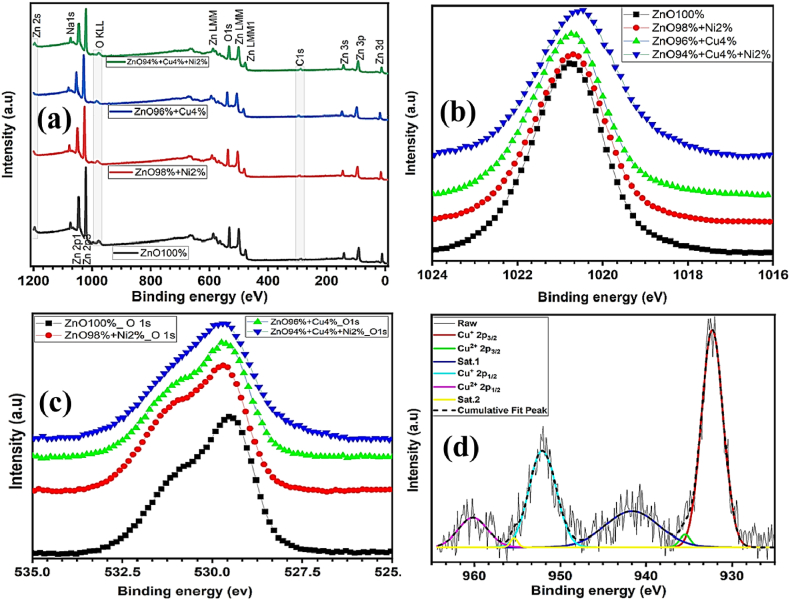
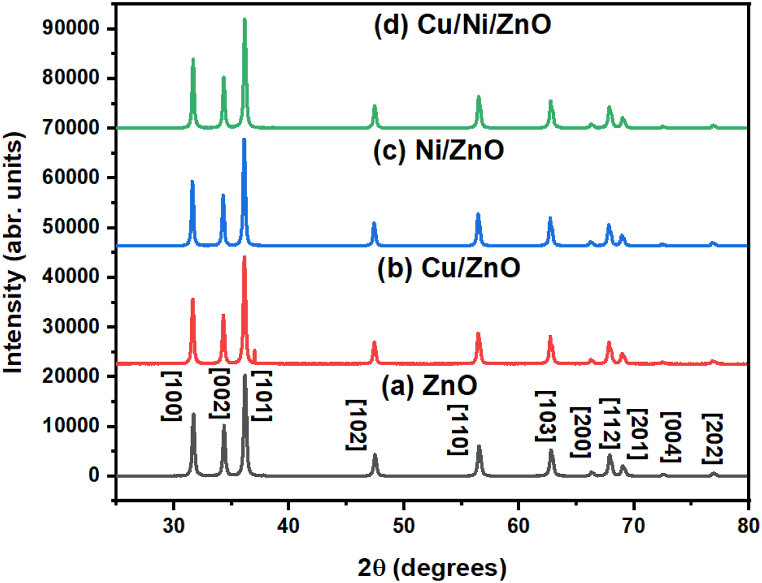
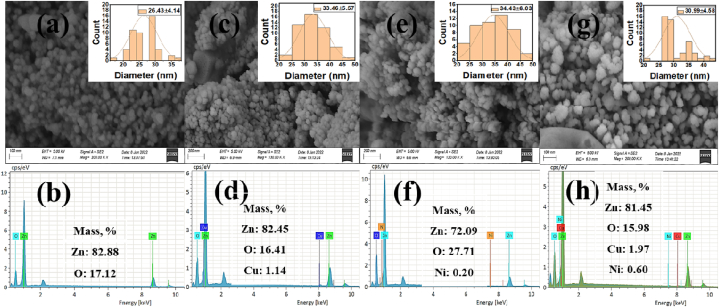
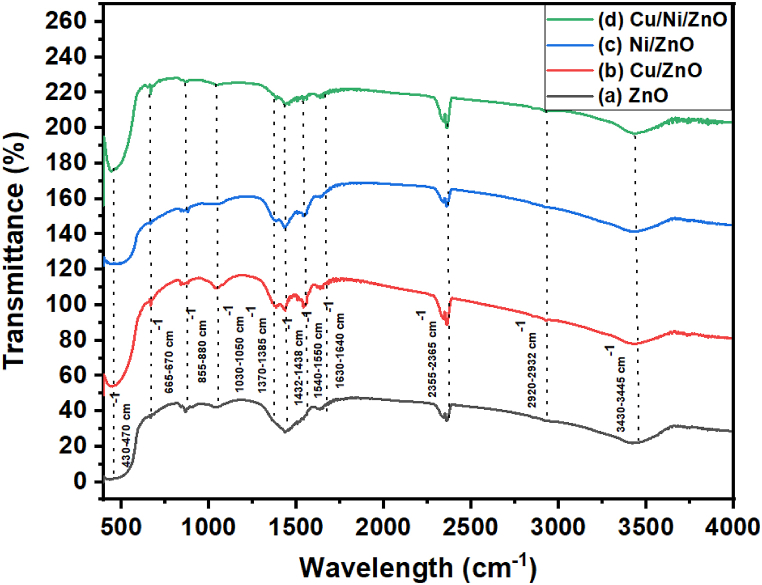
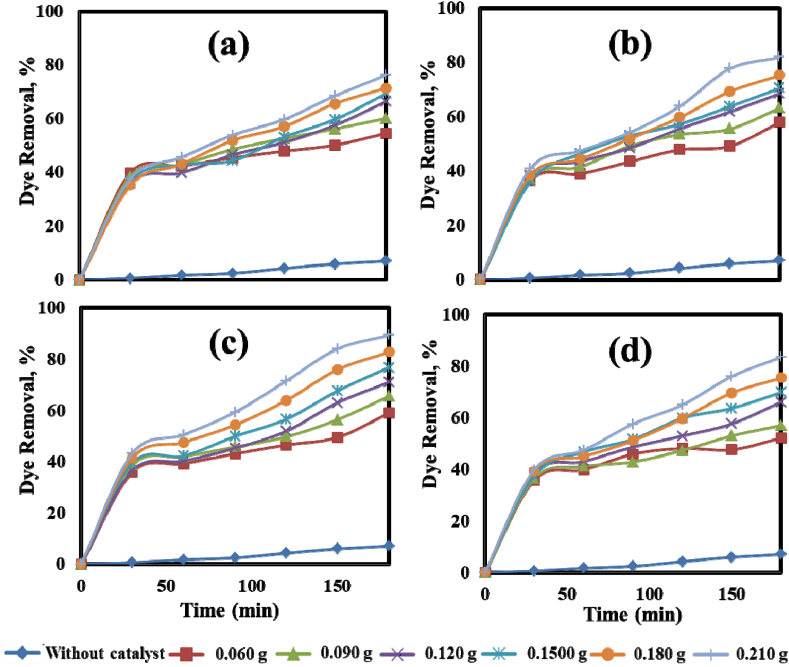
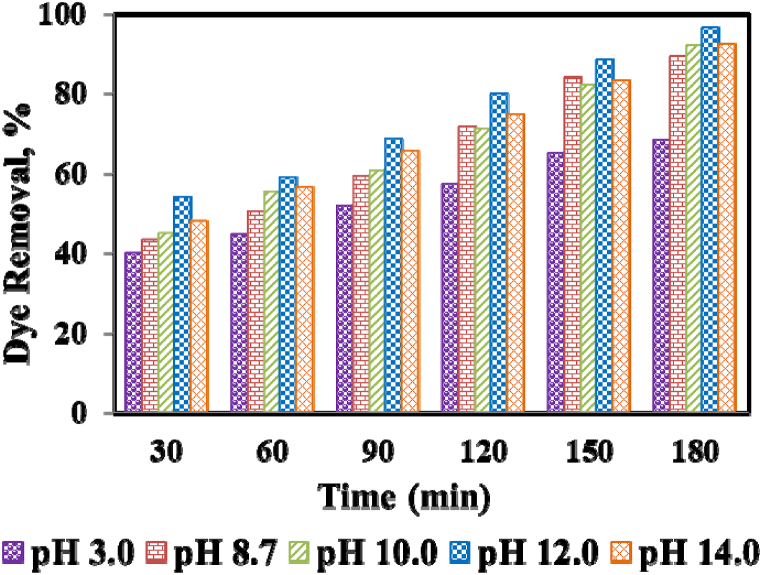
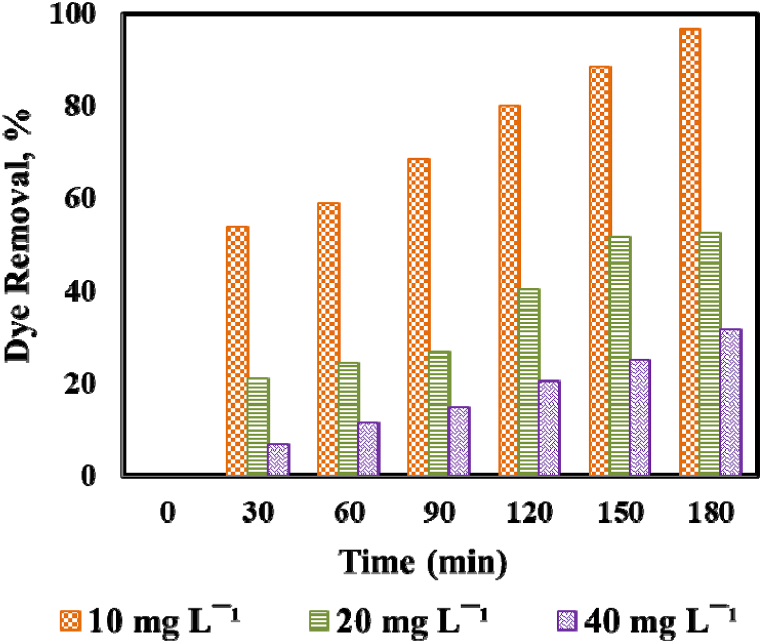
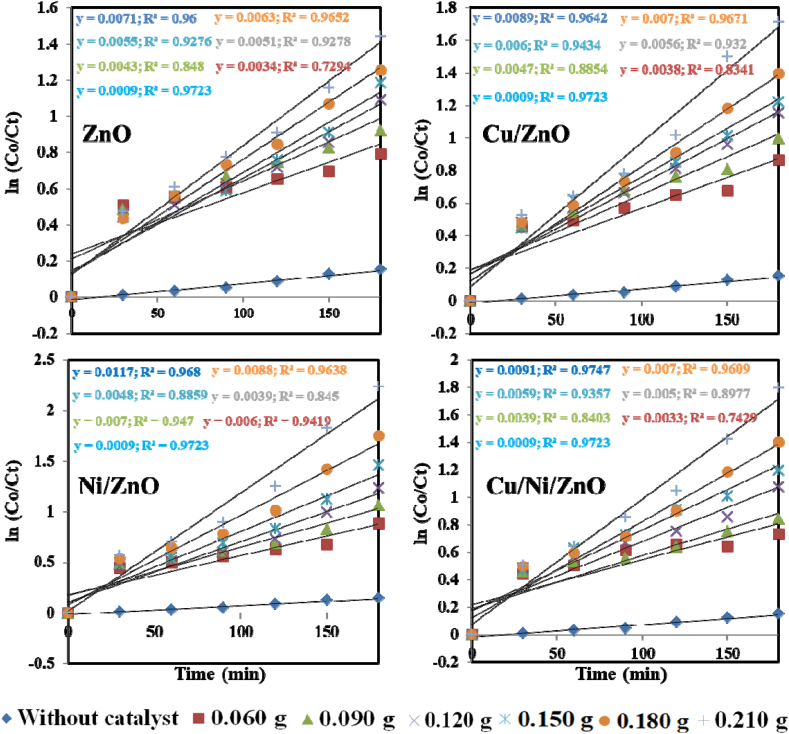
Heterogeneous photocatalysis has been considered one of the most effective and efficient techniques to remove organic contaminants from wastewater. The present work was designed to examine the photocatalytic performance of metal (Cu and Ni) doped ZnO nanocomposites in methyl orange (MO) dye degradation under UV light illumination. The wurtzite hexagonal structure was observed for both undoped/doped ZnO and a crystalline size ranging between 8.84 ± 0.71 to 12.91 ± 0.84 nm by X-ray diffraction (XRD) analysis. The scanning electron microscope (SEM) and energy dispersive X-ray (EDX) revealed the irregular spherical shape with particle diameter (34.43 ± 6.03 to 26.43 ± 4.14 nm) and ensured the purity of the individual elemental composition respectively. The chemical bonds (O-H group) and binding energy (1021.8 eV) were identified by Fourier transform infrared (FTIR) and X-ray photoelectron spectroscopy (XPS) results respectively. The bandgap energy was decreased from 3.44 to 3.16 eV when Ni dopant was added to the ZnO lattice. The comparative photocatalytic activity was observed in undoped and doped nanocomposites and found to be 76.31%, 81.95%, 89.30%, and 83.39% for ZnO, Cu/ZnO, Ni/ZnO, and Cu/Ni/ZnO photocatalysts, respectively, for a particular dose (0.210 g) and dye concentration (10 mg L) after 180 min illumination of UV light. The photocatalytic performance was increased up to 94.40% with the increase of pH (12.0) whereas reduced (35.12%) with an increase in initial dye concentration (40 mg L) using Ni/ZnO nanocomposite. The Ni/ZnO nanocomposite showed excellent reusability and was found 81% after four consecutive cycles. The best-fitted reaction kinetics was followed by pseudo-first-order and found reaction rate constant (0.0117 min) using Ni/ZnO nanocomposite. The enhanced photodegradation efficiency was observed due to decreases in bandgap energy and the crystalline size of the photocatalyst. Therefore, Ni/ZnO nanocomposite could be used as an emerging photocatalyst to degrade bio-persistent organic dye compounds from textile wastewater.
多相光催化被认为是从废水中去除有机污染物最有效且高效的技术之一。本研究旨在考察金属(铜和镍)掺杂的氧化锌纳米复合材料在紫外光照射下对甲基橙(MO)染料降解的光催化性能。通过X射线衍射(XRD)分析观察到未掺杂/掺杂的氧化锌均为纤锌矿六方结构,晶体尺寸在8.84±0.71至12.91±0.84纳米之间。扫描电子显微镜(SEM)和能量色散X射线(EDX)分别揭示了不规则球形形状,粒径为(34.43±6.03至26.43±4.14纳米),并确保了各元素组成的纯度。傅里叶变换红外光谱(FTIR)和X射线光电子能谱(XPS)结果分别确定了化学键(O-H基团)和结合能(1021.8电子伏特)。当镍掺杂剂添加到氧化锌晶格中时,带隙能量从3.44电子伏特降至3.16电子伏特。在未掺杂和掺杂的纳米复合材料中观察到了比较光催化活性,对于特定剂量(0.210克)和染料浓度(10毫克/升),在紫外光照射180分钟后,氧化锌、铜/氧化锌、镍/氧化锌和铜/镍/氧化锌光催化剂的光催化活性分别为76.31%、81.95%、89.30%和83.39%。使用镍/氧化锌纳米复合材料时,随着pH值(12.0)的增加,光催化性能提高到94.40%,而随着初始染料浓度(40毫克/升)的增加而降低(35.12%)。镍/氧化锌纳米复合材料表现出优异的可重复使用性,在连续四个循环后仍为81%。最佳拟合反应动力学符合准一级反应,使用镍/氧化锌纳米复合材料时反应速率常数为(0.0117分钟)。由于光催化剂的带隙能量和晶体尺寸减小,观察到光降解效率提高。因此,镍/氧化锌纳米复合材料可作为一种新兴的光催化剂,用于降解纺织废水中的生物持久性有机染料化合物。