Wu Dongdong, Cui Zhiqiang, Xue Tangyue, Zhang Ruijia, Su Meng, Hu Xiaotian, Sun Guochen
Department of Neurosurgery, The First Medical Centre, Chinese PLA General Hospital, Beijing 100853, China.
Medical School of Chinese PLA, Beijing 100853, China.
iScience. 2023 Jun 28;26(7):107248. doi: 10.1016/j.isci.2023.107248. eCollection 2023 Jul 21.
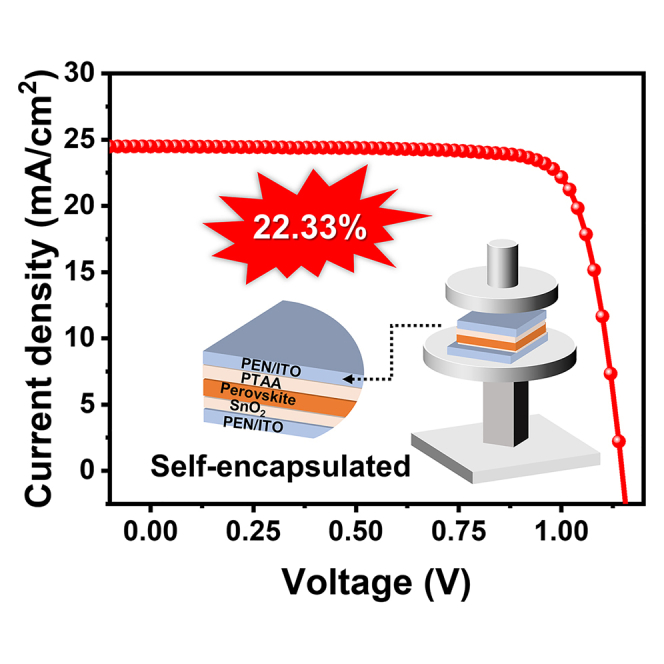
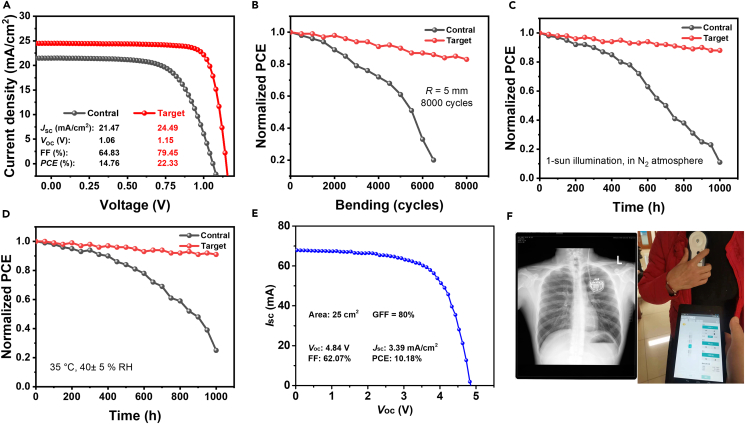
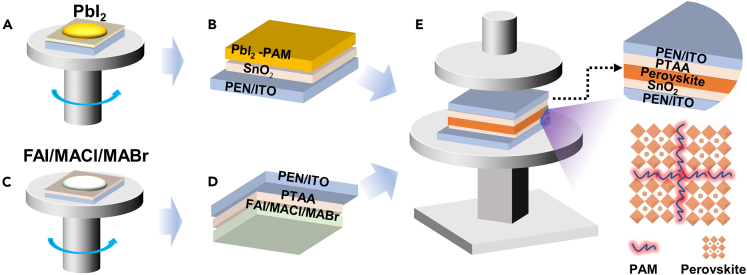
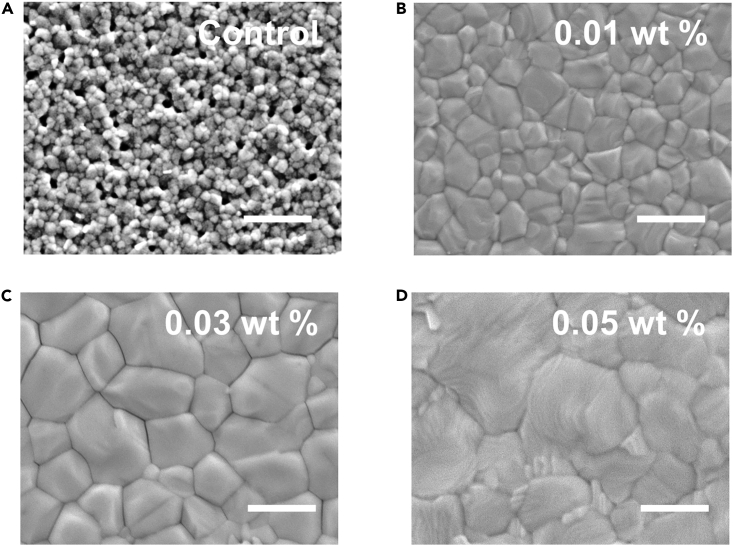
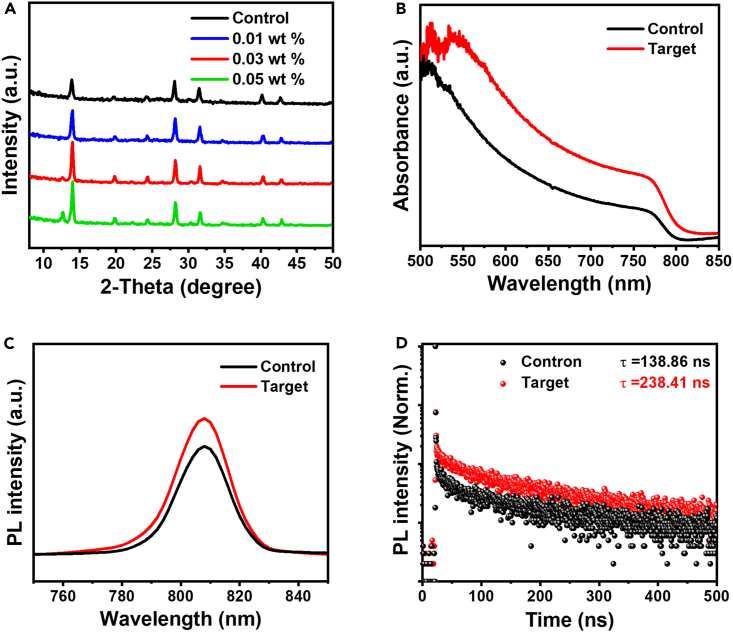
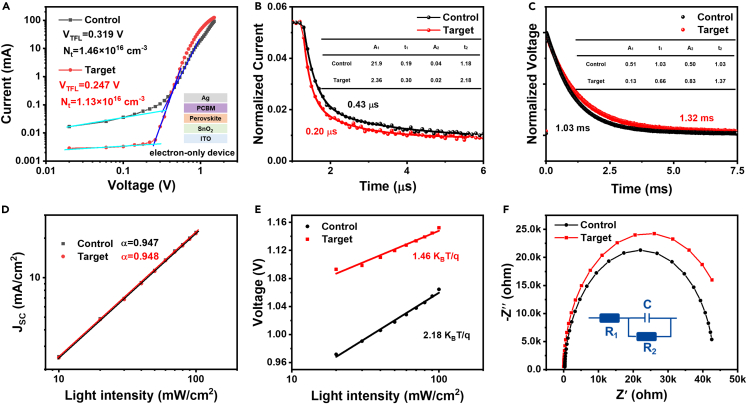
Flexible perovskite solar cells (PSCs) are highly promising photovoltaic technologies due to the prospect of integration with wearable devices. However, conventional encapsulation strategies for flexible devices often cause secondary damage to the perovskite crystals, which affects device performance. Here, we present self-encapsulated flexible PSCs realized by lamination technology. The conversion of perovskite crystals is achieved by the diffusion of lead iodide and ammonium halide under the effect of temperature and pressure. In addition, the hydrogen bonding of the introduced polyacrylamide enhances the connections of the integral device while improving the crystal quality. The self-encapsulated flexible PSCs achieve an outstanding photovoltaic conversion efficiency of 22.33%, and comprehensive stability tests are conducted based on wearable device application scenarios to verify the feasibility. Finally, 25 cm wearable perovskite modules are successfully applied into the neuro-assisted wearable devices.
柔性钙钛矿太阳能电池(PSCs)因其与可穿戴设备集成的前景而成为极具潜力的光伏技术。然而,用于柔性器件的传统封装策略常常会对钙钛矿晶体造成二次损伤,从而影响器件性能。在此,我们展示了通过层压技术实现的自封装柔性PSCs。钙钛矿晶体的转化是通过碘化铅和卤化铵在温度和压力作用下的扩散来实现的。此外,引入的聚丙烯酰胺的氢键增强了整体器件的连接性,同时提高了晶体质量。自封装柔性PSCs实现了22.33%的出色光伏转换效率,并基于可穿戴设备应用场景进行了全面的稳定性测试以验证其可行性。最后,25厘米的可穿戴钙钛矿模块成功应用于神经辅助可穿戴设备中。