Department of Medical Education Studies, International Research Center for Medical Education, Graduate School of Medicine, The University of Tokyo, Bunkyo-ku, Tokyo, Japan.
Department of Medical Education, Graduate School of Medicine, University of Toyama, Toyama, Japan.
BMC Med Educ. 2023 Jul 24;23(1):528. doi: 10.1186/s12909-023-04493-w.
Social trust in medical students is trust in the cluster of medical students and not individual medical students. Social trust in medical students seems critical in clinical practice since citizens often face unknown medical students for the first time. However, most previous research has focused on interpersonal trust in particular medical professions, and social trust in medical students has not been addressed sufficiently. In social science, the Salient Value Similarity model has demonstrated that the value similarity between professionals and citizens is associated with social trust. This research aimed to explore the relationship between social trust in medical students and the perception of value similarity. This study also aimed to determine whether the information of medical students strengthens social trust in them.
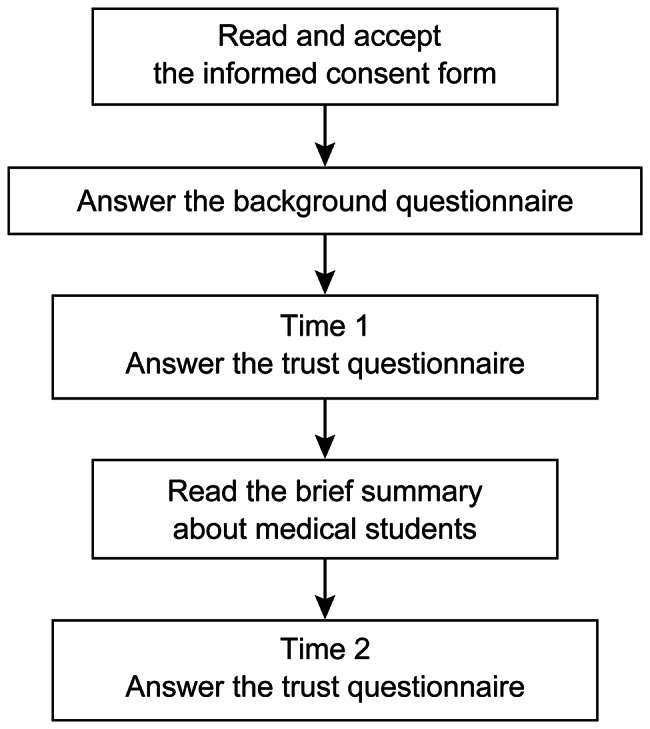
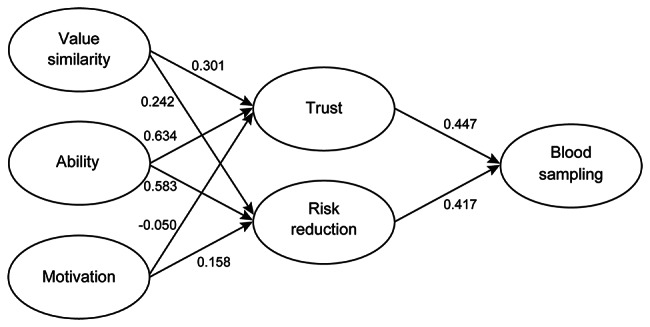
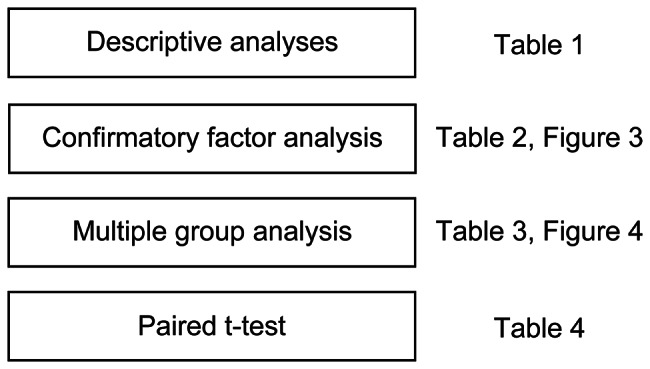
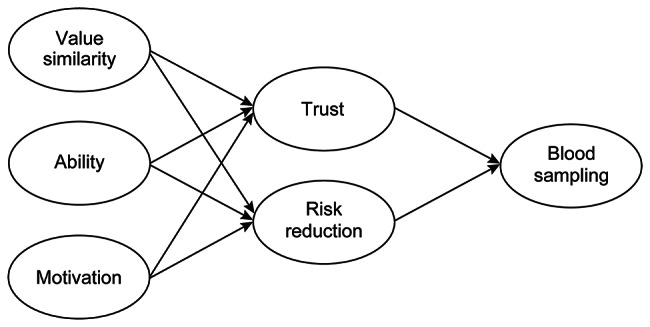
We conducted a cross-sectional study to investigate how the perception of value similarity affects social trust. The participants answered the social trust questionnaires before and after reading a brief summary of the medical education curriculum and certification via the internet in Japan. The model structure of social trust in medical students, including the perception of value similarity, was investigated using SEM. A paired t-test was used to examine the effect of informing citizens about the knowledge, skills, and professionalism requirements of students attending medical school on social trust by reading the brief summary.
The study included 658 participants, who all answered a web questionnaire. Social trust in medical students was associated with the perception of ability and value similarity. Social trust in medical students, the perception of ability, and value similarity were improved by information about medical students.
The perception of ability and value similarity seem to affect social trust in medical students. Information on medical education regarding the knowledge, skills, and professionalism of medical students may improve social trust in these students. Further research is required to sophisticate the model of social trust in medical students by exploring social trust in the medical students' supervisors in clinical settings.
社会对医学生的信任是对医学生群体的信任,而不是对个别医学生的信任。由于公民在临床实践中经常首次面对不知名的医学生,因此医学生的社会信任似乎至关重要。然而,大多数先前的研究都集中在特定医疗职业的人际信任上,而对医学生的社会信任则没有得到充分的探讨。在社会科学中,突出价值相似性模型表明,专业人士和公民之间的价值观相似性与社会信任有关。本研究旨在探讨医学生的社会信任与价值相似性感知之间的关系。本研究还旨在确定医学生的信息是否会增强对他们的社会信任。
我们进行了一项横断面研究,以调查价值相似性感知如何影响社会信任。参与者在阅读日本互联网上的简短医学教育课程和认证摘要之前和之后回答社会信任问卷。使用 SEM 研究医学生社会信任的模型结构,包括价值相似性感知。使用配对 t 检验检查通过阅读简短摘要告知公民医学生的知识、技能和专业精神要求对社会信任的影响。
该研究共纳入 658 名参与者,他们均回答了网络问卷。医学生的社会信任与能力和价值相似性感知有关。医学生的社会信任、能力感知和价值相似性感知通过医学生的信息得到提高。
能力和价值相似性感知似乎影响医学生的社会信任。有关医学生知识、技能和专业精神的医学教育信息可能会提高对这些学生的社会信任。需要进一步研究以通过探索临床环境中医学生导师的社会信任来完善医学生社会信任模型。