Dijkstra Allysa M, de Blaauw Pim, van Rijt Willemijn J, Renting Hanneke, Maatman Ronald G H J, van Spronsen Francjan J, Maase Rose E, Schielen Peter C J I, Derks Terry G J, Heiner-Fokkema M Rebecca
Section of Metabolic Diseases, Beatrix Children's Hospital, University Medical Center Groningen, University of Groningen, 9700 RB Groningen, The Netherlands.
Laboratory of Metabolic Diseases, Department of Laboratory Medicine, University Medical Center Groningen, University of Groningen, 9700 RB Groningen, The Netherlands.
Int J Neonatal Screen. 2023 Jun 21;9(3):34. doi: 10.3390/ijns9030034.
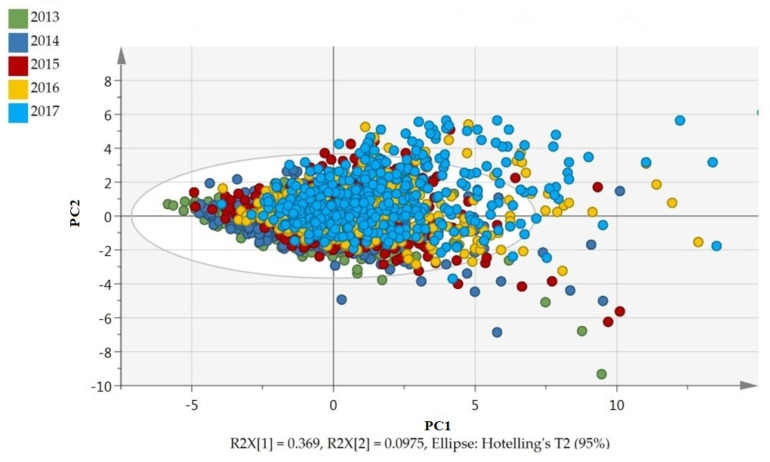
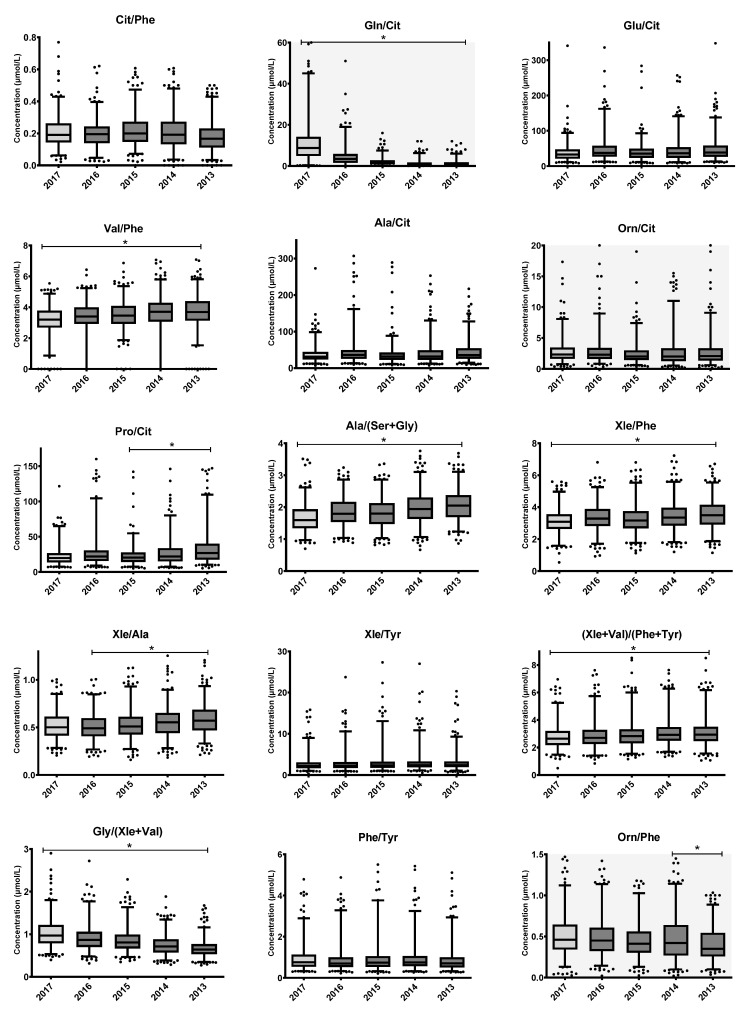
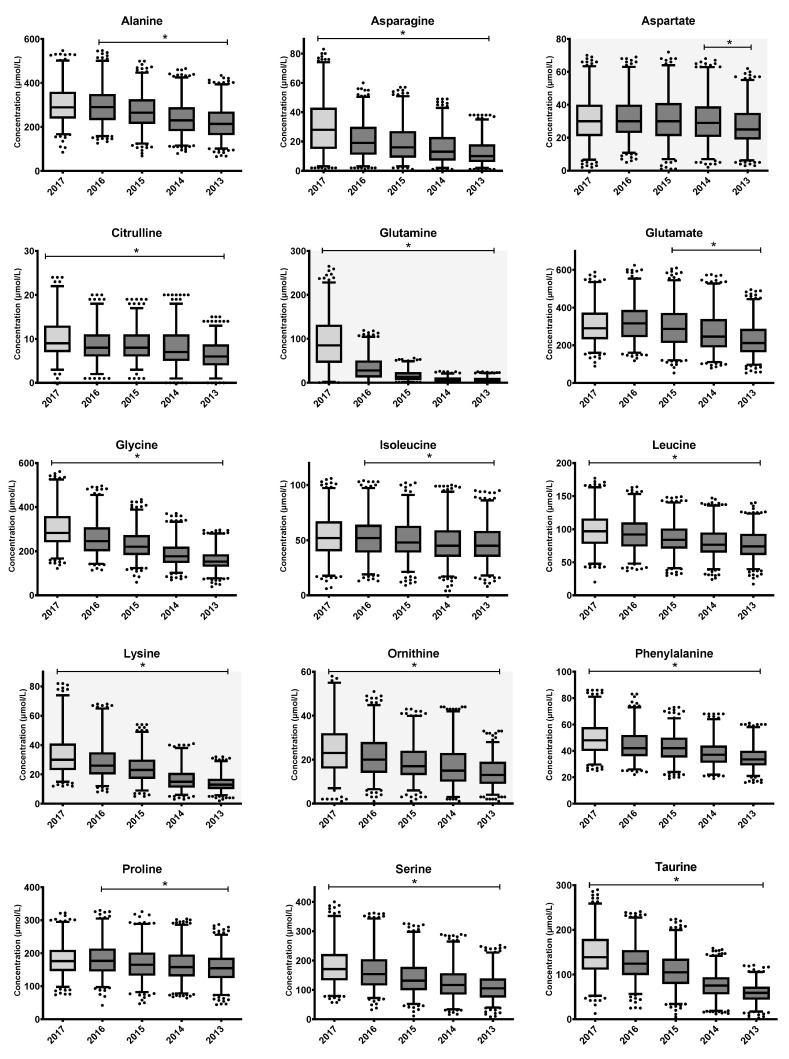
Residual heel prick Dried Blood Spots (DBS) are valuable samples for retrospective investigation of inborn metabolic diseases (IMD) and biomarker analyses. Because many metabolites suffer time-dependent decay, we investigated the five-year stability of amino acids (AA) in residual heel prick DBS. In 2019/2020, we analyzed 23 AAs in 2170 residual heel prick DBS from the Dutch neonatal screening program, stored from 2013-2017 (one year at +4 °C and four years at room temperature), using liquid chromatography mass-spectrometry. Stability was assessed by AA changes over the five years. Hydroxyproline could not be measured accurately and was not further assessed. Concentrations of 19 out of the remaining 22 AAs degraded significantly, ranked from most to least stable: aspartate, isoleucine, proline, valine, leucine, tyrosine, alanine, phenylalanine, threonine, citrulline, glutamate, serine, ornithine, glycine, asparagine, lysine, taurine, tryptophan and glutamine. Arginine, histidine and methionine concentrations were below the limit of detection and were likely to have been degraded within the first year of storage. AAs in residual heel prick DBS stored at room temperature are subject to substantial degradation, which may cause incorrect interpretation of test results for retrospective biomarker studies and IMD diagnostics. Therefore, retrospective analysis of heel prick blood should be done in comparison to similarly stored heel prick blood from controls.
足跟采血残留干血斑(DBS)是用于先天性代谢疾病(IMD)回顾性调查和生物标志物分析的宝贵样本。由于许多代谢物会随时间衰减,我们研究了足跟采血残留DBS中氨基酸(AA)的五年稳定性。在2019/2020年,我们使用液相色谱质谱法分析了荷兰新生儿筛查项目中2013 - 2017年储存的2170份足跟采血残留DBS中的23种氨基酸(在 +4°C下储存一年,室温下储存四年)。通过五年间氨基酸的变化评估稳定性。羟脯氨酸无法准确测量,未作进一步评估。其余22种氨基酸中有19种的浓度显著下降,从最稳定到最不稳定排序为:天冬氨酸、异亮氨酸、脯氨酸、缬氨酸、亮氨酸、酪氨酸、丙氨酸、苯丙氨酸、苏氨酸、瓜氨酸、谷氨酸、丝氨酸、鸟氨酸、甘氨酸、天冬酰胺、赖氨酸、牛磺酸、色氨酸和谷氨酰胺。精氨酸、组氨酸和蛋氨酸的浓度低于检测限,很可能在储存的第一年内就已降解。室温下储存的足跟采血残留DBS中的氨基酸会发生大量降解,这可能导致对回顾性生物标志物研究和IMD诊断的检测结果解读错误。因此,足跟采血的回顾性分析应与对照的足跟采血且储存方式相似的样本进行比较。