Department of Mechanical and Aerospace Engineering, The Ohio State University, Columbus, OH 43210, USA.
Department of Physics, The Ohio State University, Columbus, OH 43210, USA.
Sci Adv. 2023 Jul 28;9(30):eadi0697. doi: 10.1126/sciadv.adi0697. Epub 2023 Jul 26.
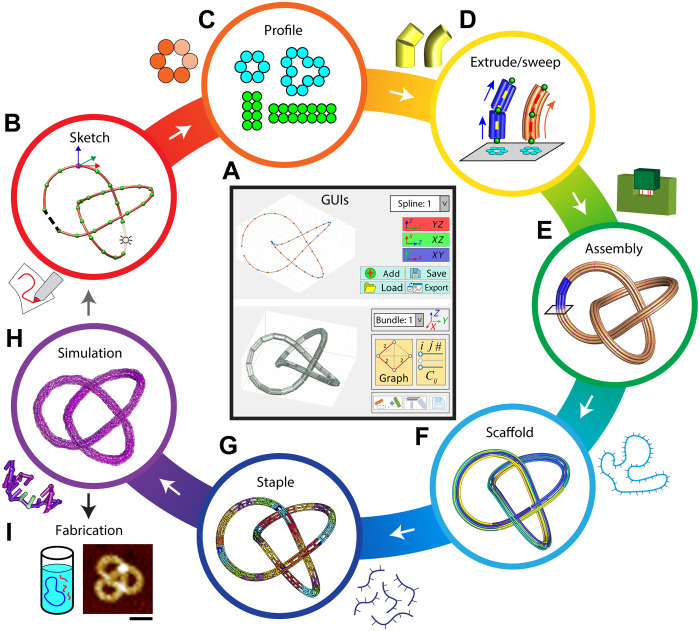
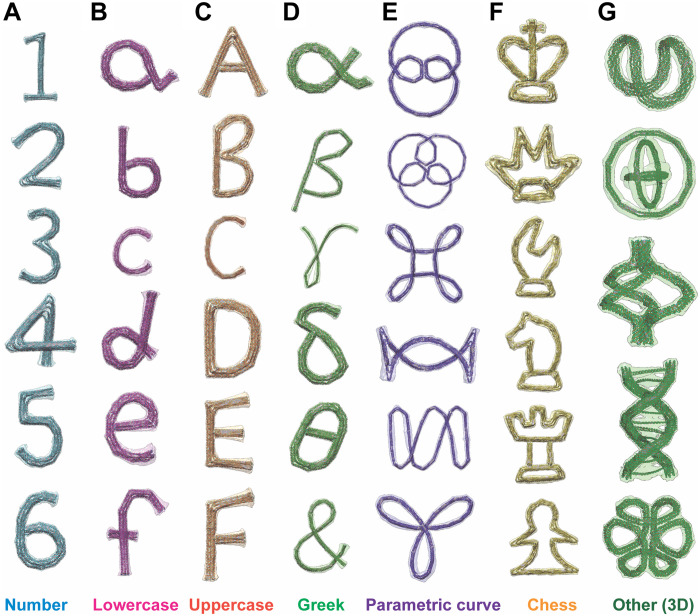
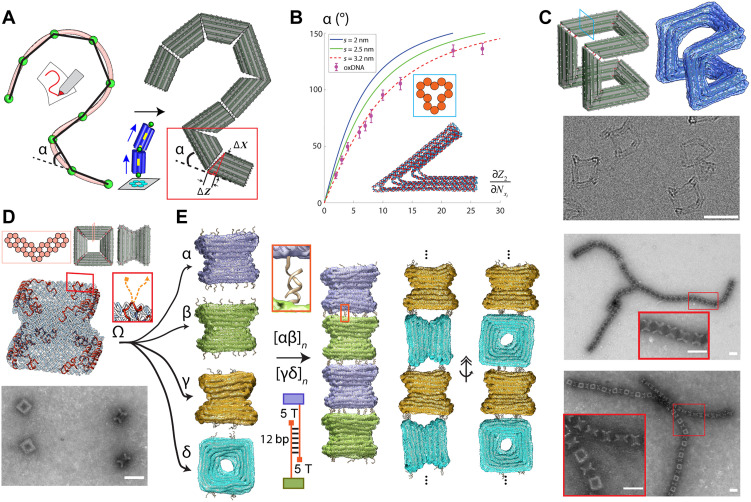
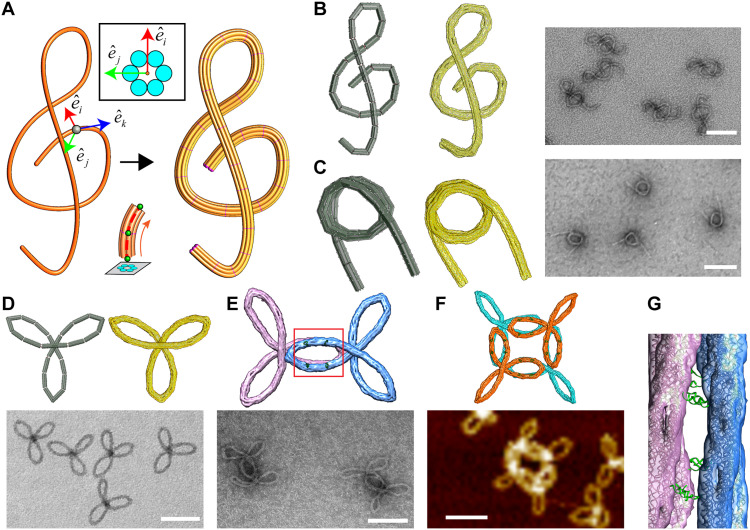
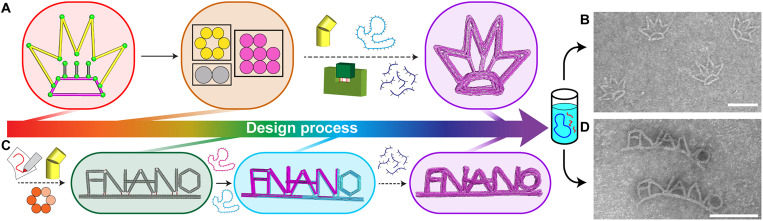
Recent advances in structural DNA nanotechnology have been facilitated by design tools that continue to push the limits of structural complexity while simplifying an often-tedious design process. We recently introduced the software MagicDNA, which enables design of complex 3D DNA assemblies with many components; however, the design of structures with free-form features like vertices or curvature still required iterative design guided by simulation feedback and user intuition. Here, we present an updated design tool, MagicDNA 2.0, that automates the design of free-form 3D geometries, leveraging design models informed by coarse-grained molecular dynamics simulations. Our GUI-based, stepwise design approach integrates a high level of automation with versatile control over assembly and subcomponent design parameters. We experimentally validated this approach by fabricating a range of DNA origami assemblies with complex free-form geometries, including a 3D Nozzle, G-clef, and Hilbert and Trifolium curves, confirming excellent agreement between design input, simulation, and structure formation.
近年来,结构 DNA 纳米技术的发展得益于设计工具的进步,这些工具在简化繁琐的设计过程的同时,不断推动结构复杂性的极限。我们最近引入了 MagicDNA 软件,该软件可用于设计具有多个组件的复杂 3D DNA 组装体;然而,具有顶点或曲率等自由形态特征的结构的设计仍然需要通过模拟反馈和用户直觉进行迭代设计。在这里,我们提出了一个更新的设计工具 MagicDNA 2.0,它可以自动设计自由形态的 3D 几何形状,利用粗粒度分子动力学模拟提供的设计模型。我们基于图形用户界面的逐步设计方法将高水平的自动化与对组装和子组件设计参数的灵活控制相结合。我们通过制造一系列具有复杂自由形态几何形状的 DNA 折纸组装体来验证这种方法,包括 3D 喷嘴、G 谱号和希尔伯特及三叶草曲线,设计输入、模拟和结构形成之间具有极好的一致性。