Chon Nara L, Tran Sherleen, Miller Christopher S, Lin Hai, Knight Jefferson D
Department of Chemistry, University of Colorado Denver.
Department of Integrative Biology, University of Colorado Denver.
bioRxiv. 2023 Oct 29:2023.07.13.548768. doi: 10.1101/2023.07.13.548768.
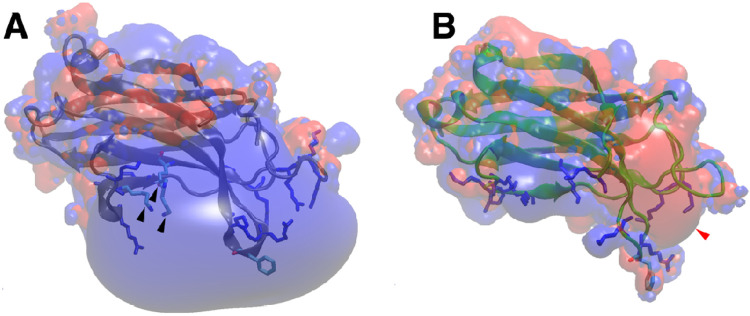
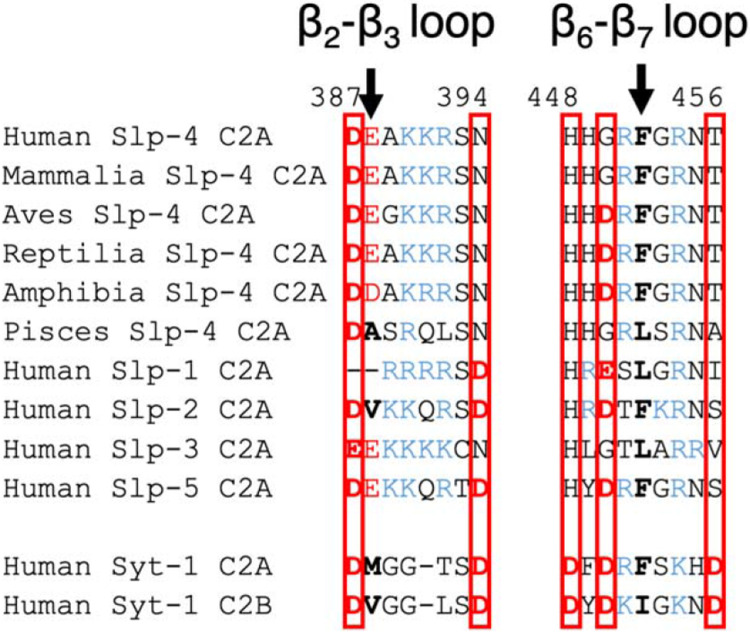
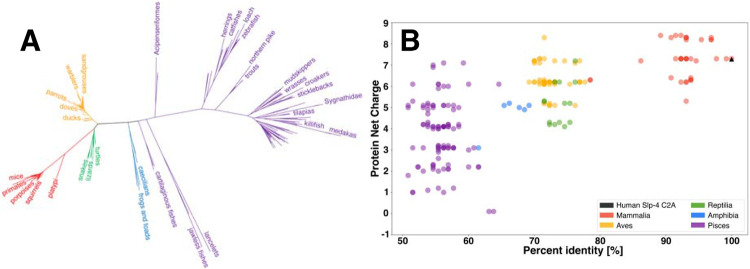
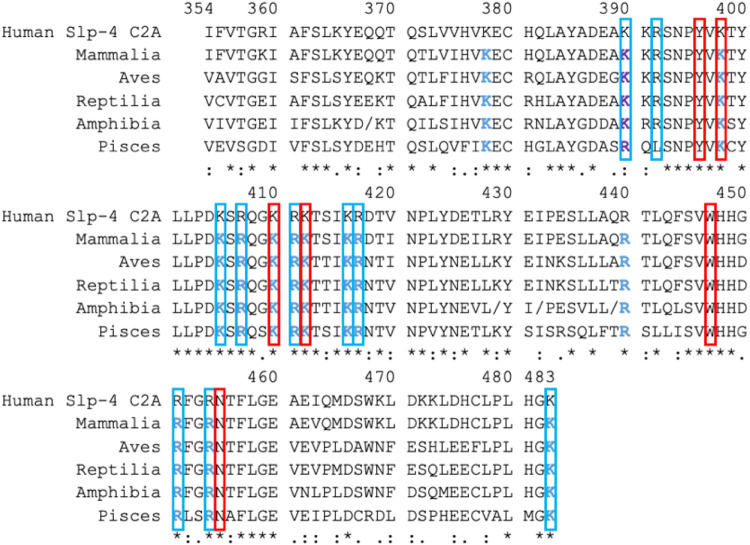
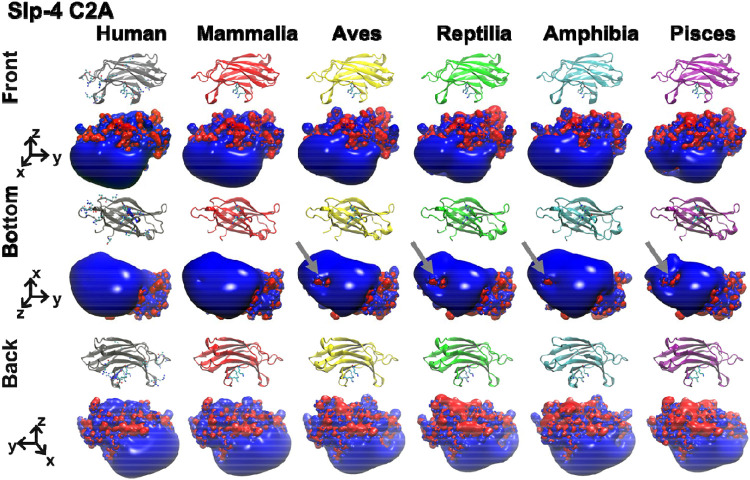
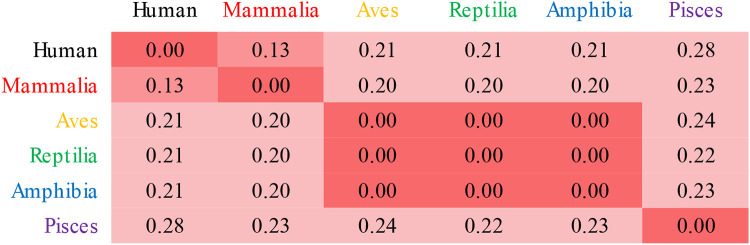
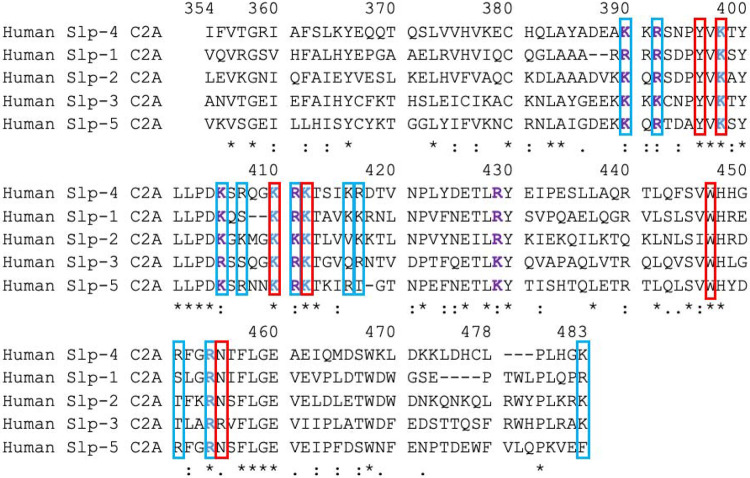
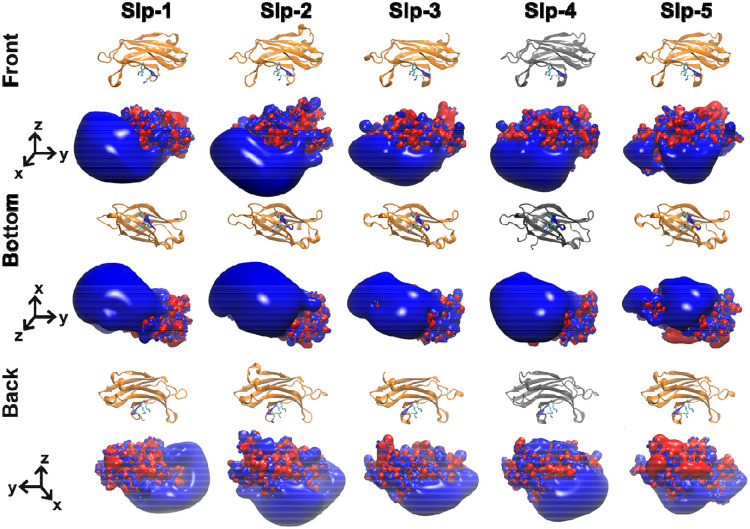
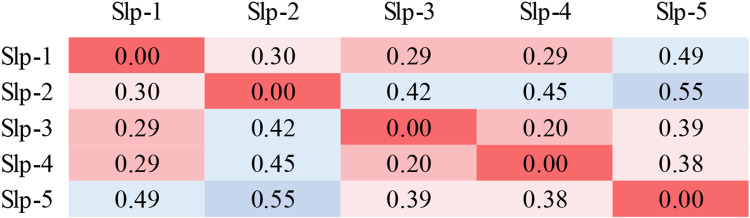
Protein structure prediction has emerged as a core technology for understanding biomolecules and their interactions. Here, we combine homology-based structure prediction with molecular phylogenetic analysis to study the evolution of electrostatic membrane binding among vertebrate synaptotagmin-like proteins (Slps). Slp family proteins play key roles in the membrane trafficking of large dense-core secretory vesicles. Our previous experimental and computational study found that the C2A domain of Slp-4 (also called granuphilin) binds with high affinity to anionic phospholipids in the cytoplasmic leaflet of the plasma membrane through a large positively charged protein surface centered on a cluster of phosphoinositide-binding lysine residues. Because this surface contributes greatly to Slp-4 C2A domain membrane binding, we hypothesized that the net charge on the surface might be evolutionarily conserved. To test this hypothesis, the known C2A sequences of Slp-4 among vertebrates were organized by class (from mammalia to pisces) using molecular phylogenetic analysis. Consensus sequences for each class were then identified and used to generate homology structures, from which Poisson-Boltzmann electrostatic potentials were calculated. For comparison, homology structures and electrostatic potentials were also calculated for the five human Slp protein family members. The results demonstrate that the charge on the membrane-binding surface is highly conserved throughout the evolution of Slp-4, and more highly conserved than many individual residues among the human Slp family paralogs. Such molecular phylogenetic-driven computational analysis can help to describe the evolution of electrostatic interactions between proteins and membranes which are crucial for their function.
蛋白质结构预测已成为理解生物分子及其相互作用的核心技术。在此,我们将基于同源性的结构预测与分子系统发育分析相结合,以研究脊椎动物中类似突触结合蛋白(Slps)的静电膜结合的进化。Slp家族蛋白在大致密核心分泌囊泡的膜运输中起关键作用。我们之前的实验和计算研究发现,Slp - 4(也称为颗粒嗜碱蛋白)的C2A结构域通过以磷酸肌醇结合赖氨酸残基簇为中心的大的带正电荷的蛋白质表面,与质膜胞质小叶中的阴离子磷脂高亲和力结合。由于该表面对Slp - 4 C2A结构域的膜结合有很大贡献,我们推测该表面的净电荷可能在进化上是保守的。为了验证这一假设,我们使用分子系统发育分析,按类别(从哺乳动物到鱼类)整理了脊椎动物中已知的Slp - 4的C2A序列。然后确定每个类别的共有序列,并用于生成同源结构,从中计算泊松 - 玻尔兹曼静电势。为了进行比较,还计算了五个人类Slp蛋白家族成员的同源结构和静电势。结果表明,在Slp - 4的整个进化过程中,膜结合表面的电荷高度保守,并且比人类Slp家族旁系同源物中的许多单个残基更加保守。这种由分子系统发育驱动的计算分析有助于描述蛋白质与膜之间静电相互作用的进化,而这种相互作用对它们的功能至关重要。