Department of Melanoma, Cancer Immunotherapy and Innovative Therapy, Istituto Nazionale Tumori IRCCS "Fondazione G. Pascale", Naples, Italy.
Temple University School of Medicine, Philadelphia, PA, USA.
J Transl Med. 2023 Jul 28;21(1):508. doi: 10.1186/s12967-023-04325-x.
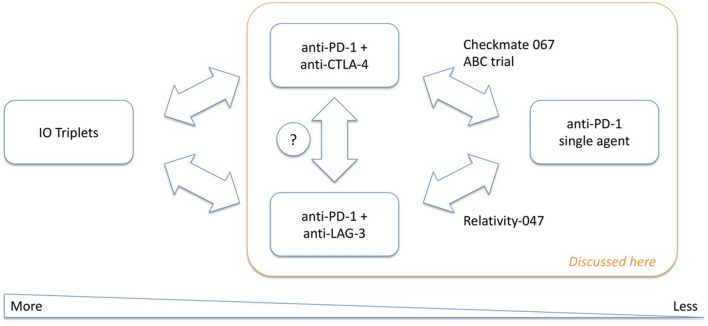
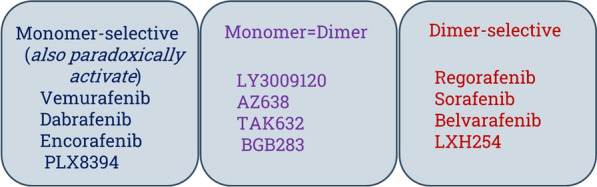
Outcomes for patients with melanoma have improved over the past decade with the clinical development and approval of immunotherapies targeting immune checkpoint receptors such as programmed death-1 (PD-1), programmed death ligand 1 (PD-L1) or cytotoxic T lymphocyte antigen-4 (CTLA-4). Combinations of these checkpoint therapies with other agents are now being explored to improve outcomes and enhance benefit-risk profiles of treatment. Alternative inhibitory receptors have been identified that may be targeted for anti-tumor immune therapy, such as lymphocyte-activation gene-3 (LAG-3), as have several potential target oncogenes for molecularly targeted therapy, such as tyrosine kinase inhibitors. Unfortunately, many patients still progress and acquire resistance to immunotherapy and molecularly targeted therapies. To bypass resistance, combination treatment with immunotherapies and single or multiple TKIs have been shown to improve prognosis compared to monotherapy. The number of new combinations treatment under development for melanoma provides options for the number of patients to achieve a therapeutic benefit. Many diagnostic and prognostic assays have begun to show clinical applicability providing additional tools to optimize and individualize treatments. However, the question on the optimal algorithm of first- and later-line therapies and the search for biomarkers to guide these decisions are still under investigation. This year, the Melanoma Bridge Congress (Dec 1-3rd, 2022, Naples, Italy) addressed the latest advances in melanoma research, focusing on themes of paramount importance for melanoma prevention, diagnosis and treatment. This included sessions dedicated to systems biology on immunotherapy, immunogenicity and gene expression profiling, biomarkers, and combination treatment strategies.
过去十年,随着针对免疫检查点受体(如程序性死亡受体-1[PD-1]、程序性死亡配体 1[PD-L1]或细胞毒性 T 淋巴细胞相关抗原 4[CTLA-4])的免疫疗法的临床开发和批准,黑色素瘤患者的预后得到了改善。目前正在探索这些检查点疗法与其他药物联合使用,以改善治疗效果并提高治疗的获益风险比。已经鉴定出其他抑制性受体,这些受体可能成为抗肿瘤免疫治疗的靶点,如淋巴细胞激活基因 3(LAG-3),而酪氨酸激酶抑制剂等分子靶向治疗的几个潜在靶标致癌基因也已被确定。不幸的是,许多患者仍会进展并对免疫治疗和分子靶向治疗产生耐药性。为了克服耐药性,与单药治疗相比,免疫治疗联合单药或多种 TKI 的联合治疗已显示出改善预后的效果。目前正在开发的黑色素瘤联合治疗方案数量众多,为更多患者提供了获得治疗获益的选择。许多诊断和预后检测方法已开始显示出临床适用性,为优化和个体化治疗提供了更多工具。然而,关于一线和二线治疗的最佳方案以及寻找指导这些决策的生物标志物的问题仍在研究中。今年,黑色素瘤桥接大会(2022 年 12 月 1 日至 3 日,意大利那不勒斯)讨论了黑色素瘤研究的最新进展,重点关注黑色素瘤预防、诊断和治疗的重要主题。这包括专门讨论免疫治疗、免疫原性和基因表达谱、生物标志物和联合治疗策略的系统生物学的会议。