Wang Qiong, Yao Wenpo, Bai Dengxuan, Yi Wanyi, Yan Wei, Wang Jun
School of Telecommunications and Information Engineering, Nanjing University of Posts and Telecommunications, Nanjing 210003, China.
School of Physics and Information Engineering, Jiangsu Second Normal University, Nanjing 210013, China.
Entropy (Basel). 2023 Jun 30;25(7):1006. doi: 10.3390/e25071006.
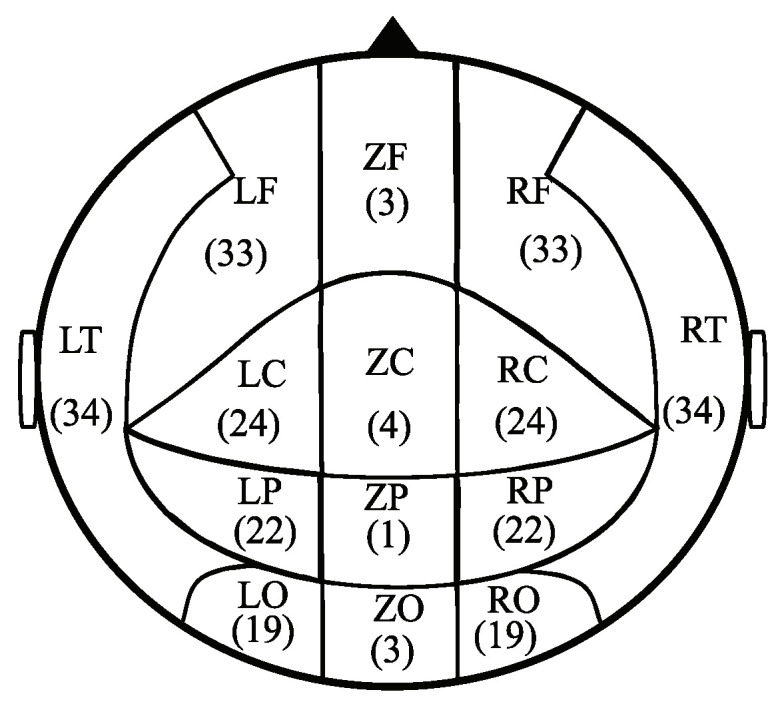
Network analysis is an important approach to explore complex brain structures under different pathological and physiological conditions. In this paper, we employ the multivariate inhomogeneous polynomial kernel Granger causality (MKGC) to construct directed weighted networks to characterize schizophrenia magnetoencephalography (MEG). We first generate data based on coupled autoregressive processes to test the effectiveness of MKGC in comparison with the bivariate linear Granger causality and bivariate inhomogeneous polynomial kernel Granger causality. The test results suggest that MKGC outperforms the other two methods. Based on these results, we apply MKGC to construct effective connectivity networks of MEG for patients with schizophrenia (SCZs). We measure three network features, i.e., strength, nonequilibrium, and complexity, to characterize schizophrenia MEG. Our results suggest that MEG of the healthy controls (HCs) has a denser effective connectivity network than that of SCZs. The most significant difference in the in-connectivity strength is observed in the right frontal network (p=0.001). The strongest out-connectivity strength for all subjects occurs in the temporal area, with the most significant between-group difference in the left occipital area (p=0.0018). The total connectivity strength of the frontal, temporal, and occipital areas of HCs exhibits higher values compared with SCZs. The nonequilibrium feature over the whole brain of SCZs is significantly higher than that of the HCs (p=0.012); however, the results of Shannon entropy suggest that healthy MEG networks have higher complexity than schizophrenia networks. Overall, MKGC provides a reliable approach to construct MEG brain networks and characterize the network characteristics.
网络分析是探索不同病理和生理条件下复杂脑结构的重要方法。在本文中,我们采用多元非齐次多项式核格兰杰因果关系(MKGC)来构建有向加权网络,以表征精神分裂症的脑磁图(MEG)。我们首先基于耦合自回归过程生成数据,以测试MKGC与双变量线性格兰杰因果关系和双变量非齐次多项式核格兰杰因果关系相比的有效性。测试结果表明,MKGC优于其他两种方法。基于这些结果,我们应用MKGC构建精神分裂症患者(SCZ)的MEG有效连接网络。我们测量了三个网络特征,即强度、非平衡和复杂性,以表征精神分裂症的MEG。我们的结果表明,健康对照组(HC)的MEG有效连接网络比SCZ的更密集。在右额叶网络中观察到内连接强度的最显著差异(p = 0.001)。所有受试者最强的外连接强度出现在颞叶区域,组间差异最显著的是左枕叶区域(p = 0.0018)。与SCZ相比,HC的额叶、颞叶和枕叶区域的总连接强度呈现出更高的值。SCZ全脑的非平衡特征显著高于HC(p = 0.012);然而,香农熵的结果表明,健康的MEG网络比精神分裂症网络具有更高的复杂性。总体而言,MKGC为构建MEG脑网络和表征网络特征提供了一种可靠的方法。