MRC/CSO Social and Public Health Science Unit, School of Health and Wellbeing, University of Glasgow, Glasgow, UK.
MRC/CSO Social and Public Health Science Unit, School of Health and Wellbeing, University of Glasgow, Glasgow, UK
J Epidemiol Community Health. 2023 Oct;77(10):641-648. doi: 10.1136/jech-2023-220501. Epub 2023 Jul 31.
This study aims to estimate ethnic inequalities in risk for positive SARS-CoV-2 tests, COVID-19 hospitalisations and deaths over time in Scotland.
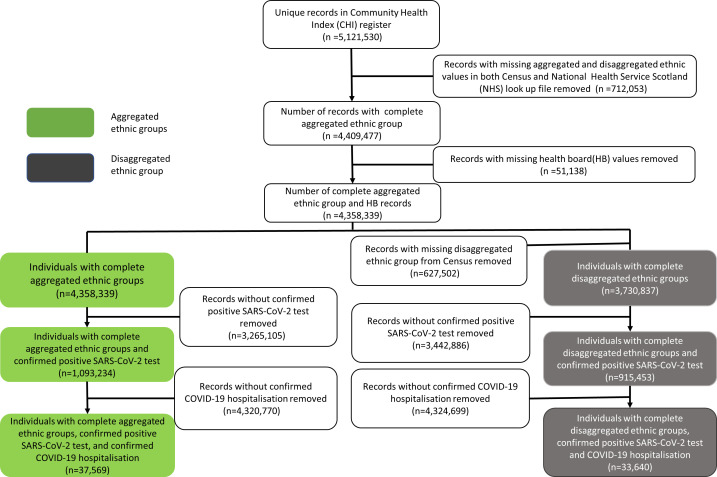
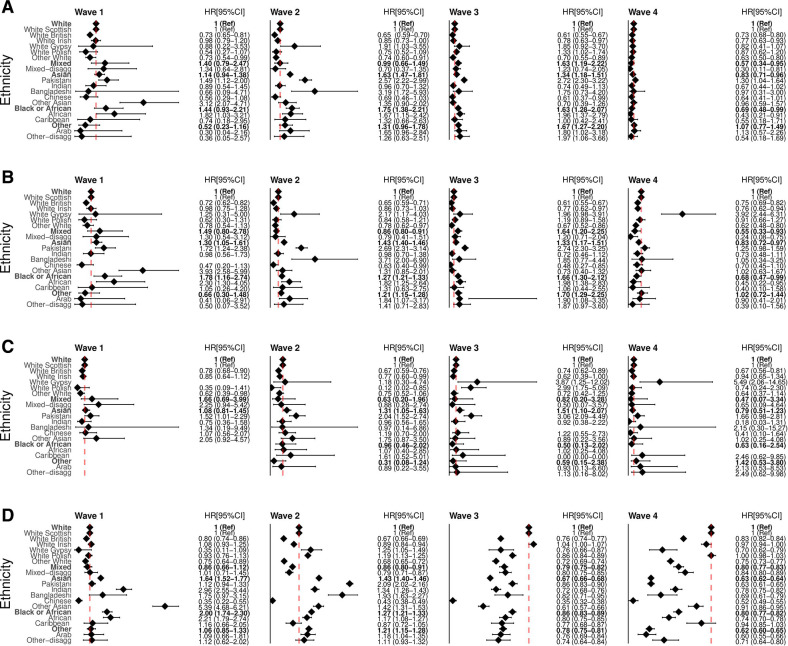
We conducted a population-based cohort study where the 2011 Scottish Census was linked to health records. We included all individuals ≥ 16 years living in Scotland on 1 March 2020. The study period was from 1 March 2020 to 17 April 2022. Self-reported ethnic group was taken from the census and Cox proportional hazard models estimated HRs for positive SARS-CoV-2 tests, hospitalisations and deaths, adjusted for age, sex and health board. We also conducted separate analyses for each of the four waves of COVID-19 to assess changes in risk over time.
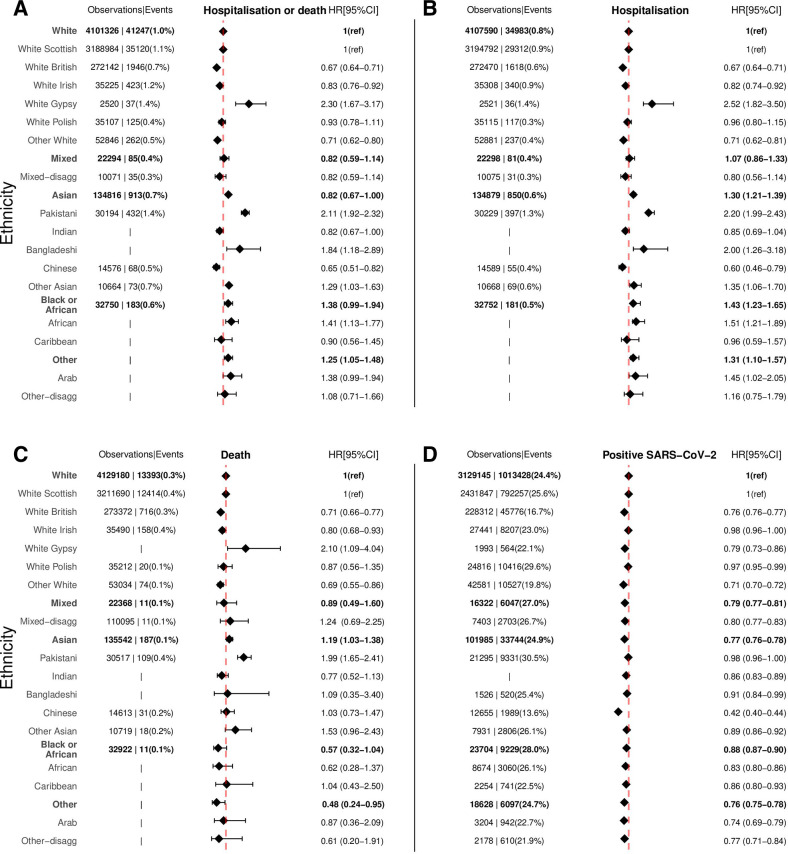
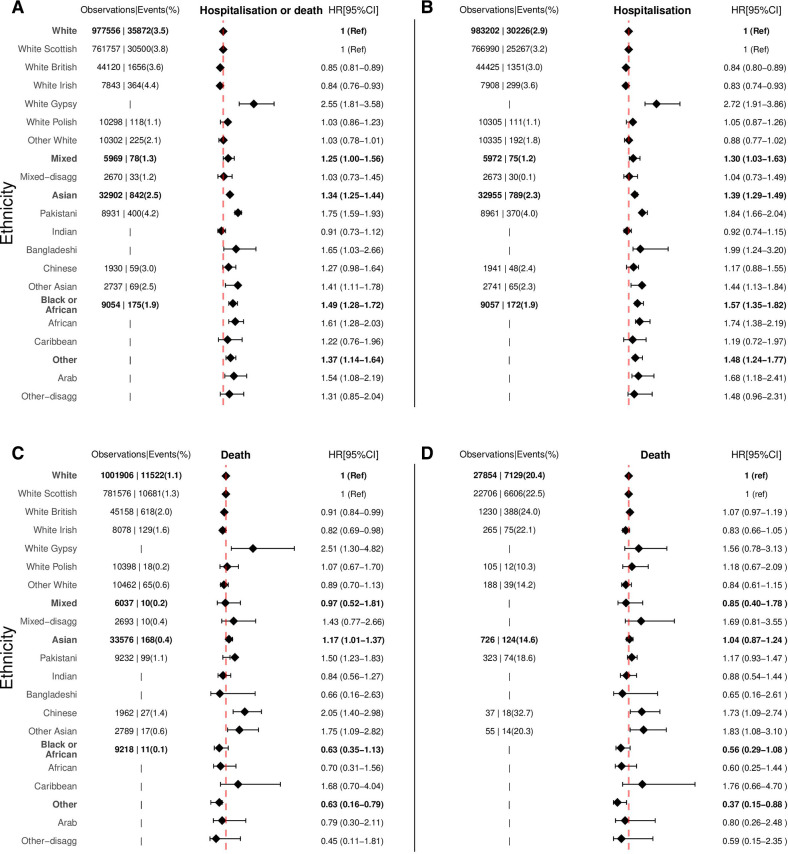
Of the 4 358 339 individuals analysed, 1 093 234 positive SARS-CoV-2 tests, 37 437 hospitalisations and 14 158 deaths occurred. The risk of COVID-19 hospitalisation or death among ethnic minority groups was often higher for White Gypsy/Traveller (HR 2.21, 95% CI (1.61 to 3.06)) and Pakistani 2.09 (1.90 to 2.29) groups compared with the white Scottish group. The risk of COVID-19 hospitalisation or death following confirmed positive SARS-CoV-2 test was particularly higher for White Gypsy/Traveller 2.55 (1.81-3.58), Pakistani 1.75 (1.59-1.73) and African 1.61 (1.28-2.03) individuals relative to white Scottish individuals. However, the risk of COVID-19-related death following hospitalisation did not differ. The risk of COVID-19 outcomes for ethnic minority groups was higher in the first three waves compared with the fourth wave.
Most ethnic minority groups were at increased risk of adverse COVID-19 outcomes in Scotland, especially White Gypsy/Traveller and Pakistani groups. Ethnic inequalities persisted following community infection but not following hospitalisation, suggesting differences in hospital treatment did not substantially contribute to ethnic inequalities.
本研究旨在评估苏格兰在 SARS-CoV-2 检测呈阳性、COVID-19 住院和死亡方面的种族不平等情况随时间的变化。
我们进行了一项基于人群的队列研究,将 2011 年苏格兰人口普查与健康记录相关联。我们纳入了 2020 年 3 月 1 日居住在苏格兰的所有≥16 岁的个体。研究期间为 2020 年 3 月 1 日至 2022 年 4 月 17 日。种族群体的自我报告来自人口普查,Cox 比例风险模型估计 SARS-CoV-2 检测、住院和死亡的 HRs,调整年龄、性别和卫生局。我们还对 COVID-19 的四个波次分别进行了单独分析,以评估随时间变化的风险变化。
在分析的 4358339 人中,有 1093234 例 SARS-CoV-2 检测呈阳性,37437 例住院,14158 例死亡。与白种苏格兰群体相比,少数族裔群体中 COVID-19 住院或死亡的风险往往更高,其中白种吉普赛/旅行者为 2.21(95%CI(1.61 至 3.06)),巴基斯坦人为 2.09(1.90 至 2.29)。与白种苏格兰个体相比,COVID-19 检测呈阳性后住院的 COVID-19 住院或死亡风险对白人吉普赛/旅行者个体尤其更高,为 2.55(1.81-3.58),巴基斯坦人为 1.75(1.59-1.73),非洲人为 1.61(1.28-2.03)。然而,住院后 COVID-19 相关死亡的风险并无差异。与第四波相比,少数族裔群体在前三波 COVID-19 事件中的不良结局风险更高。
苏格兰的大多数少数族裔群体面临更高的 COVID-19 不良结局风险,尤其是白种吉普赛/旅行者和巴基斯坦群体。社区感染后,少数族裔群体的种族不平等仍然存在,但住院后则不存在,这表明医院治疗的差异并未对种族不平等产生实质性影响。