School of Pharmaceutical Sciences, Tsinghua University, Beijing, 100084, China.
Institute of Biomedical Engineering, Chinese Academy of Medical Sciences and Peking Union Medical College, Tianjin, 300192, China.
Cell Commun Signal. 2023 Aug 1;21(1):186. doi: 10.1186/s12964-023-01140-1.
In colorectal cancer (CRC), the normal tissue adjacent to tumor (NAT) communicates actively with the tumor. Adult stem cells from the colon play a crucial role in the development of the colonic epithelium. In the tumor microenvironment, however, it is unclear what changes have occurred in colonic stem cells derived from NAT.
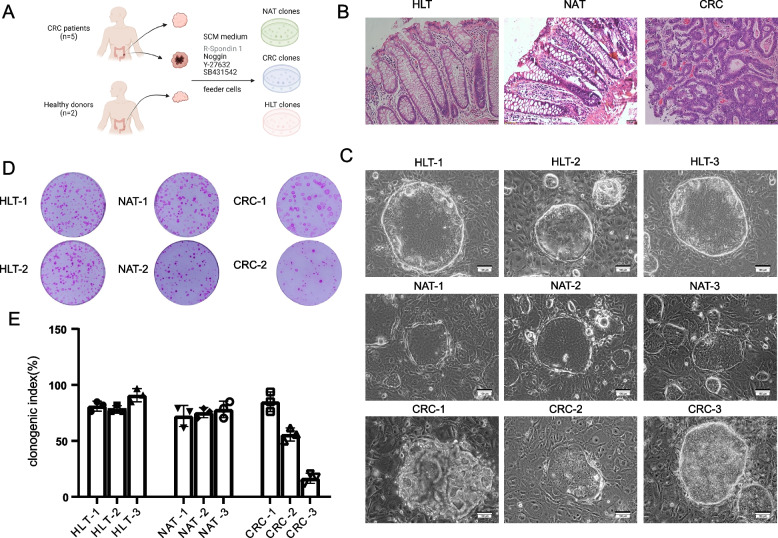
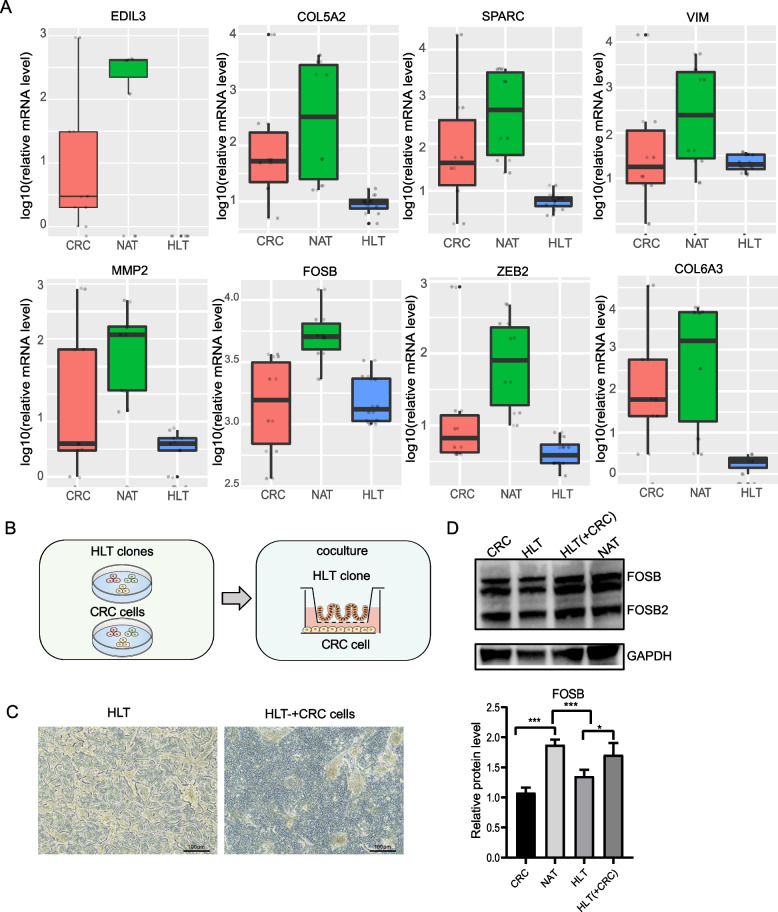
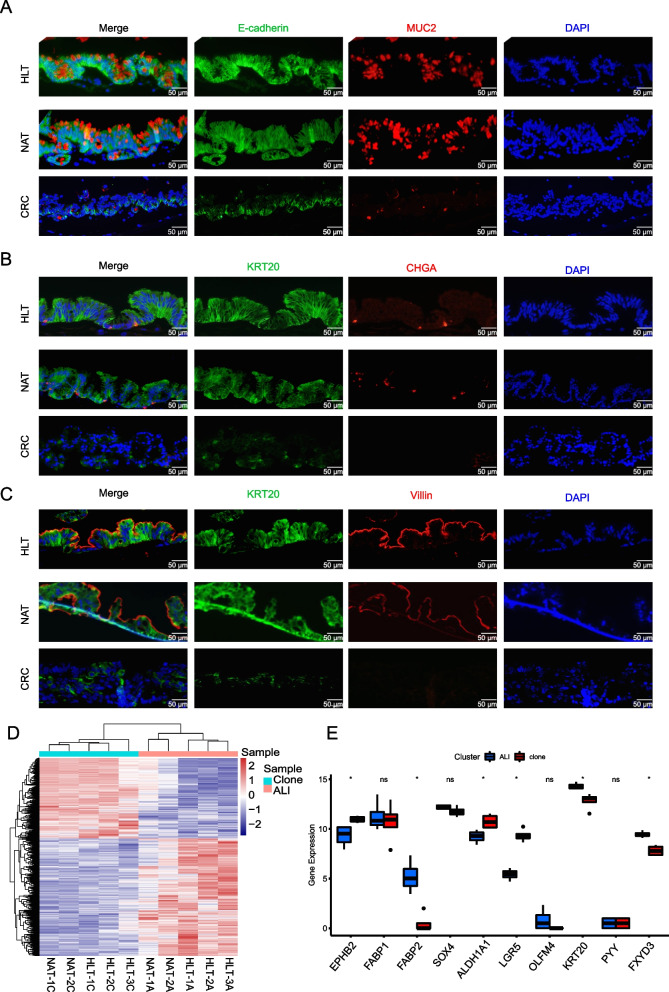
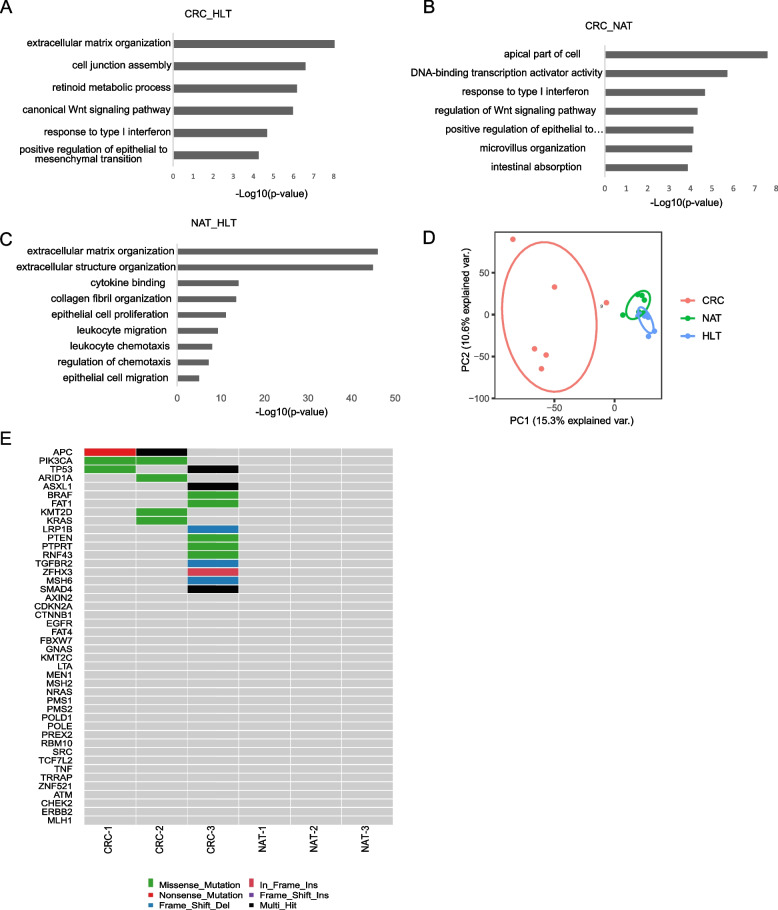
Using an intestinal stem cell culture system, we cultured colonic cells from NAT and paired CRC tissue, as well as cells from healthy tissue (HLT). Clonogenicity and differentiation ability were used to compare the function of clones from NAT, HLT and CRC tissues. RNA high-throughput sequencing of these clones was used to identify the molecular characteristics of NAT-derived clones. Coculture of clones from HLT and CRC was used to assess molecular changes.
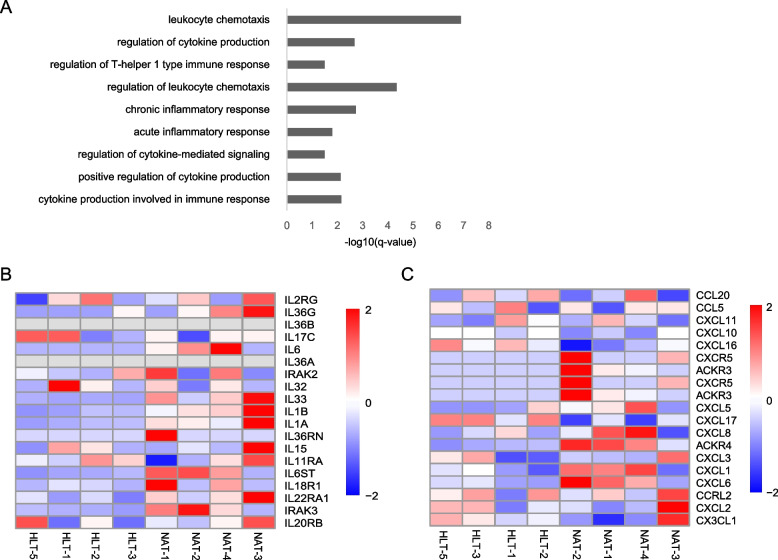
We found that the morphological characteristics, clonogenic ability, and differentiation ability of NAT-derived clones were consistent with those of HLT-derived clones. However, NAT-derived clones changed at the molecular level. A number of genes were specifically activated in NAT. NAT-derived clones enriched pathways related to inflammation and fibrosis, including epithelial mesenchymal transition (EMT) pathway and TGF-beta signaling pathway. Our results also confirmed that NAT-derived clones could recruit fibroblasts in mice. In addition, HLT-derived clones showed high expression of FOSB when cocultured with tumor cells.
Our results demonstrate that colonic stem cells from NAT in the tumor microenvironment undergo changes at the molecular level, and these molecular characteristics can be maintained in vitro, which can induce fibrosis and an inflammatory response. Video Abstract.
在结直肠癌(CRC)中,肿瘤旁的正常组织(NAT)与肿瘤积极沟通。来自结肠的成体干细胞在结肠上皮发育中起关键作用。然而,在肿瘤微环境中,尚不清楚源自 NAT 的结肠干细胞发生了哪些变化。
我们使用肠干细胞培养系统,培养源自 NAT 和配对 CRC 组织以及健康组织(HLT)的结肠细胞。克隆形成能力和分化能力用于比较源自 NAT、HLT 和 CRC 组织的克隆的功能。使用这些克隆的 RNA 高通量测序来鉴定源自 NAT 的克隆的分子特征。HLT 和 CRC 克隆的共培养用于评估分子变化。
我们发现源自 NAT 的克隆的形态特征、克隆形成能力和分化能力与源自 HLT 的克隆一致。然而,NAT 衍生的克隆在分子水平上发生了变化。许多基因在 NAT 中特异性激活。NAT 衍生的克隆富集了与炎症和纤维化相关的途径,包括上皮间质转化(EMT)途径和 TGF-β信号通路。我们的结果还证实,源自 NAT 的克隆可以在小鼠中招募成纤维细胞。此外,当与肿瘤细胞共培养时,HLT 衍生的克隆表现出 FOSB 的高表达。
我们的结果表明,肿瘤微环境中源自 NAT 的结肠干细胞在分子水平上发生变化,这些分子特征可以在体外维持,从而诱导纤维化和炎症反应。