Department of Coal Chemistry and Environmental Sciences, Faculty of Energy and Fuels, AGH University of Science and Technology, al. Mickiewicza 30, 30-059, Kraków, Poland.
Department of Geoengineering and Water Management, Faculty of Environmental Engineering and Energy, Cracow University of Technology, Kraków, Poland.
Environ Geochem Health. 2023 Oct;45(10):7099-7113. doi: 10.1007/s10653-023-01699-1. Epub 2023 Aug 2.
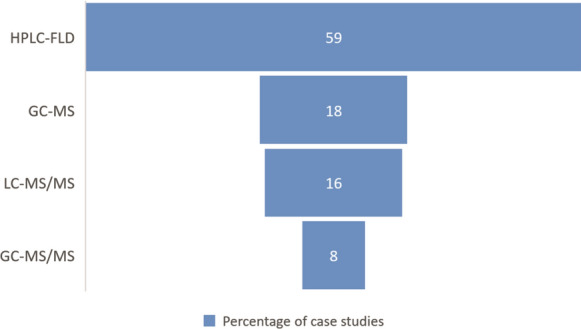
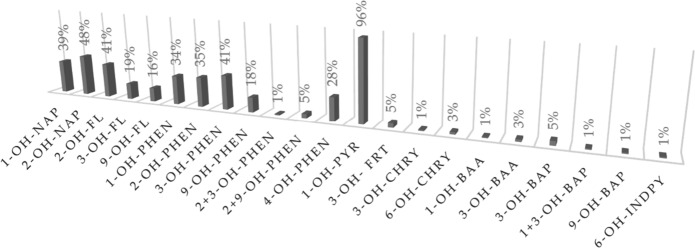
Polycyclic aromatic hydrocarbons (PAHs) are widespread environmental pollutants that are generated by the incomplete combustion of organic materials. The main anthropogenic sources of PAHs are the combustion of solid fuels for heating purposes, illegal waste incineration, road transport and industries based on fossil fuels. PAHs can easily enter the body because they are present in all elements of the environment, including water, soil, air, and food. Due to their ubiquitous presence, PAHs, may exert a harmful effect on human health. Assessing PAH exposure through biomonitoring mostly involve techniques to measure the concentration of 1-hydroxypyrene in human urine. Nevertheless, through recent progress in analytical techniques, other common metabolites of PAHs in human biospecimens can be detected. A scientific literature search was conducted to determine which hydroxy derivatives of PAHs are markers of PAHs exposure and to reveal the leading sources of these compounds. Techniques for analyzing biological samples to identify OH-PAHs are also discussed. The most frequently determined OH-PAH in human urine is 1-hydroxypyrene, the concentration of which reaches up to a dozen ng/L in urine. Apart from this compound, the most frequently determined biomarkers were naphthalene and fluorene metabolites. The highest concentrations of 1- and 2-hydroxynaphthalene, as well as 2-hydroxyfluorene, are associated with occupational exposure and reach approximately 30 ng/L in urine. High molecular weight PAH metabolites have been identified in only a few studies. To date, PAH metabolites in feces have been analyzed only in animal models for PAH exposure. The most frequently used analytical method is HPLC-FLD. However, compared to liquid chromatography, the LOD for gas chromatography methods is at least one order of magnitude lower. The hydroxy derivatives naphthalene and fluorene may also serve as indicators of PAH exposure.
多环芳烃(PAHs)是广泛存在的环境污染物,由有机物质不完全燃烧产生。PAHs 的主要人为来源是为取暖目的燃烧固体燃料、非法废物焚烧、道路交通和以化石燃料为基础的工业。由于它们存在于环境的所有元素中,包括水、土壤、空气和食物,因此 PAHs 很容易进入人体。由于无处不在,PAHs 可能对人类健康产生有害影响。通过生物监测评估 PAH 暴露主要涉及测量人尿中 1-羟芘浓度的技术。然而,通过分析技术的最新进展,也可以检测到人生物标本中其他常见的 PAH 代谢物。进行了科学文献检索,以确定哪些 PAHs 的羟基衍生物是 PAHs 暴露的标志物,并揭示这些化合物的主要来源。还讨论了用于分析生物样本以识别 OH-PAHs 的技术。人尿中最常测定的 OH-PAH 是 1-羟芘,其浓度在尿液中可达到十几个 ng/L。除了这种化合物之外,最常测定的生物标志物是萘和芴代谢物。1-和 2-羟萘以及 2-羟基芴的浓度最高与职业暴露有关,在尿液中的浓度约为 30 ng/L。只有少数研究中鉴定出高分子量 PAH 代谢物。迄今为止,仅在动物模型中分析了粪便中的 PAH 代谢物。最常用的分析方法是 HPLC-FLD。然而,与液相色谱相比,气相色谱方法的 LOD 至少低一个数量级。羟基衍生物萘和芴也可能作为 PAH 暴露的指标。