A Assaf Enas, Al Sabbah Haleama, Al-Jawadleh Ayoub
Faculty of Nursing, Applied Science Private University, Amman, Jordan.
Department of Public Health, College of Health Sciences, Abu Dhabi University, Abu Dhabi, United Arab Emirates.
Front Nutr. 2023 Jul 18;10:1206090. doi: 10.3389/fnut.2023.1206090. eCollection 2023.
Food insecurity, occupation, and poverty contribute to the poor nutritional status of Palestine. This review study aimed to analyze the nutritional status in the Palestinian Territory by analyzing published data from 2011 to 2023.
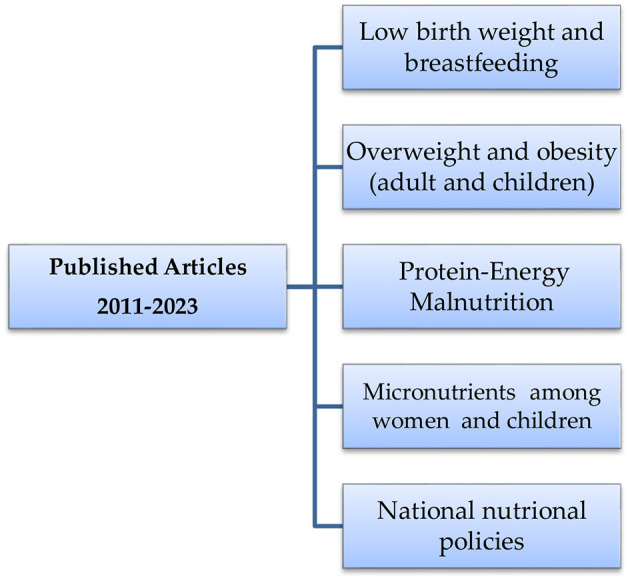
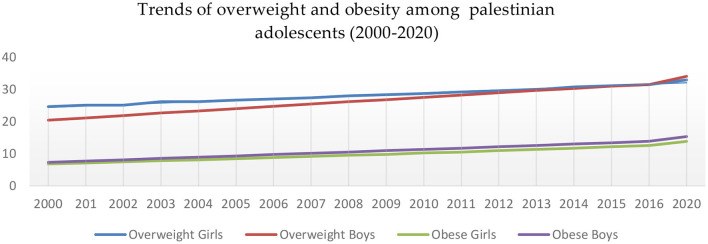
Searching for relevant publications yielded 67 studies. Based on reviewing these studies, five major themes were identified: low birth weight, breastfeeding, obesity and overweight, protein-energy malnutrition, and micronutrient deficiency.
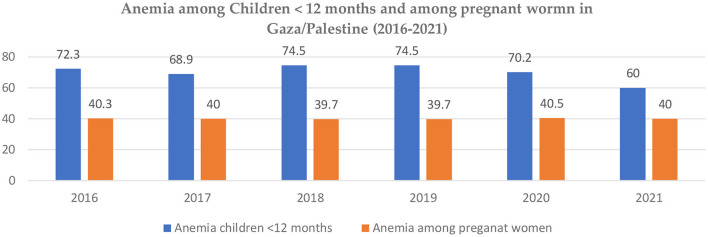
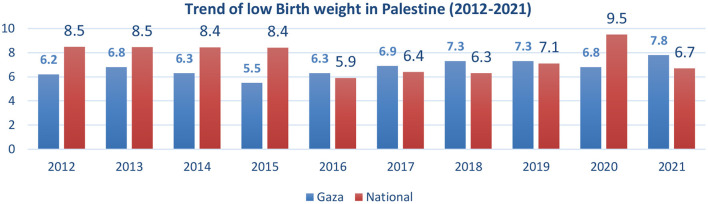
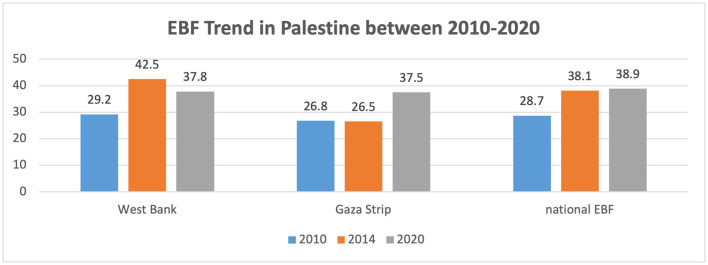
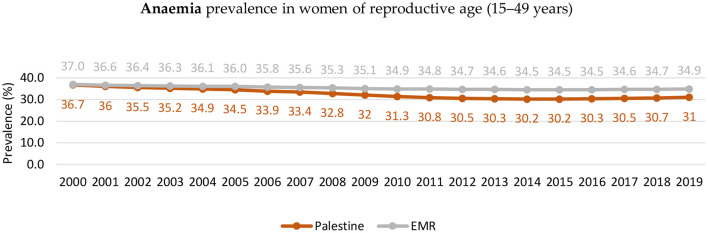
Based on the review of these studies, five major themes were identified, namely, low birth weight, breastfeeding, obesity and overweight, protein-energy malnutrition, and micronutrient deficiency. Based on the literature, the prevalence rate of exclusive breastfeeding was 24.4% in the Gaza Strip, compared to a national rate of 39.9% in 2020. Smoking, anemia in mothers, diet during pregnancy, and indoor pollution were associated with low birth weight. One-fifth of the boys and girls were stunted by 2 years of age in the Gaza Strip, and girls were more stunted than boys. The prevalence rates of underweight, overweight, and obesity among school children in the West Bank were 7.3%, 14.5%, and 15.7%, respectively. Age, gender, and living area were significant predictors of being overweight among school children. The prevalence rates of overweight and obesity among adults in Palestine were 57.8% and 26.8%, respectively. Obesity is associated with a family history, chronic diseases, and low physical activity among adults. Exclusive breastfeeding was below the WHO recommendations, while significant rates of obesity and overweight were found among children and adults. Iron-deficiency anemia (IDA) among pregnant women and children remains a challenging public health issue, while other micronutrient deficiencies are high among children.
This review emphasizes the need for multi-sectoral interventions to address malnutrition and nutritional shifts. It identifies gaps and addresses nutrition-related issues in the Palestinian Territory, which can serve as a basis for guiding United Nations agencies and governments in formulating evidence-based policies and strategies for prioritizing nutritional interventions to meet sustainable development goals.
粮食不安全、职业和贫困导致巴勒斯坦人的营养状况不佳。本综述研究旨在通过分析2011年至2023年发表的数据来分析巴勒斯坦领土内的营养状况。
搜索相关出版物后得到67项研究。在对这些研究进行综述的基础上,确定了五个主要主题:低出生体重、母乳喂养、肥胖和超重、蛋白质能量营养不良以及微量营养素缺乏。
基于对这些研究的综述,确定了五个主要主题,即低出生体重、母乳喂养、肥胖和超重、蛋白质能量营养不良以及微量营养素缺乏。根据文献资料,加沙地带纯母乳喂养的普及率为24.4%,而2020年全国普及率为39.9%。吸烟、母亲贫血、孕期饮食和室内污染与低出生体重有关。在加沙地带,五分之一的男孩和女孩在2岁时发育迟缓,女孩比男孩发育迟缓的情况更严重。约旦河西岸学童中体重不足、超重和肥胖的患病率分别为7.3%、14.5%和15.7%。年龄、性别和居住地区是学童超重的重要预测因素。巴勒斯坦成年人中超重和肥胖的患病率分别为57.8%和26.8%。肥胖与成年人的家族病史、慢性病和低体力活动有关。纯母乳喂养率低于世界卫生组织的建议,而儿童和成年人中肥胖和超重的比例很高。孕妇和儿童缺铁性贫血(IDA)仍然是一个具有挑战性的公共卫生问题,而其他微量营养素缺乏在儿童中也很普遍。
本综述强调需要采取多部门干预措施来解决营养不良和营养转变问题。它确定了巴勒斯坦领土内的差距并解决了与营养相关的问题,可为指导联合国机构和各国政府制定基于证据的政策和战略提供依据,以便优先进行营养干预以实现可持续发展目标。