Faculty of Public Health, Universitas Sriwijaya, Palembang, Indonesia.
Department of Public Health and Community Medicine, Faculty of Medicine, Universitas Sriwijaya, Palembang, Indonesia.
PLoS One. 2023 Aug 3;18(8):e0289354. doi: 10.1371/journal.pone.0289354. eCollection 2023.
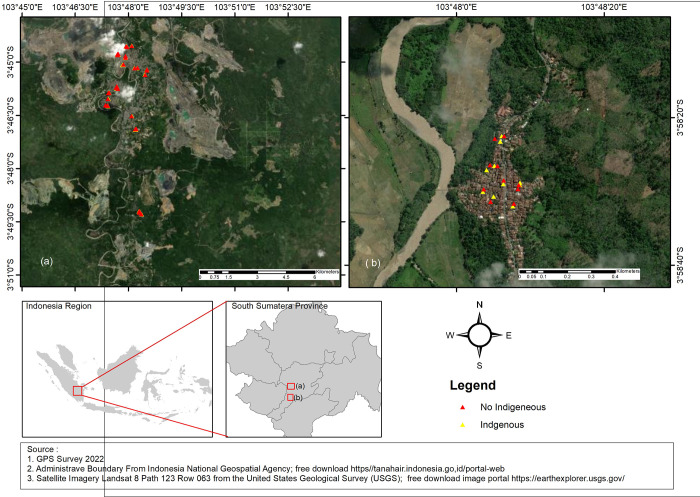
Malaria is a significant public health concern in Indonesia. Muara Enim Regency is one of the districts in South Sumatra with the most important number of indigenous malaria cases in the last three years (2018-2020). Therefore, this study aimed to identify determinants of indigenous malaria in the Muara Enim Regency.
This study was designed as a case-control study. A stratified random sample in 2018, 2019, and 2020 was used at the Primary Health Centres (PHCs) areas of Tanjung Enim and Tanjung Agung. The sample included 49 cases and 49 controls. Indigenous malaria determinants were discovered using both bivariable and multivariable logistic regression models.
The multivariable logistic regression model results show that mosquito repellent reduces malaria risk by 71% (AOR = 0.29, 95% CI: 0.11-0.64). Besides, the presence of wire mesh on ventilation reduces the risk of malaria by 76% (AOR = 0.24, 95% CI: 0.10-0.57), and the distance from mosquito breeding sites near hundred meters and fewer increases the risk of malaria by 3.88 fold (AOR = 3.88; 95% CI: 1.67-8.97).
Multivariable analysis revealed distance from mosquito breeding sites as a risk factor for malaria. Besides, the study shows that using insect repellent, wire netting in ventilation, eliminating mosquito breeding sites, mosquito repellent or protective clothing, and improving house conditions were protective factors for indigenous malaria. Therefore, preventive and promotional efforts are essential as the first step toward malaria elimination at the study site, including avoiding direct contact between residents and vectors near mosquito breeding sites.
疟疾是印度尼西亚一个重大的公共卫生问题。穆阿拉埃尼姆县是南苏门答腊省过去三年(2018-2020 年)本地疟疾病例最多的地区之一。因此,本研究旨在确定穆阿拉埃尼姆县本地疟疾的决定因素。
本研究设计为病例对照研究。2018 年、2019 年和 2020 年在坦江恩伊姆和坦江阿贡的初级卫生中心(PHC)地区使用分层随机抽样。样本包括 49 例病例和 49 例对照。使用双变量和多变量逻辑回归模型发现本地疟疾决定因素。
多变量逻辑回归模型结果表明,驱蚊剂可将疟疾风险降低 71%(AOR = 0.29,95%CI:0.11-0.64)。此外,通风用金属网的存在将疟疾风险降低 76%(AOR = 0.24,95%CI:0.10-0.57),距离蚊子滋生地数百米且蚊子滋生地较少可使疟疾风险增加 3.88 倍(AOR = 3.88;95%CI:1.67-8.97)。
多变量分析显示,蚊子滋生地的距离是疟疾的一个危险因素。此外,研究表明,使用驱虫剂、通风用金属网、消除蚊子滋生地、使用驱蚊剂或防护服以及改善房屋条件是本地疟疾的保护因素。因此,预防和宣传工作是必要的,作为在研究地点消除疟疾的第一步,包括避免居民与蚊子滋生地附近的病媒直接接触。