Institute for Occupational Medicine, Social Medicine and Environmental Medicine, Faculty of Medicine, Goethe University, Frankfurt am Main, Germany.
Faculty of Public Health, Sriwijaya University, Indralaya, South Sumatra, Indonesia.
Malar J. 2018 Feb 20;17(1):87. doi: 10.1186/s12936-018-2230-8.
Malaria, a parasitic infection, is a life-threatening disease in South Sumatra Province, Indonesia. This study aimed to investigate the spatial association between malaria occurrence and environmental risk factors.
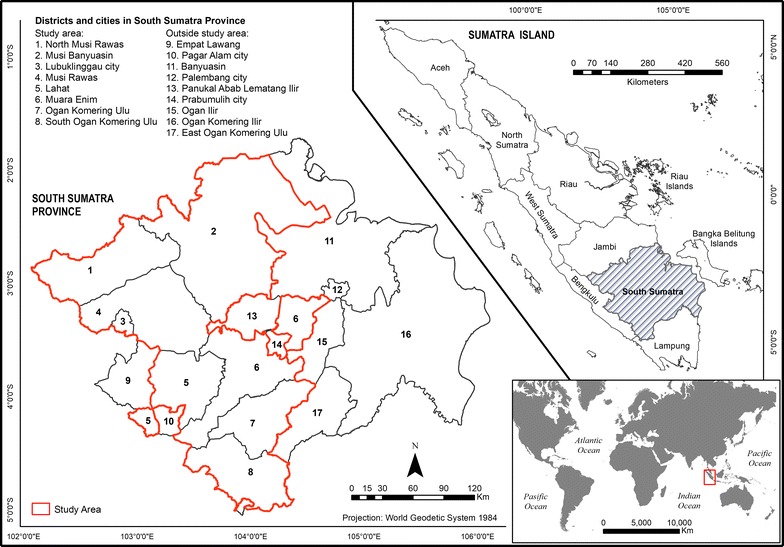
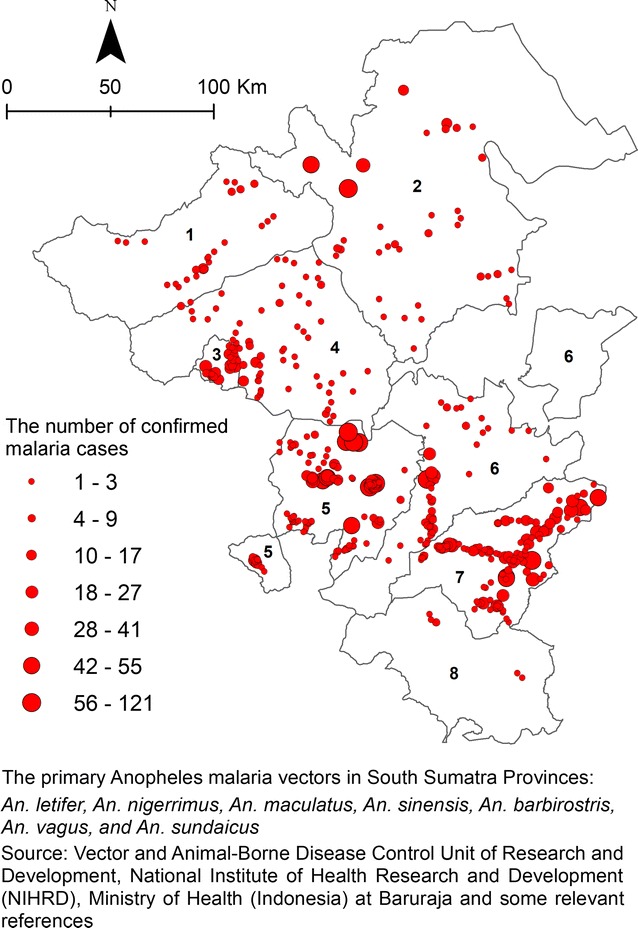
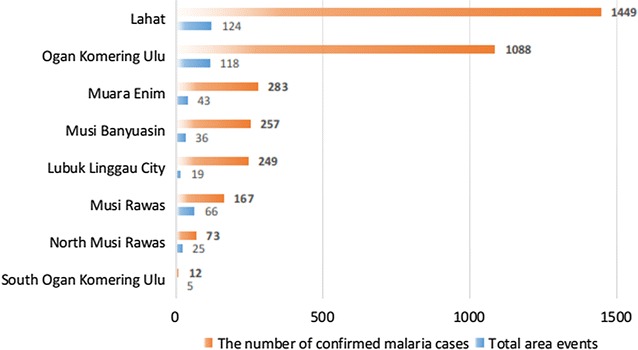
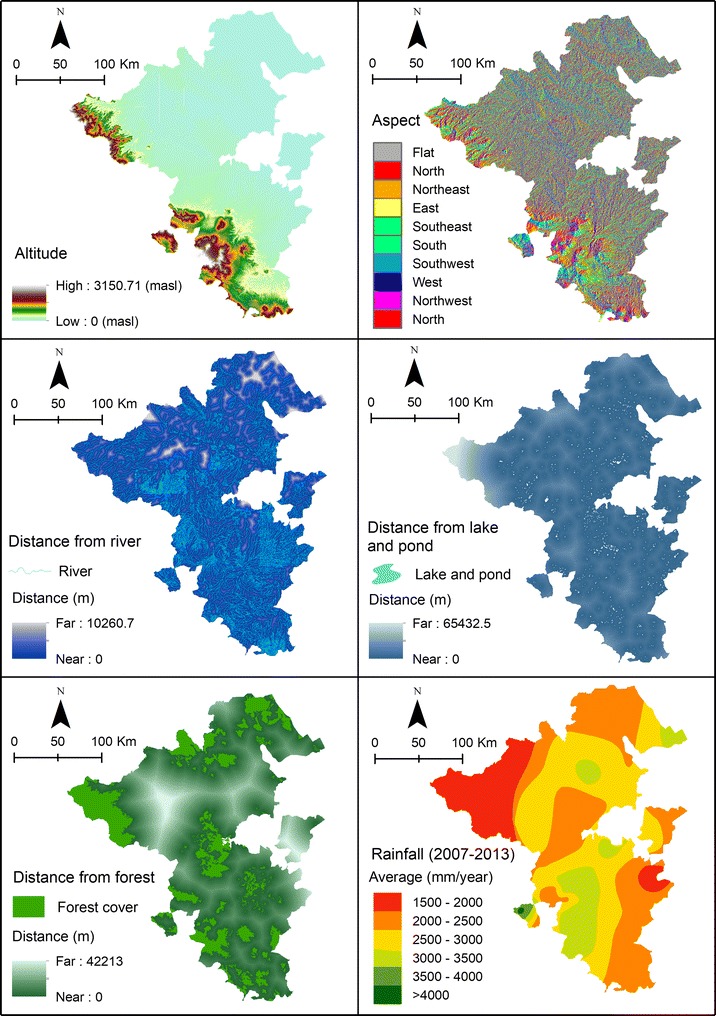
The number of confirmed malaria cases was analysed for the year 2013 from the routine reporting of the Provincial Health Office of South Sumatra. The cases were spread over 436 out of 1613 villages. Six potential ecological predictors of malaria cases were analysed in the different regions using ordinary least square (OLS) and geographically weighted regression (GWR). The global pattern and spatial variability of associations between malaria cases and the selected potential ecological predictors was explored.
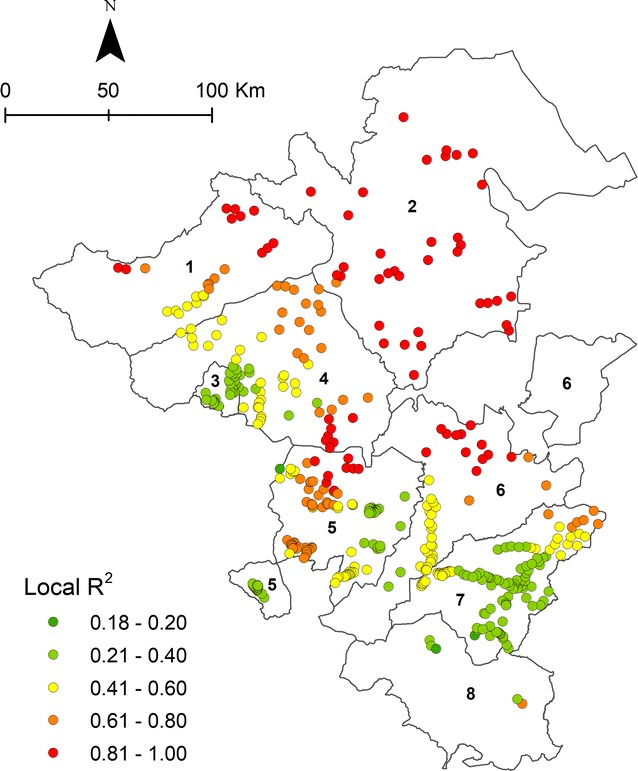
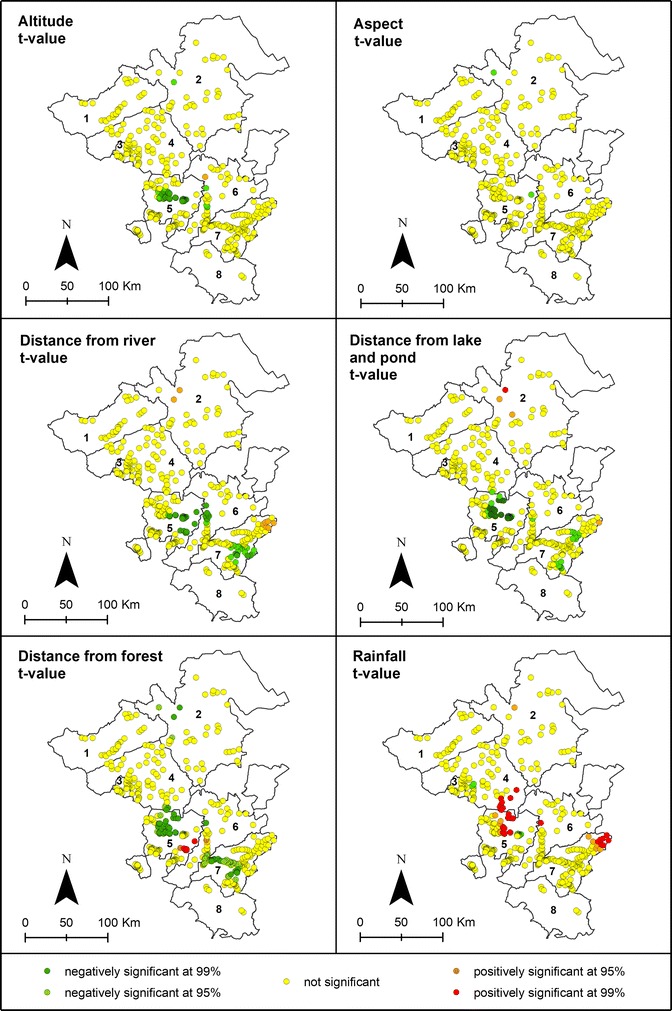
The importance of different environmental and geographic parameters for malaria was shown at global and village-level in South Sumatra, Indonesia. The independent variables altitude, distance from forest, and rainfall in global OLS were significantly associated with malaria cases. However, as shown by GWR model and in line with recent reviews, the relationship between malaria and environmental factors in South Sumatra strongly varied spatially in different regions.
A more in-depth understanding of local ecological factors influencing malaria disease as shown in present study may not only be useful for developing sustainable regional malaria control programmes, but can also benefit malaria elimination efforts at village level.
疟疾是一种寄生虫感染,在印度尼西亚苏门答腊南部省是一种危及生命的疾病。本研究旨在调查疟疾发生与环境风险因素之间的空间关联。
分析了 2013 年来自苏门答腊南部省卫生局常规报告的确诊疟疾病例数。这些病例分布在 1613 个村庄中的 436 个村庄。使用普通最小二乘法(OLS)和地理加权回归(GWR)在不同地区分析了 6 种潜在的疟疾病例生态预测因子。探讨了疟疾病例与选定潜在生态预测因子之间的全球模式和空间变异性。
在印度尼西亚苏门答腊南部,全球和村庄层面都显示出不同环境和地理参数对疟疾的重要性。全球 OLS 中的独立变量海拔、距森林的距离和降雨量与疟疾病例显著相关。然而,正如 GWR 模型所示,并且与最近的综述一致,苏门答腊南部疟疾与环境因素之间的关系在不同地区的空间上存在很大差异。
如本研究所示,更深入地了解影响疟疾疾病的当地生态因素不仅有助于制定可持续的区域疟疾控制计划,还可以使村级消除疟疾工作受益。