Bălăeț Maria, Kurtin Danielle L, Gruia Dragos C, Lerede Annalaura, Custovic Darije, Trender William, Jolly Amy E, Hellyer Peter J, Hampshire Adam
Department of Brain Sciences, Imperial College London, London, United Kingdom.
Neuromodulation Lab, Department of Psychology, Faculty of Health and Medical Sciences, University of Surrey, Guildford, United Kingdom.
Front Psychol. 2023 Jul 19;14:1183789. doi: 10.3389/fpsyg.2023.1183789. eCollection 2023.
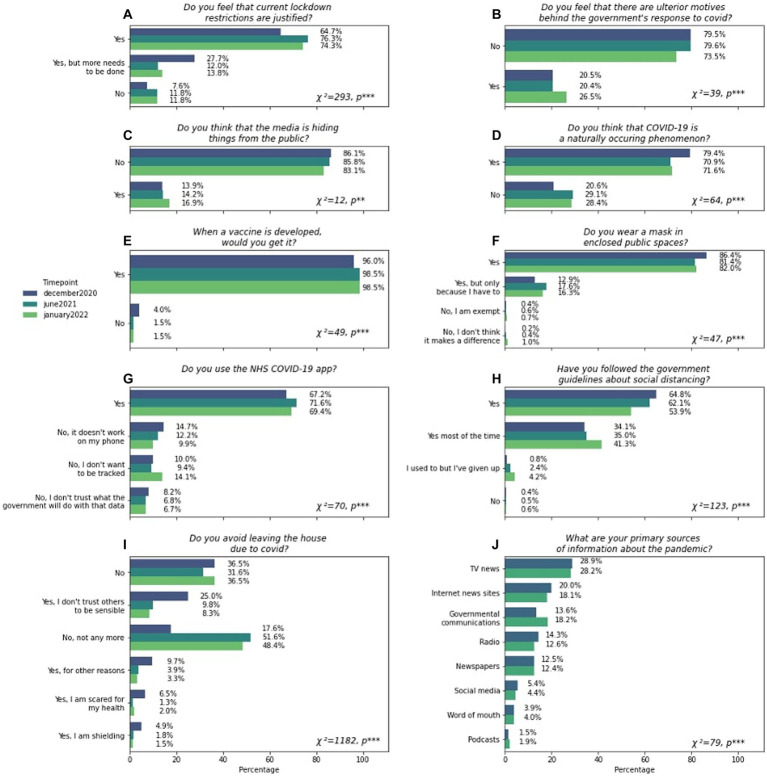
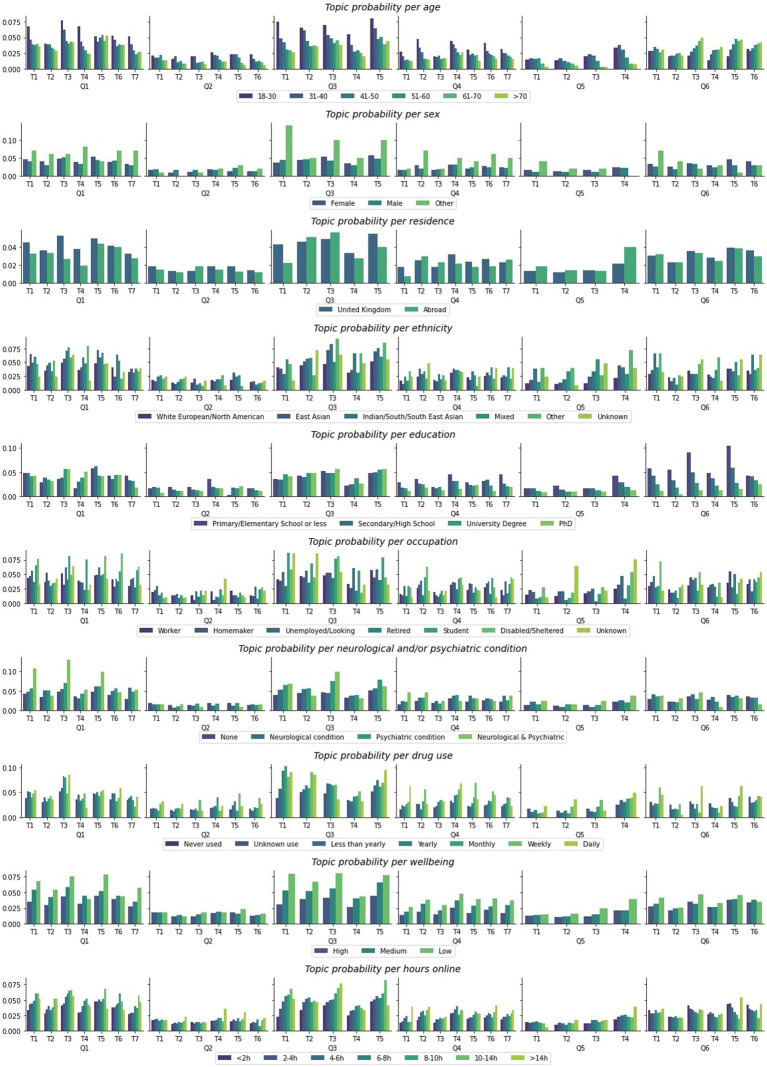
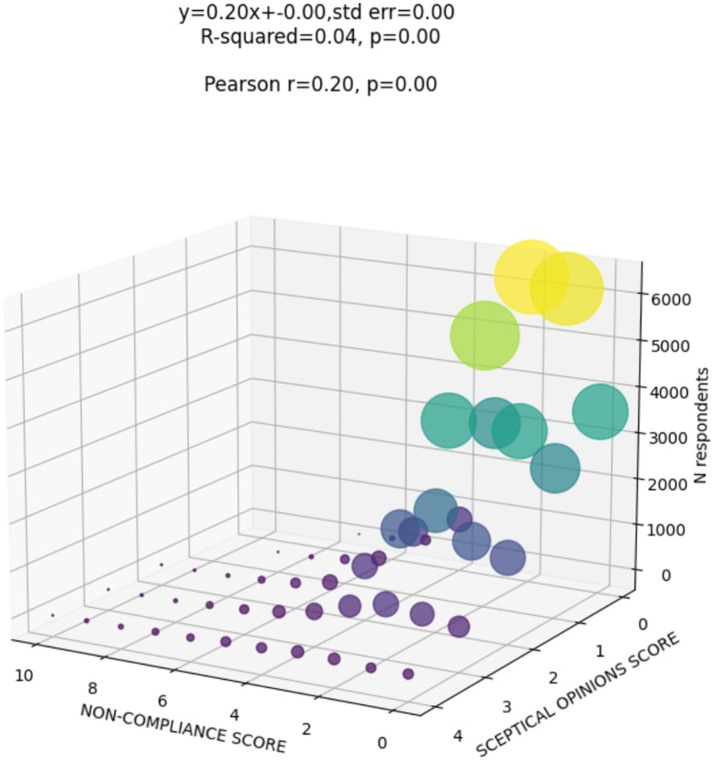
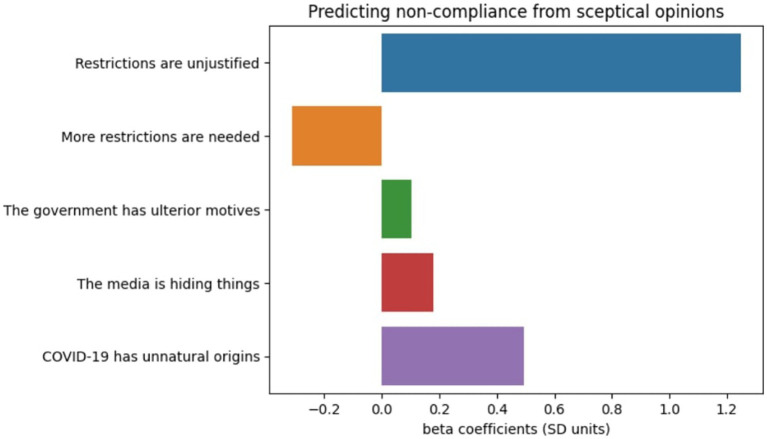
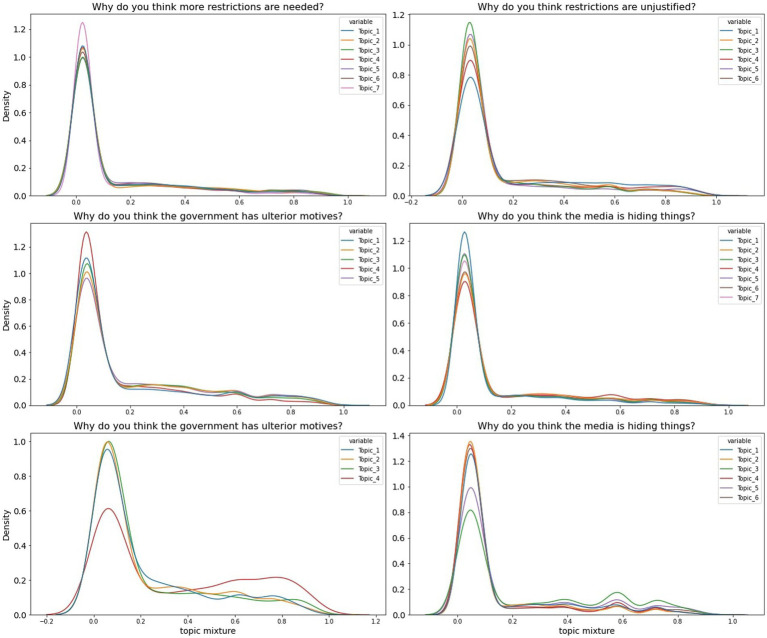
Which population factors have predisposed people to disregard government safety guidelines during the COVID-19 pandemic and what justifications do they give for this non-compliance? To address these questions, we analyse fixed-choice and free-text responses to survey questions about compliance and government handling of the pandemic, collected from tens of thousands of members of the UK public at three 6-monthly timepoints. We report that sceptical opinions about the government and mainstream-media narrative, especially as pertaining to justification for guidelines, significantly predict non-compliance. However, free text topic modelling shows that such opinions are diverse, spanning from scepticism about government competence and self-interest to full-blown conspiracy theories, and covary in prevalence with sociodemographic variables. These results indicate that attempts to counter non-compliance through argument should account for this diversity in peoples' underlying opinions, and inform conversations aimed at bridging the gap between the general public and bodies of authority accordingly.
哪些人口因素使人们在新冠疫情期间无视政府的安全指南,他们对此不遵守行为给出了哪些理由?为解决这些问题,我们分析了在三个每六个月一次的时间点从数万英国公众成员那里收集到的关于遵守情况和政府应对疫情的调查问题的固定选择和自由文本回复。我们报告称,对政府和主流媒体说法的怀疑态度,尤其是涉及指南合理性的怀疑,能显著预测不遵守行为。然而,自由文本主题建模显示,此类观点多种多样,从对政府能力和自身利益的怀疑到成熟的阴谋论,且其流行程度与社会人口统计学变量相关。这些结果表明,通过论证来对抗不遵守行为的尝试应考虑到人们潜在观点的这种多样性,并据此为旨在弥合公众与权威机构之间差距的对话提供信息。