Department of Tropical Disease Biology, Liverpool School of Tropical Medicine, Liverpool, United Kingdom.
Institute of Medical Microbiology, Semmelweis University, Budapest, Hungary.
Am J Trop Med Hyg. 2023 Aug 7;109(3):626-639. doi: 10.4269/ajtmh.23-0156. Print 2023 Sep 6.
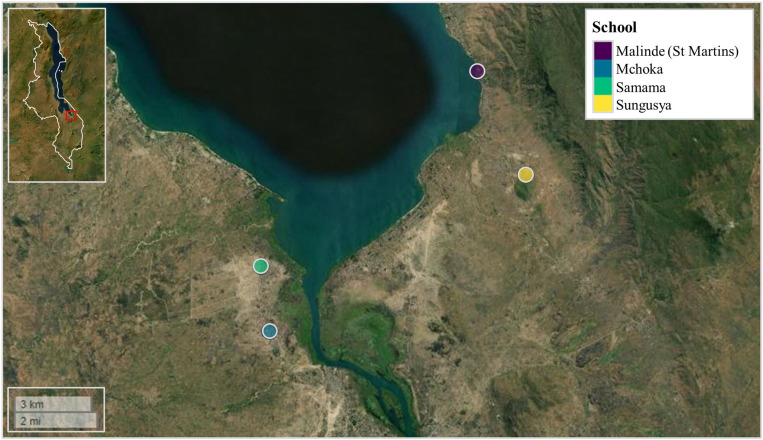
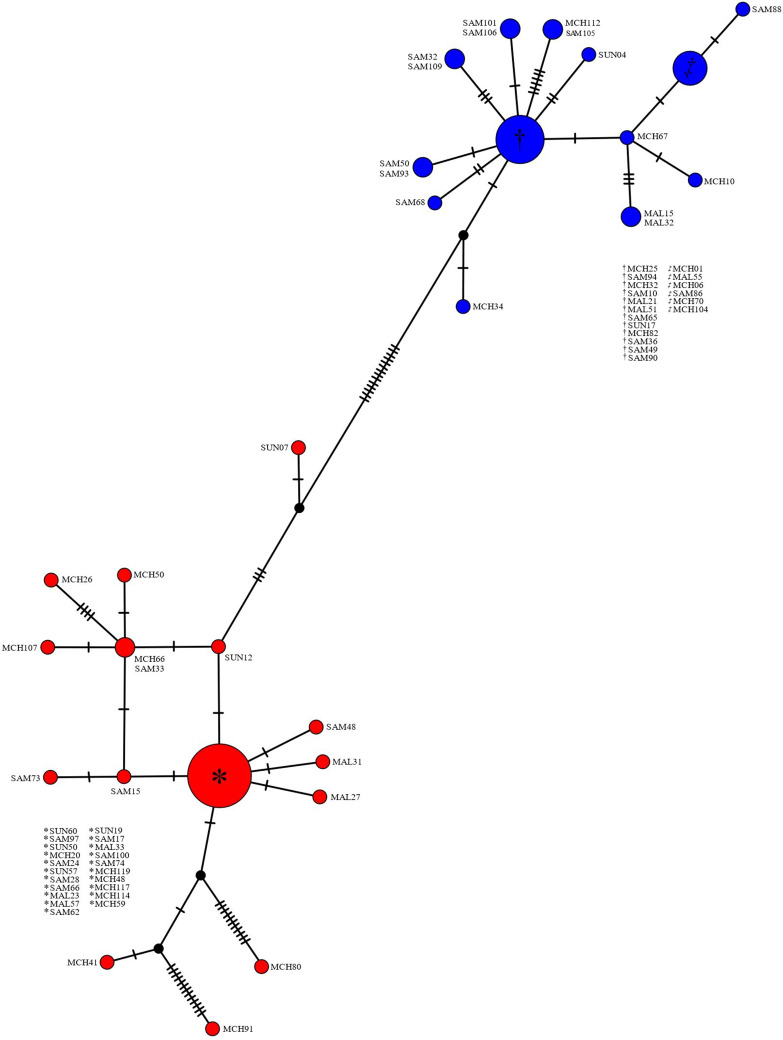
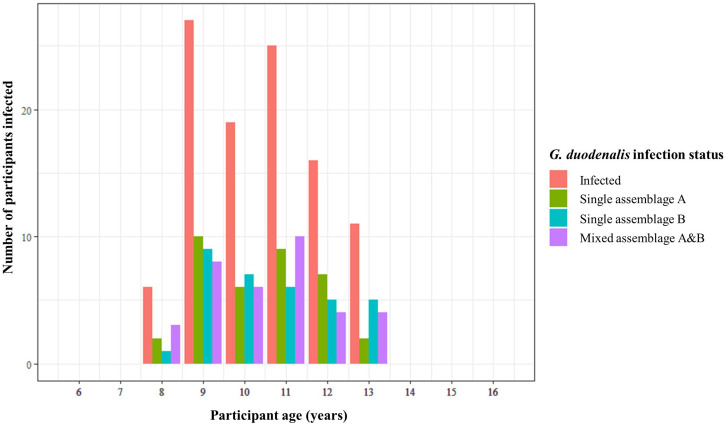
Almost all human giardiasis infections are caused by Giardia duodenalis assemblages A and B. Differentiation between human infections with these assemblages, as well as between single-assemblage (A or B) and mixed-assemblage (A and B) infections, is therefore needed to better understand the pathological impact of infection with either, or both, assemblages. We assessed the prevalence of G. duodenalis assemblages A and B using 305 fecal samples provided by school-age children situated along the southern shoreline of Lake Malawi. Concurrently, intestinal pathology data were also collected to test for association(s) between assemblage infection status and intestinal health. Prevalence of G. duodenalis infection was 39.3% by real-time polymerase chain reaction. Of all identified infections, 32% were single G. duodenalis assemblage A and 32% were single G. duodenalis assemblage B, whereas 33% were mixed-assemblage infections. Fifteen unique G. duodenalis assemblage A and 13 unique G. duodenalis assemblage B β-giardin haplotypes were identified. There was a positive association between single infection with G. duodenalis assemblage B and both self-reporting of abdominal pain (odds ratio [OR]: 3.05, P = 0.004) and self-reporting of diarrhea (OR: 3.1, P = 0.003). No association between single infection with assemblage A and any form of intestinal pathology was found. Additionally, there was a positive association between mixed-assemblage infections and self-reporting of abdominal pain (OR: 3.1, P = 0.002). Our study highlights the importance G. duodenalis assemblage typing and reaffirms the need for improved access to water, sanitation and hygiene infrastructure in rural areas of low- and middle-income countries.
几乎所有人类贾第虫病感染都是由十二指肠贾第虫的 A 和 B 组合引起的。因此,需要区分人类感染这些组合,以及单一组合(A 或 B)和混合组合(A 和 B)感染,以更好地了解感染任一组或两组组合的病理影响。我们使用来自马拉维湖南岸的学龄儿童提供的 305 份粪便样本,评估了十二指肠贾第虫的 A 和 B 组合的流行情况。同时,还收集了肠道病理学数据,以检验组合感染状况与肠道健康之间的关联。实时聚合酶链反应检测到贾第虫感染的患病率为 39.3%。在所有确定的感染中,32%是单一的十二指肠贾第虫 A 组合,32%是单一的十二指肠贾第虫 B 组合,而 33%是混合组合感染。鉴定出 15 种独特的十二指肠贾第虫 A 组合和 13 种独特的十二指肠贾第虫 B 组合β-微管蛋白单倍型。单一感染十二指肠贾第虫 B 组合与自述腹痛(优势比[OR]:3.05,P = 0.004)和自述腹泻(OR:3.1,P = 0.003)之间存在正相关。未发现单一感染 A 组合与任何形式的肠道病理学之间存在关联。此外,混合组合感染与自述腹痛之间存在正相关(OR:3.1,P = 0.002)。我们的研究强调了对十二指肠贾第虫组合进行基因分型的重要性,并再次证实了在中低收入国家的农村地区需要改善获得水、卫生和环境卫生基础设施的机会。