Krumrie Sarah, Capewell Paul, McDonald Mike, Dunbar Dawn, Panarese Rossella, Katzer Frank, El Sakka Noha, Mellor Dominic, Alexander Claire L, Weir William
School of Biodiversity, One Health and Veterinary Medicine, College of Medical, Veterinary and Life Sciences, University of Glasgow, Garscube Estate, 464 Bearsden Road, Glasgow, G61 1QH, UK.
BioClavis Ltd., Queen Elizabeth Teaching and Learning Centre, 1345 Govan Road, Glasgow, G51 4TF, UK.
Curr Res Parasitol Vector Borne Dis. 2022 Nov 26;2:100105. doi: 10.1016/j.crpvbd.2022.100105. eCollection 2022.
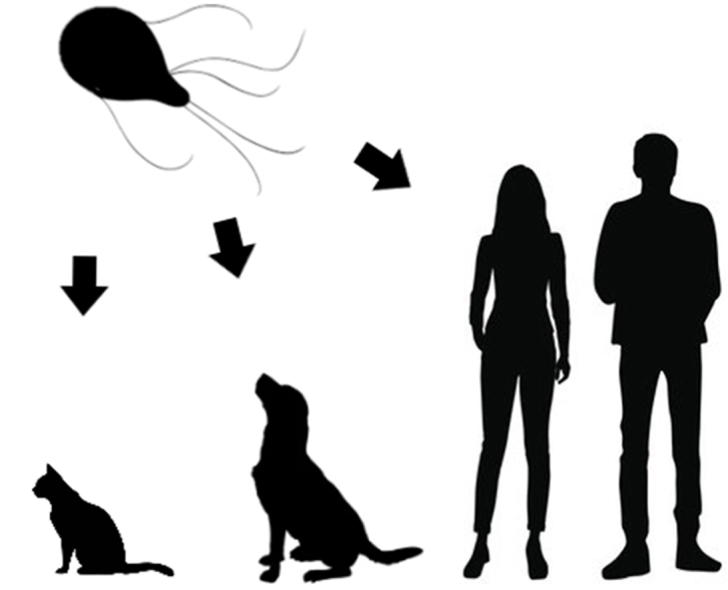
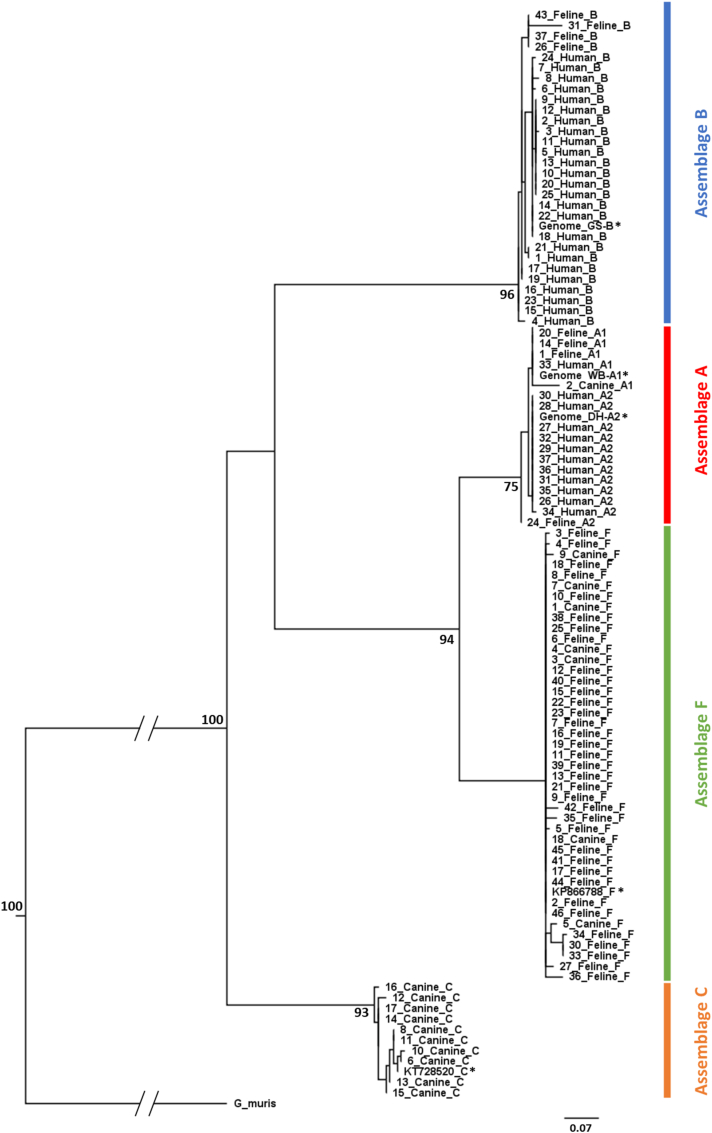
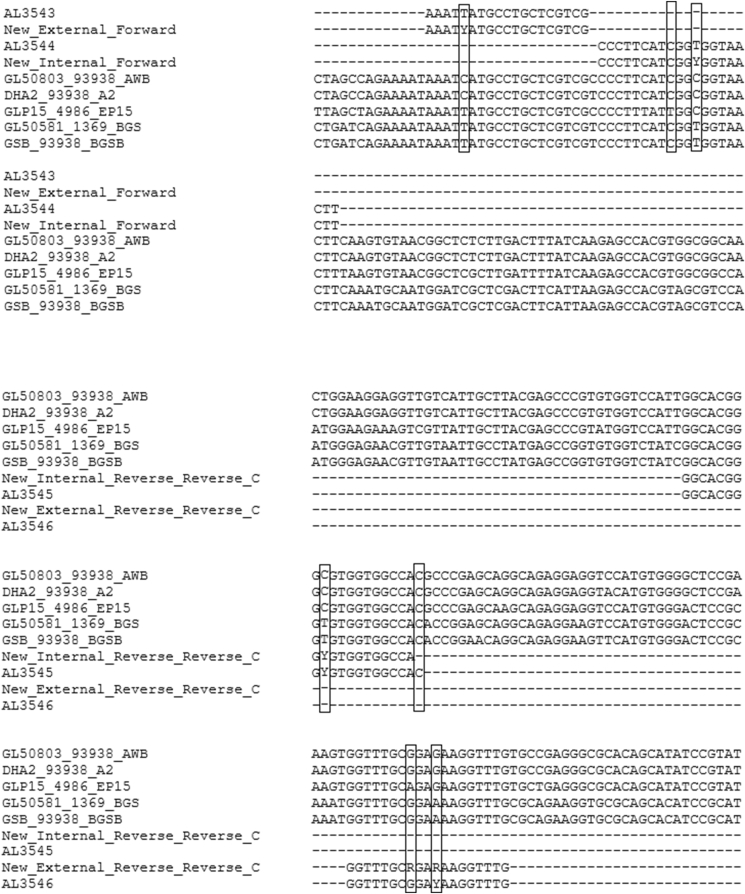
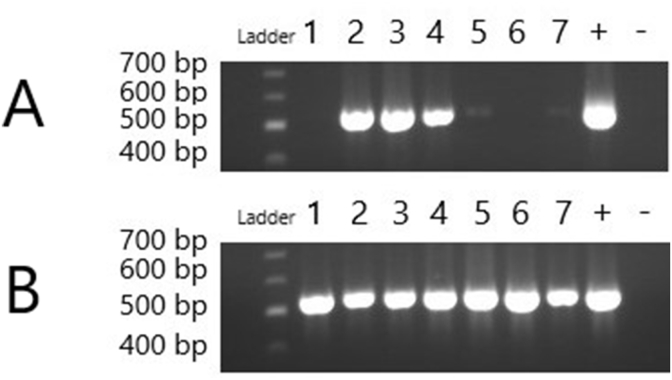
is a protozoan parasite known for its ability to cause gastrointestinal disease in human and non-human mammals. In the UK, the full impact of this parasite has yet to be fully explored, due to the limited testing which has been undertaken in humans and the low-resolution assemblage-typing methods currently available. Rather than being primarily a travel-associated condition, a recent study has highlighted that an endemic cycle is present in the UK, although the source of human disease is unclear in the majority of cases. This study focussed on the improvement of one of the commonly used assemblage-typing assays, a nested () PCR, to increase the amplification success rate across both human and companion animal samples. After comparing published primers to full reference genomes, this marker protocol was optimised and then deployed to test a substantial number of human ( = 79) and companion animal ( = 174) samples to gain an insight into the molecular epidemiology of in the UK. One assemblage A1 and eleven assemblage A2 genotypes were detected in humans, along with and 25 assemblage B genotypes. Assemblage A1 genotypes, known to be human-infective, were found in three feline and one canine sample, while one feline sample contained assemblage A2. Additionally, four feline samples contained assemblage B, which is recognised as potentially human-infective. This study demonstrates the presence of potentially human-infective genotypes circulating in the companion animal population, notably with 17.4% (8/46) of feline-derived strains being potentially zoonotic. Using a modified -based genotyping assay, this work highlights the potential for domestic pets to be involved in the endemic transmission of giardiasis in the UK and underlines the need for appropriate hygiene measures to be observed when interacting with both symptomatic and asymptomatic animals. It also serves to underline the requirement for further studies to assess the zoonotic risk of associated with companion animals in high-income countries.
是一种原生动物寄生虫,以其在人类和非人类哺乳动物中引发胃肠道疾病的能力而闻名。在英国,由于针对人类进行的检测有限以及目前可用的低分辨率分型方法,这种寄生虫的全面影响尚未得到充分探究。最近的一项研究强调,英国存在地方性传播周期,而不是主要与旅行相关的疾病,尽管在大多数情况下人类疾病的源头尚不清楚。这项研究专注于改进常用的分型检测方法之一,即巢式()PCR,以提高在人类和伴侣动物样本中的扩增成功率。在将已发表的引物与完整参考基因组进行比较后,优化了该标记方案,然后用于检测大量人类( = 79)和伴侣动物( = 174)样本,以深入了解英国的分子流行病学。在人类中检测到一种A1型和十一种A2型基因型,以及25种B型基因型。已知可感染人类的A1型基因型在三个猫科动物和一个犬科动物样本中被发现,而一个猫科动物样本中含有A2型。此外,四个猫科动物样本中含有B型,被认为具有潜在的人类感染性。这项研究表明,在伴侣动物群体中存在潜在的可感染人类的基因型,特别是17.4%(8/46)的猫源菌株具有潜在的人畜共患病性。通过使用改良的基于的基因分型检测方法,这项工作突出了宠物在英国贾第虫病地方性传播中的潜在作用,并强调在与有症状和无症状动物互动时需要遵守适当的卫生措施。它还强调了进一步研究评估高收入国家中与伴侣动物相关的贾第虫人畜共患病风险的必要性。