Guangxi Subtropical Crops Research Institute, 22 Yongwu Road, Xingning District, Nanning, 530001, Guangxi Province, China.
Sci Rep. 2023 Aug 7;13(1):12823. doi: 10.1038/s41598-023-40006-x.
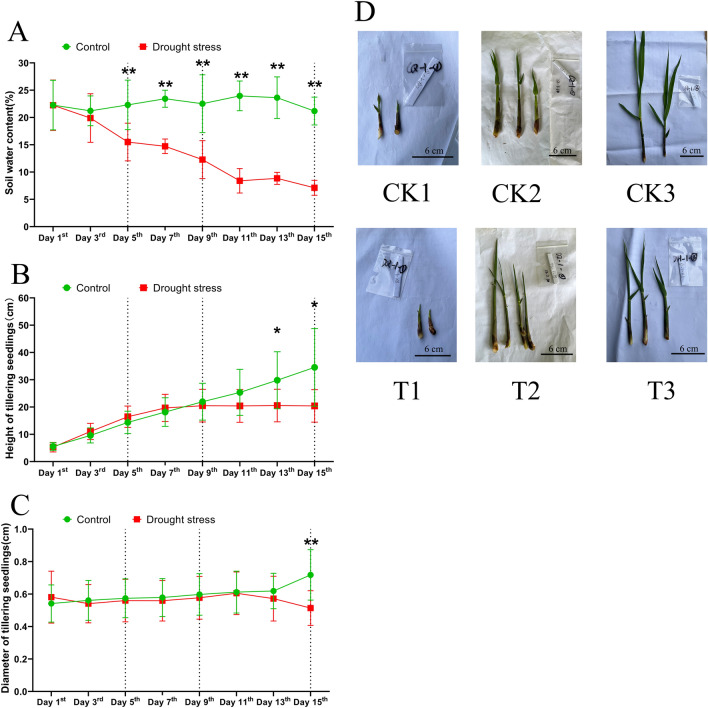
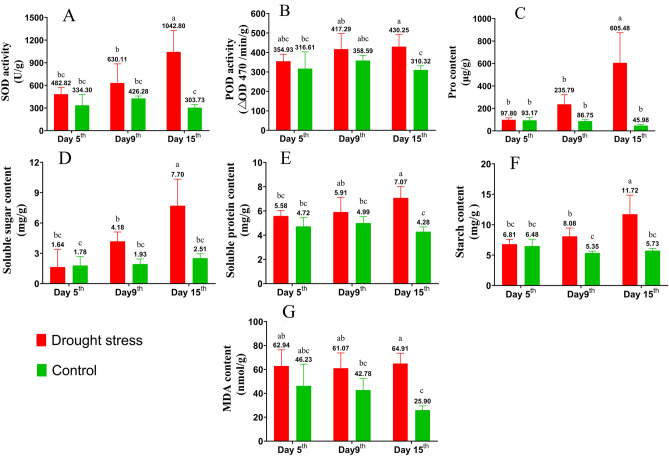
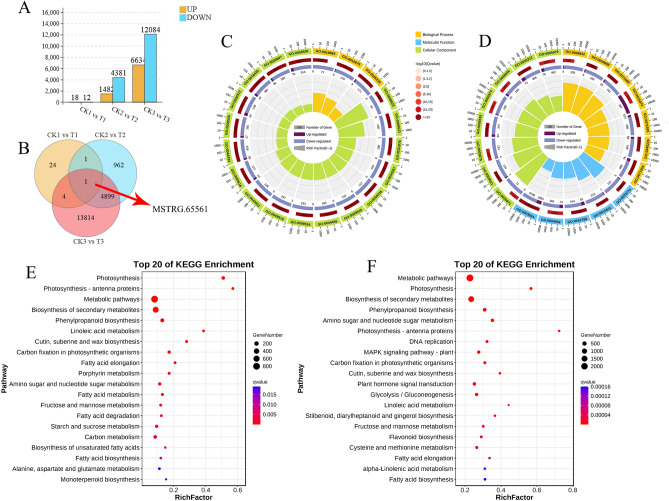
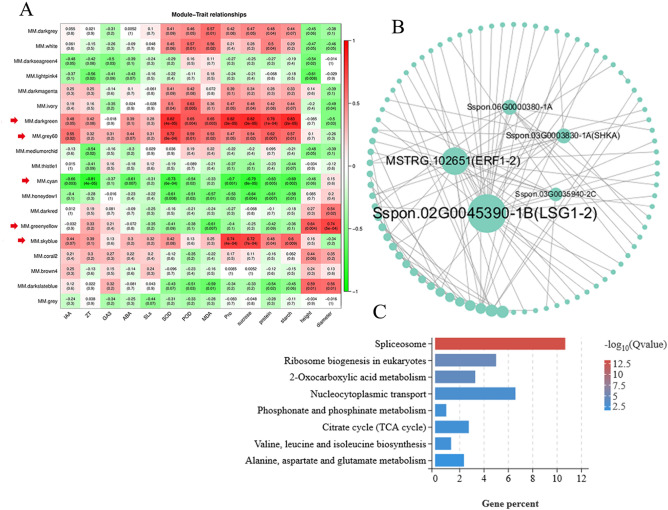
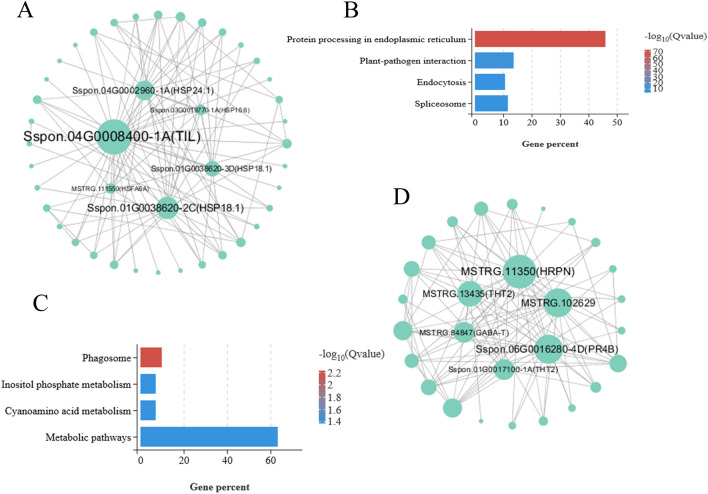
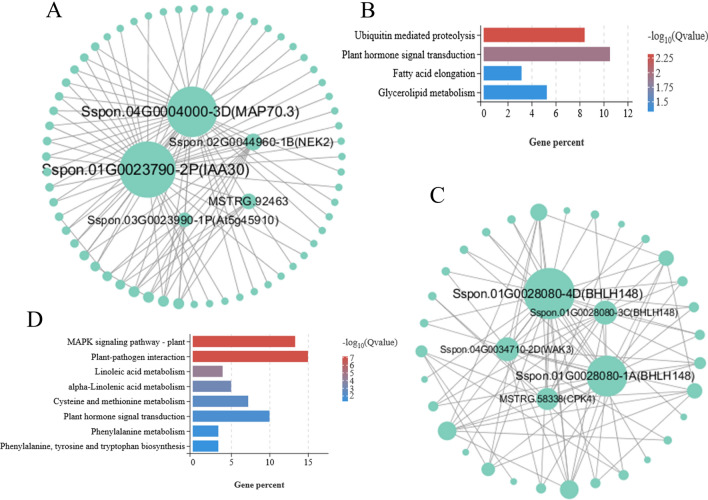
Drought stress can severely affect sugarcane growth and yield. The objective of this research was to identify candidate genes in sugarcane tillering seedlings in response to drought stress. We performed a comparative phenotypic, physiological and transcriptomic analysis of tiller seedlings of drought-stressed and well-watered "Guire 2" sugarcane, in a time-course experiment (5 days, 9 days and 15 days). Physiological examination reviewed that SOD, proline, soluble sugars, and soluble proteins accumulated in large amounts in tiller seedlings under different intensities of drought stress, while MDA levels remained at a stable level, indicating that the accumulation of osmoregulatory substances and the enhancement of antioxidant enzyme activities helped to limit further damage caused by drought stress. RNA-seq and weighted gene co-expression network analysis (WGCNA) were performed to identify genes and modules associated with sugarcane tillering seedlings in response to drought stress. Drought stress induced huge down-regulated in gene expression profiles, most of down-regulated genes were mainly associated with photosynthesis, sugar metabolism and fatty acid synthesis. We obtained four gene co-expression modules significantly associated with the physiological changes under drought stress (three modules positively correlated, one module negatively correlated), and found that LSG1-2, ERF1-2, SHKA, TIL, HSP18.1, HSP24.1, HSP16.1 and HSFA6A may play essential regulatory roles as hub genes in increasing SOD, Pro, soluble sugar or soluble protein contents. In addition, one module was found mostly involved in tiller stem diameter, among which members of the BHLH148 were important nodes. These results provide new insights into the mechanisms by which sugarcane tillering seedlings respond to drought stress.
干旱胁迫会严重影响甘蔗的生长和产量。本研究的目的是鉴定甘蔗分蘖苗在干旱胁迫下的候选基因。我们对干旱胁迫和充分供水的“桂糖 29 号”甘蔗分蘖苗进行了比较表型、生理和转录组分析,在时间进程实验中(5 天、9 天和 15 天)。生理检查表明,在不同强度的干旱胁迫下,分蘖苗中 SOD、脯氨酸、可溶性糖和可溶性蛋白大量积累,而 MDA 水平保持稳定,表明渗透调节物质的积累和抗氧化酶活性的增强有助于限制干旱胁迫造成的进一步损害。进行了 RNA-seq 和加权基因共表达网络分析(WGCNA),以鉴定与甘蔗分蘖苗对干旱胁迫反应相关的基因和模块。干旱胁迫诱导基因表达谱的大量下调,大多数下调基因主要与光合作用、糖代谢和脂肪酸合成有关。我们获得了四个与干旱胁迫下生理变化显著相关的基因共表达模块(三个模块呈正相关,一个模块呈负相关),并发现 LSG1-2、ERF1-2、SHKA、TIL、HSP18.1、HSP24.1、HSP16.1 和 HSFA6A 可能作为枢纽基因,在增加 SOD、脯氨酸、可溶性糖或可溶性蛋白含量方面发挥重要调节作用。此外,还发现一个模块主要参与分蘖茎直径,其中 BHLH148 的成员是重要节点。这些结果为甘蔗分蘖苗响应干旱胁迫的机制提供了新的见解。