Division of Health Services and Outcomes Research, Children's Mercy Kansas City, 2401 Gillham Road, Kansas City, MO, 64108, USA.
Department of Biobehavioral Health, The Pennsylvania State University, University Park, PA, USA.
BMC Public Health. 2023 Aug 10;23(1):1526. doi: 10.1186/s12889-023-16388-y.
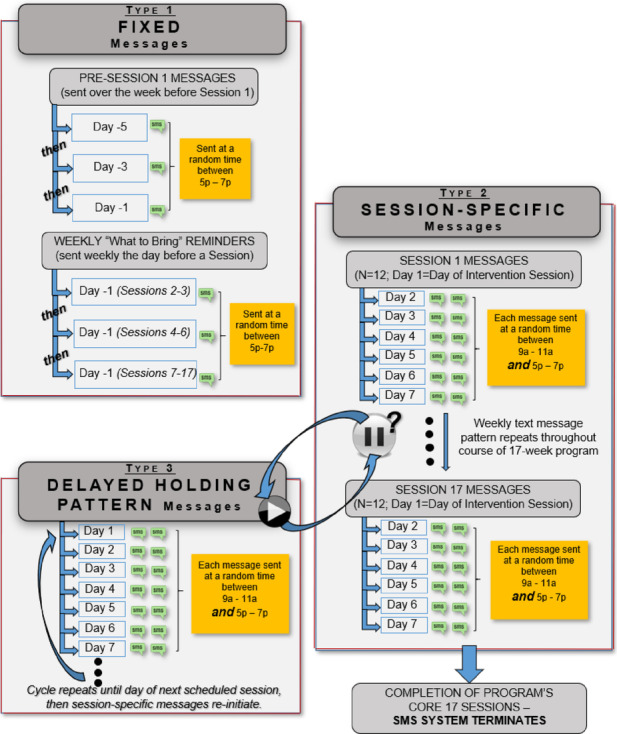
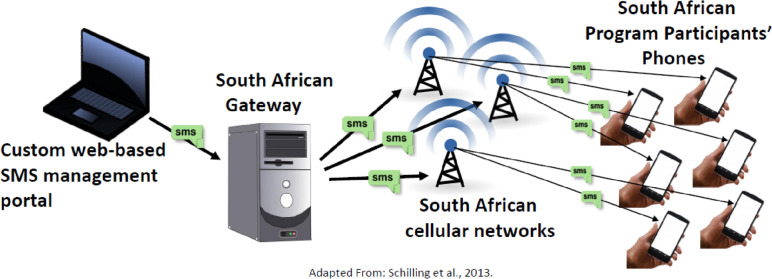
The prevalence of non-communicable diseases, such as diabetes and cardiovascular disease, is rising in low- and middle-income countries (LMICs). Health behavior change (HBC) interventions such as the widely used Diabetes Prevention Program (DPP) are effective at reducing chronic disease risk, but have not been adapted for LMICs. Leveraging mobile health (mHealth) technology such as text messaging (SMS) to enhance reach and participant engagement with these interventions has great promise, yet we lack evidence-informed approaches to guide the integration of SMS specifically to support HBC interventions in LMIC contexts. To address this gap, we integrated guidance from the mHealth literature with expertise and first-hand experience to establish specific development steps for building and implementing SMS systems to support HBC programming in LMICs. Specifically, we provide real-world examples of each development step by describing our experience in designing and delivering an SMS system to support a culturally-adapted DPP designed for delivery in South Africa. We outline eight key SMS development steps, including: 1) determining if SMS is appropriate; 2) developing system architecture and programming; 3) developing theory-based messages; 4) developing SMS technology; 5) addressing international SMS delivery; 6) testing; 7) system training and technical support; and 8) cost considerations. We discuss lessons learned and extractable principles that may be of use to other mHealth and HBC researchers working in similar LMIC contexts.Trial registration Clinicaltrials.gov, NCT03342274 . Registered 10 November 2017.
在中低收入国家(LMICs),非传染性疾病(如糖尿病和心血管疾病)的患病率正在上升。健康行为改变(HBC)干预措施,如广泛使用的糖尿病预防计划(DPP),在降低慢性病风险方面非常有效,但尚未在 LMICs 中进行调整。利用移动健康(mHealth)技术,如短信(SMS),来扩大这些干预措施的覆盖范围并增强参与者的参与度,具有很大的潜力,但我们缺乏基于证据的方法来指导 SMS 的整合,特别是为了在 LMIC 环境中支持 HBC 干预。为了弥补这一差距,我们将 mHealth 文献中的指导意见与专业知识和第一手经验相结合,为在 LMIC 中构建和实施支持 HBC 计划的 SMS 系统建立了具体的开发步骤。具体来说,我们通过描述我们在设计和提供短信系统以支持为南非设计的经过文化调整的 DPP 方面的经验,为每个开发步骤提供了现实世界的例子。我们概述了八个关键的 SMS 开发步骤,包括:1)确定 SMS 是否合适;2)开发系统架构和编程;3)开发基于理论的消息;4)开发 SMS 技术;5)解决国际 SMS 交付问题;6)测试;7)系统培训和技术支持;8)成本考虑。我们讨论了所学到的经验教训和可提取的原则,这些经验教训和可提取的原则可能对其他在类似 LMIC 环境中工作的 mHealth 和 HBC 研究人员有用。
Clinicaltrials.gov,NCT03342274。2017 年 11 月 10 日注册。