Department of Neurosurgery, Dongfang Affiliated Hospital of Xiamen University, School of Medicine, Xiamen University, Fuzhou, China.
Department of Neurosurgery, Fuzhou 900th Hospital, Fuzong Clinical Medical College of Fujian Medical University, Fuzhou, China.
Lipids Health Dis. 2023 Aug 10;22(1):127. doi: 10.1186/s12944-023-01883-3.
This study aimed to investigate the role of cholesterol metabolism-related genes in nonfunctioning pituitary neuroendocrine tumors (NF-PitNETs) invading the cavernous sinus and analyze the differences in immune cell infiltration between invasive and noninvasive NF-PitNETs.
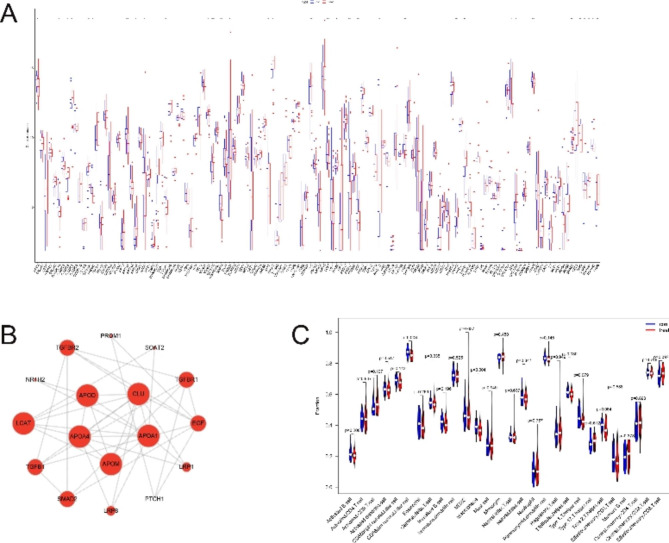
First, a retrospective analysis of single-center clinical data was performed. Second, the immune cell infiltration between invasive and noninvasive NF-PitNETs in the GSE169498 dataset was further analyzed, and statistically different cholesterol metabolism-related gene expression matrices were obtained from the dataset. The hub cholesterol metabolism-related genes in NF-PitNETs were screened by constructing machine learning models. In accordance with the hub gene, 73 cases of NF-PitNETs were clustered into two subtypes, and the functional differences and immune cell infiltration between the two subtypes were further analyzed.
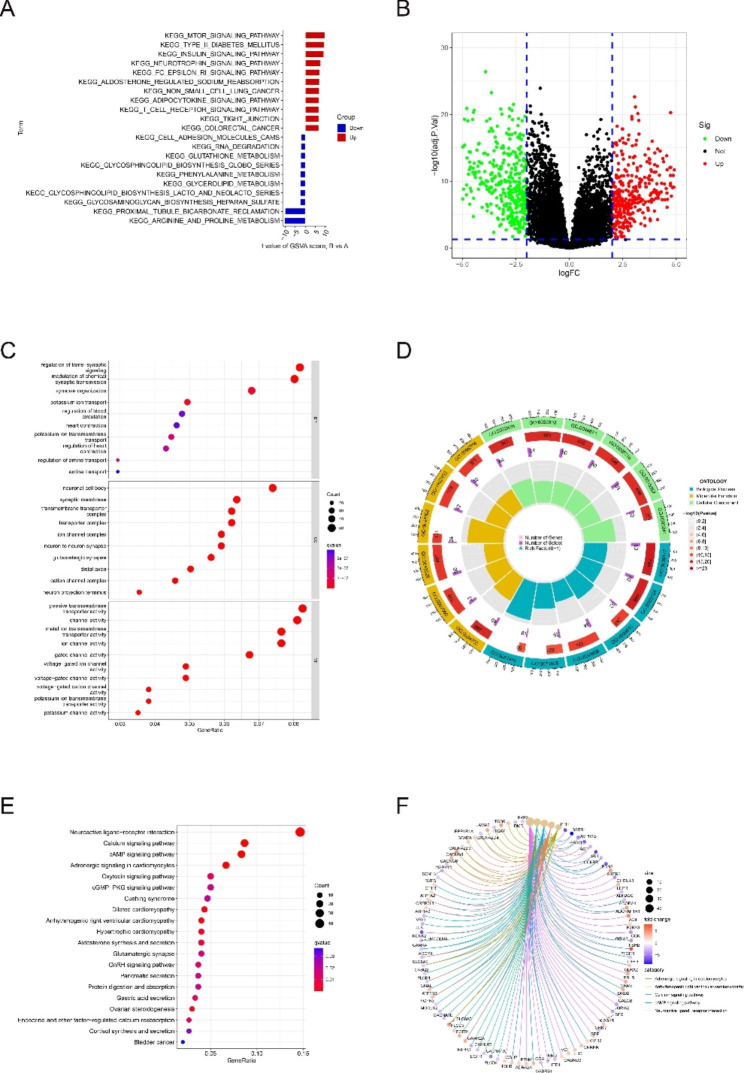
The clinical data of 146 NF-PitNETs were evaluated, and the results showed that the cholesterol (P = 0.034) between invasive and noninvasive NF-PitNETs significantly differed. After binary logistic analysis, cholesterol was found to be an independent risk factor for cavernous sinus invasion (CSI) in NF-PitNETs. Bioinformatics analysis found three immune cells between invasive and noninvasive NF-PitNETs were statistically significant in the GSE169498 dataset, and 34 cholesterol metabolism-related genes with differences between the two groups were obtained 12 hub genes were selected by crossing the two machine learning algorithm results. Subsequently, cholesterol metabolism-related subgroups, A and B, were obtained by unsupervised hierarchical clustering analysis. The results showed that 12 immune cells infiltrated differentially between the two subgroups. The chi-square test revealed that the two subgroups had statistically significance in the invasive and noninvasive samples (P = 0.001). KEGG enrichment analysis showed that the differentially expressed genes were mainly enriched in the neural ligand-receptor pathway. GSVA analysis showed that the mTORC signaling pathway was upregulated and played an important role in the two-cluster comparison.
By clinical data and bioinformatics analysis, cholesterol metabolism-related genes may promote the infiltration abundance of immune cells in NF-PitNETs and the invasion of cavernous sinuses by NF-PitNETs through the mTOR signaling pathway. This study provides a new perspective to explore the pathogenesis of cavernous sinus invasion by NF-PitNETs and determine potential therapeutic targets for this disease.
本研究旨在探讨胆固醇代谢相关基因在侵袭性和非侵袭性垂体无功能神经内分泌肿瘤(NF-PitNETs)侵犯海绵窦中的作用,并分析侵袭性和非侵袭性 NF-PitNETs 之间免疫细胞浸润的差异。
首先进行单中心临床数据的回顾性分析。其次,进一步分析 GSE169498 数据集侵袭性和非侵袭性 NF-PitNETs 之间的免疫细胞浸润情况,并从数据集中获得统计学上有差异的胆固醇代谢相关基因表达矩阵。通过构建机器学习模型筛选 NF-PitNETs 中的枢纽胆固醇代谢相关基因。根据枢纽基因,将 73 例 NF-PitNETs 聚类为两个亚型,并进一步分析两个亚型之间的功能差异和免疫细胞浸润。
评估了 146 例 NF-PitNETs 的临床数据,结果表明侵袭性和非侵袭性 NF-PitNETs 之间的胆固醇(P=0.034)有显著差异。经过二元逻辑分析,胆固醇被发现是 NF-PitNETs 发生海绵窦侵袭(CSI)的独立危险因素。生物信息学分析发现,在 GSE169498 数据集中,侵袭性和非侵袭性 NF-PitNETs 之间有三种免疫细胞存在统计学意义,并且获得了两组间有差异的 34 个胆固醇代谢相关基因。通过交叉两种机器学习算法的结果,选择了 12 个枢纽基因。随后,通过无监督层次聚类分析获得了胆固醇代谢相关亚组 A 和 B。结果表明,两组间有 12 种免疫细胞浸润差异。卡方检验显示,两组在侵袭性和非侵袭性样本中均具有统计学意义(P=0.001)。KEGG 富集分析表明,差异表达基因主要富集在神经配体-受体途径。GSVA 分析表明,mTORC 信号通路被上调,在两个聚类比较中发挥重要作用。
通过临床数据和生物信息学分析,胆固醇代谢相关基因可能通过 mTOR 信号通路促进 NF-PitNETs 中免疫细胞的浸润丰度和 NF-PitNETs 对海绵窦的侵袭。本研究为探讨 NF-PitNETs 海绵窦侵袭的发病机制以及确定该疾病的潜在治疗靶点提供了新视角。