Department of Biomedical Sciences, Seoul National University College of Medicine, Seoul, Republic of Korea.
SL Bigen Inc., Incheon, Republic of Korea.
J Extracell Vesicles. 2023 Aug;12(8):e12357. doi: 10.1002/jev2.12357.
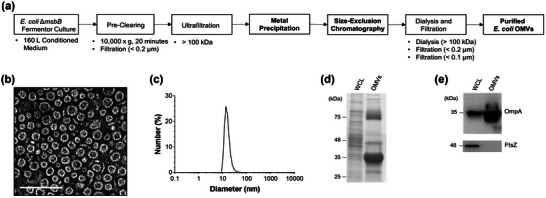
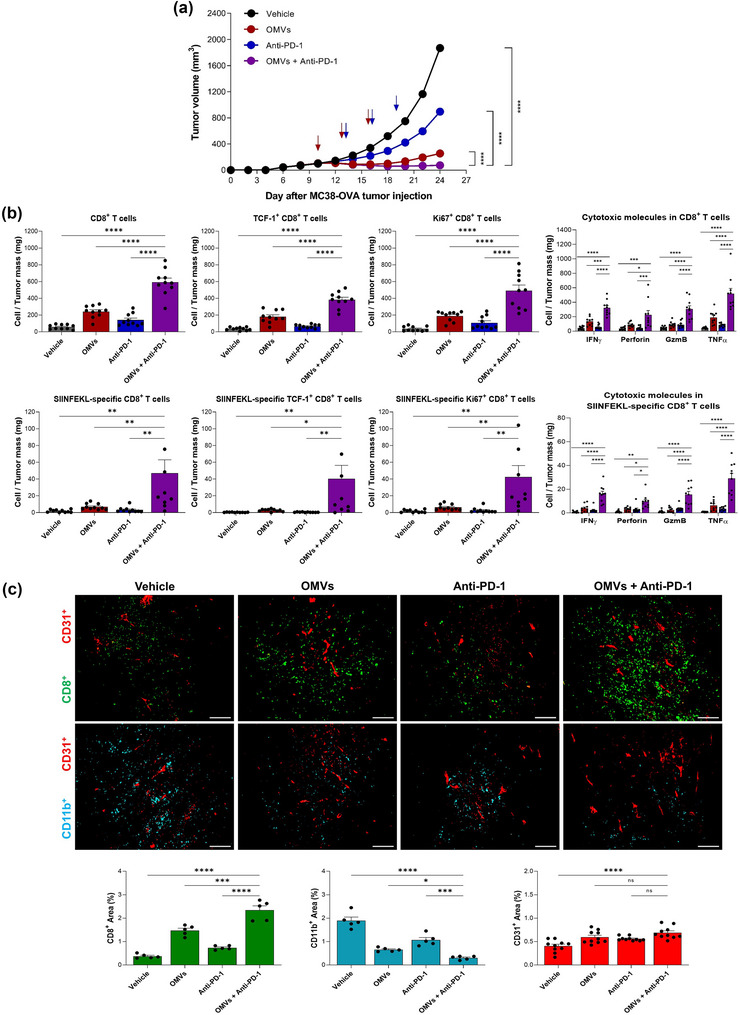
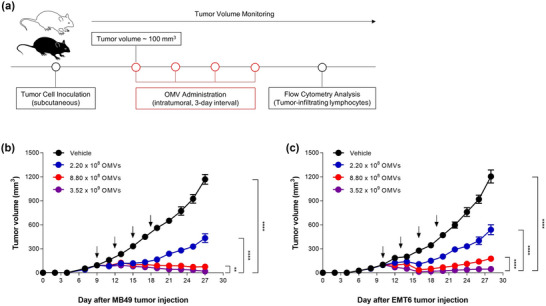
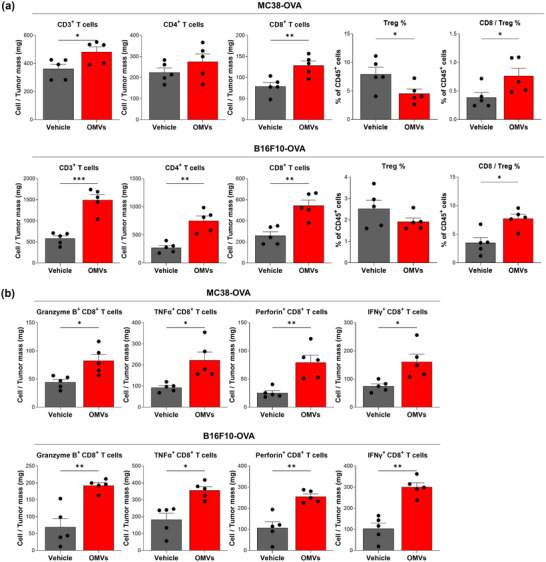
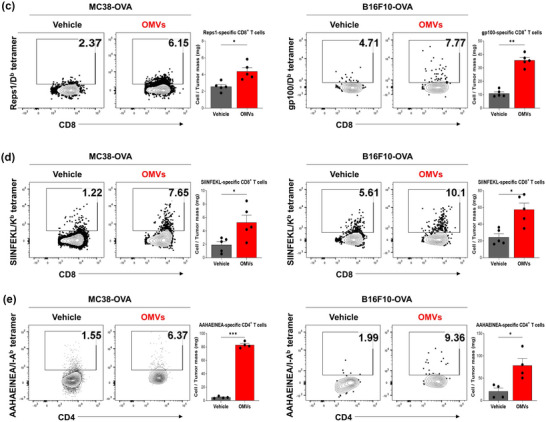
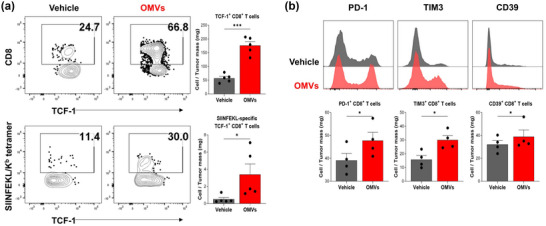
Despite the capability of extracellular vesicles (EVs) derived from Gram-negative and Gram-positive bacteria to induce potent anti-tumour responses, large-scale production of bacterial EVs remains as a hurdle for their development as novel cancer immunotherapeutic agents. Here, we developed manufacturing processes for mass production of Escherichia coli EVs, namely, outer membrane vesicles (OMVs). By combining metal precipitation and size-exclusion chromatography, we isolated 357 mg in total protein amount of E. coli OMVs, which was equivalent to 3.93 × 10 particles (1.10 × 10 particles/μg in total protein amounts of OMVs) from 160 L of the conditioned medium. We show that these mass-produced E. coli OMVs led to complete remission of two mouse syngeneic tumour models. Further analysis of tumour microenvironment in neoantigen-expressing tumour models revealed that E. coli OMV treatment causes increased infiltration and activation of CD8 T cells, especially those of cancer antigen-specific CD8 T cells with high expression of TCF-1 and PD-1. Furthermore, E. coli OMVs showed synergistic anti-tumour activity with anti-PD-1 antibody immunotherapy, inducing substantial tumour growth inhibition and infiltration of activated cancer antigen-specific stem-like CD8 T cells into the tumour microenvironment. These data highlight the potent anti-tumour activities of mass-produced E. coli OMVs as a novel candidate for developing next-generation cancer immunotherapeutic agents.
尽管革兰氏阴性和革兰氏阳性细菌来源的细胞外囊泡 (EVs) 具有诱导强烈抗肿瘤反应的能力,但大规模生产细菌 EVs 仍然是将其开发为新型癌症免疫治疗剂的一个障碍。在这里,我们开发了大规模生产大肠杆菌 EVs(即外膜囊泡 (OMVs))的制造工艺。通过结合金属沉淀和大小排阻色谱法,我们从 160 升条件培养基中总共分离出 357 毫克总蛋白量的大肠杆菌 OMVs,相当于 3.93×10 个颗粒(总蛋白量 OMVs 中的 1.10×10 个颗粒/μg)。我们表明,这些大规模生产的大肠杆菌 OMVs 导致两种小鼠同基因肿瘤模型完全缓解。在表达新抗原的肿瘤模型中的肿瘤微环境进一步分析表明,大肠杆菌 OMV 处理导致 CD8 T 细胞的浸润和激活增加,特别是那些具有高 TCF-1 和 PD-1 表达的癌症抗原特异性 CD8 T 细胞。此外,大肠杆菌 OMVs 与抗 PD-1 抗体免疫疗法具有协同抗肿瘤活性,诱导肿瘤生长显著抑制和激活的癌症抗原特异性干细胞样 CD8 T 细胞浸润肿瘤微环境。这些数据突出了大规模生产的大肠杆菌 OMVs 作为开发下一代癌症免疫治疗剂的新型候选物的强大抗肿瘤活性。