Kang Mingyu, Kang Joon H, Sim In A, Seong Do Y, Han Suji, Jang Hyonchol, Lee Ho, Kang Sang W, Kim Soo-Youl
Division of Cancer Biology, Research Institute, National Cancer Center, Goyang 10408, Gyeonggi-do, Republic of Korea.
New Cancer Cure Bio Co., Goyang 10408, Gyeonggi-do, Republic of Korea.
Int J Mol Sci. 2023 Jul 26;24(15):11969. doi: 10.3390/ijms241511969.
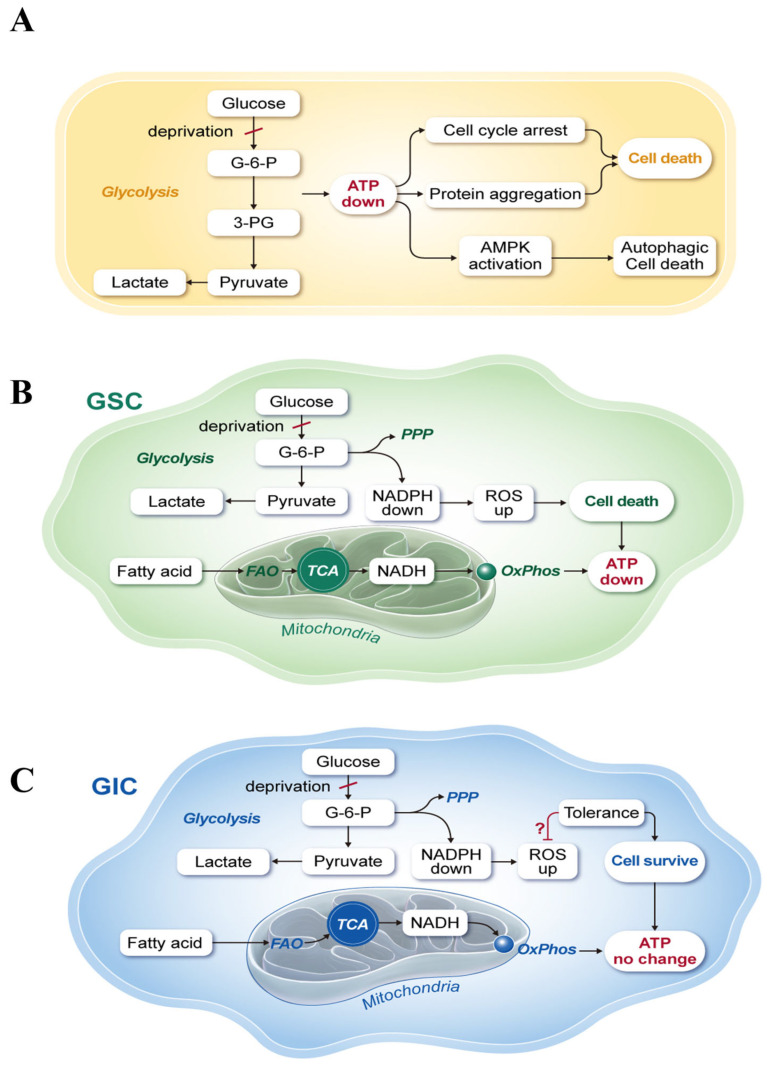
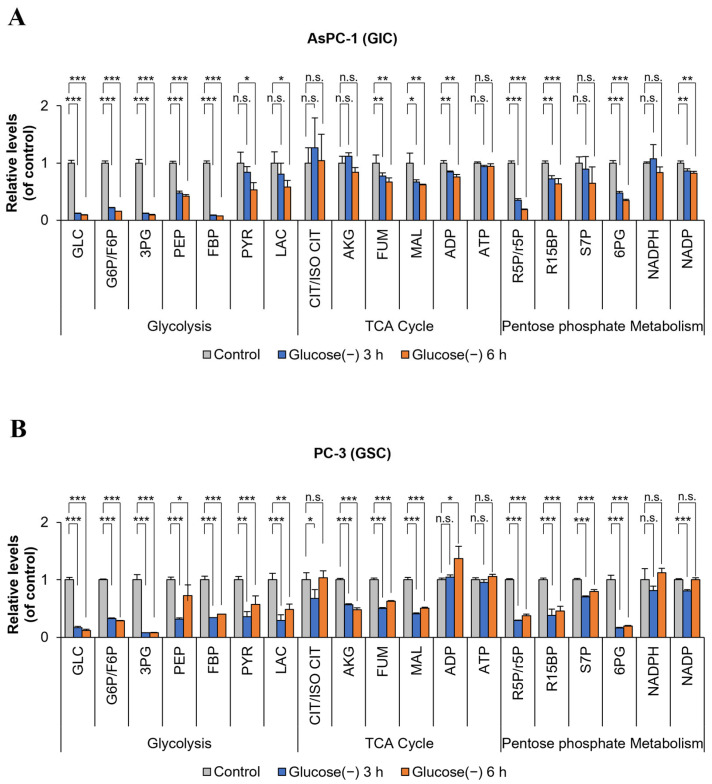
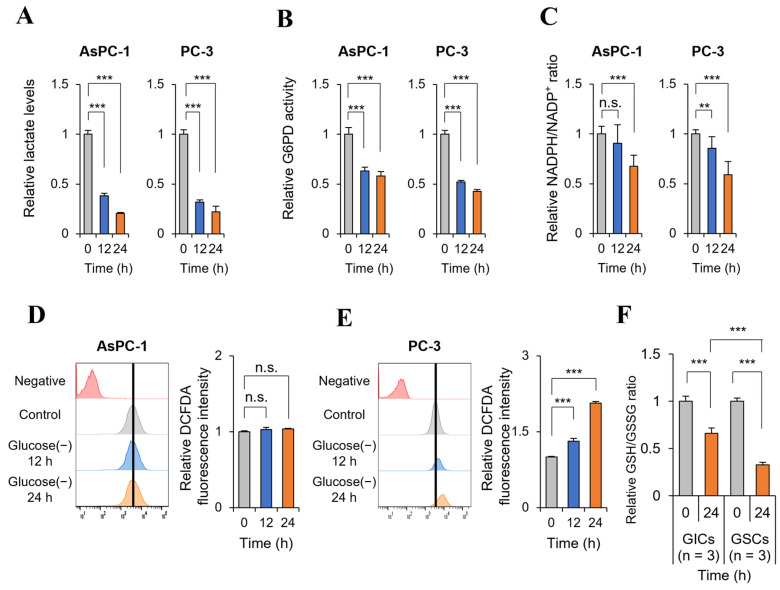
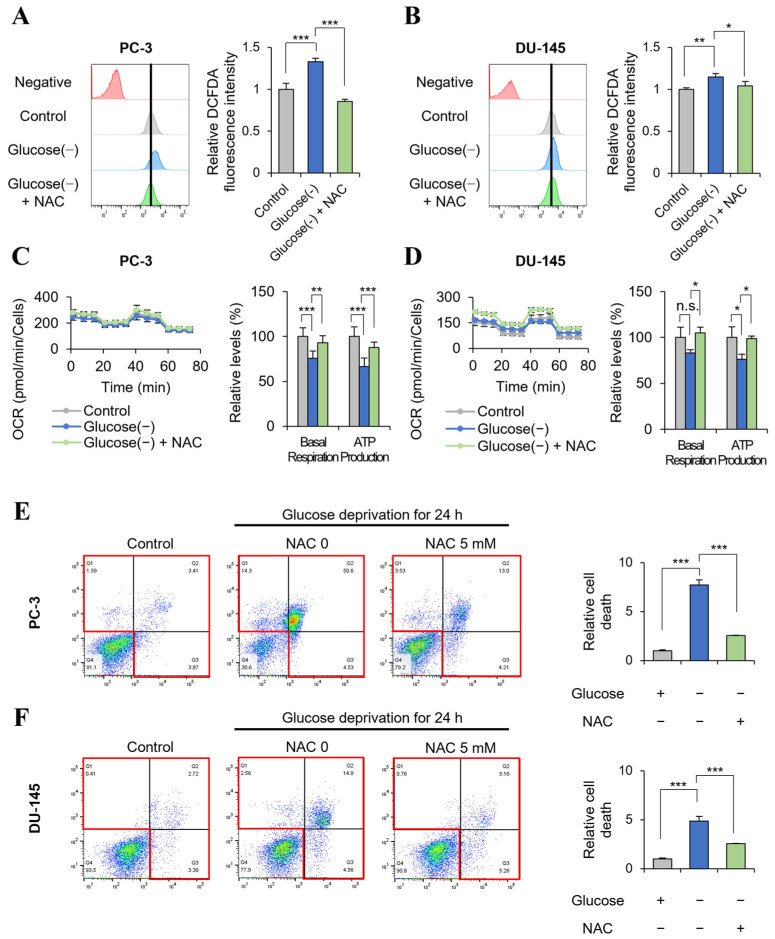
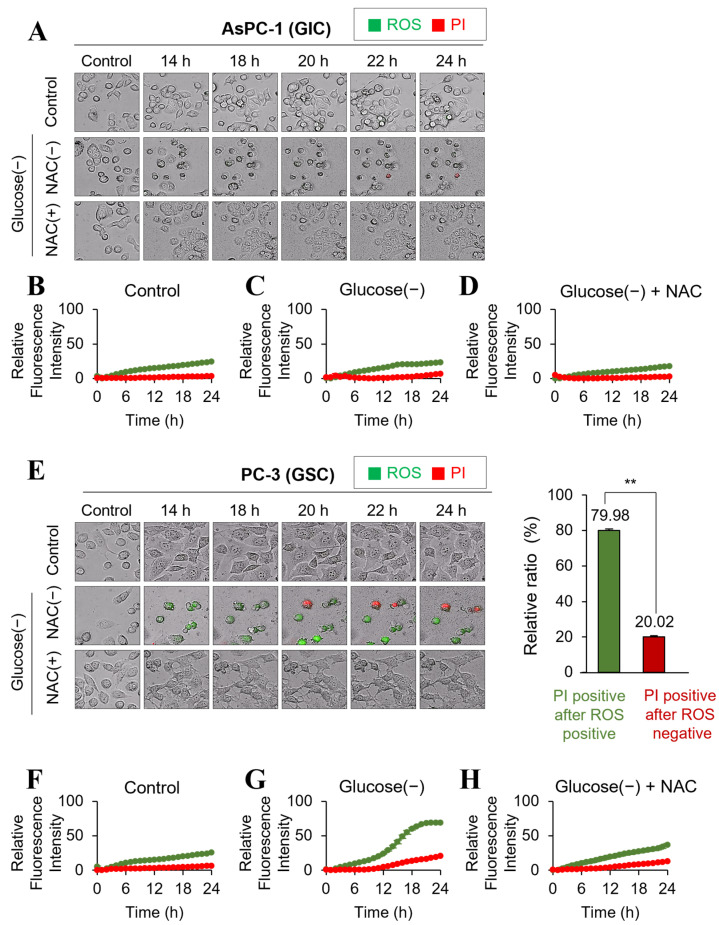
In previous work, we showed that cancer cells do not depend on glycolysis for ATP production, but they do on fatty acid oxidation. However, we found some cancer cells induced cell death after glucose deprivation along with a decrease of ATP production. We investigated the different response of glucose deprivation with two types of cancer cells including glucose insensitive cancer cells (GIC) which do not change ATP levels, and glucose sensitive cancer cells (GSC) which decrease ATP production in 24 h. Glucose deprivation-induced cell death in GSC by more than twofold after 12 h and by up to tenfold after 24 h accompanied by decreased ATP production to compare to the control (cultured in glucose). Glucose deprivation decreased the levels of metabolic intermediates of the pentose phosphate pathway (PPP) and the reduced form of nicotinamide adenine dinucleotide phosphate (NADPH) in both GSC and GIC. However, glucose deprivation increased reactive oxygen species (ROS) only in GSC, suggesting that GIC have a higher tolerance for decreased NADPH than GSC. The twofold higher ratio of reduced/oxidized glutathione (GSH/GSSG) in GIS than in GSC correlates closely with the twofold lower ROS levels under glucose starvation conditions. Treatment with N-acetylcysteine (NAC) as a precursor to the biologic antioxidant glutathione restored ATP production by 70% and reversed cell death caused by glucose deprivation in GSC. The present findings suggest that glucose deprivation-induced cancer cell death is not caused by decreased ATP levels, but rather triggered by a failure of ROS regulation by the antioxidant system. Conclusion is clear that glucose deprivation-induced cell death is independent from ATP depletion-induced cell death.
在之前的研究中,我们发现癌细胞并非依赖糖酵解来产生ATP,而是依赖脂肪酸氧化。然而,我们发现一些癌细胞在葡萄糖剥夺后会诱导细胞死亡,同时ATP生成减少。我们研究了两种癌细胞对葡萄糖剥夺的不同反应,包括葡萄糖不敏感癌细胞(GIC),其ATP水平不变;以及葡萄糖敏感癌细胞(GSC),其在24小时内ATP生成减少。与对照组(在葡萄糖中培养)相比,葡萄糖剥夺在12小时后使GSC中的细胞死亡增加了两倍多,在24小时后增加了多达十倍,同时伴随着ATP生成减少。葡萄糖剥夺降低了戊糖磷酸途径(PPP)的代谢中间体水平以及烟酰胺腺嘌呤二核苷酸磷酸(NADPH)的还原形式,在GSC和GIC中均如此。然而,葡萄糖剥夺仅在GSC中增加了活性氧(ROS),这表明GIC对NADPH减少的耐受性高于GSC。GIS中还原型/氧化型谷胱甘肽(GSH/GSSG)的比例比GSC高两倍,这与葡萄糖饥饿条件下ROS水平低两倍密切相关。用生物抗氧化剂谷胱甘肽的前体N - 乙酰半胱氨酸(NAC)处理可使GSC中的ATP生成恢复70%,并逆转由葡萄糖剥夺引起的细胞死亡。目前的研究结果表明,葡萄糖剥夺诱导的癌细胞死亡不是由ATP水平降低引起的,而是由抗氧化系统对ROS调节的失败所触发。结论很明确,葡萄糖剥夺诱导的细胞死亡独立于ATP耗竭诱导的细胞死亡。